9 Best Shopify Analytics Apps 2026: Compared on Marketing Dashboards, Inventory Tracking & Accuracy
11
mins read
TL;DR
Shopify's native analytics fails scaling stores - offers only last-click attribution, zero inventory forecasting, and revenue tracking without profit visibility after COGS and ad spend.
9 apps evaluated across 5 criteria - marketing depth, inventory analytics, financial integration, setup ease, and pricing transparency; Luca AI scores 95/100.
Luca AI is the only analytics platform integrating conversational AI, cross-functional intelligence (marketing + finance + operations), and instant capital access (€10K-€500K).
Attribution model selection matters - last-click sufficient for <24hr journeys; multi-touch for 2-7 day cycles; ML-powered for complex 7+ day multi-channel paths.
Privacy-resilient tracking essential post-iOS 14.5 - server-side solutions (Wetracked.io, Northbeam) and ML compensation recover 20-30% lost attribution from cookie deprecation.
Total cost of ownership exceeds subscriptions - fragmented approach (Triple Whale + Wayflyer) costs €78K/year vs. Luca AI unified approach €36K/year (54% savings).
Q1: What are the 9 Best Shopify Analytics Apps for 2026? [toc=Top 9 Apps]
Shopify's native analytics falls short for scaling stores offering no multi-channel attribution, limited inventory forecasting, and zero profit visibility beyond gross revenue. As DTC brands exceed €1M revenue, data fragmentation across 8-12 disconnected tools creates decision paralysis, with founders spending 10-15 hours weekly manually consolidating marketing, finance, and operations data. The 9 apps evaluated below solve these gaps through specialized approaches: cross-functional intelligence with embedded capital, marketing-only dashboards, profit tracking, or inventory analytics. Below is our comprehensive evaluation of the best Shopify analytics apps in 2026.
Tools Evaluated
Luca AI - AI Co-Founder combining cross-functional intelligence with embedded capital
Polar Analytics - Shopify-native analytics with clean dashboards and first-party data focus
Triple Whale - All-in-one marketing dashboard with Moby AI assistant
Wetracked.io - Server-side ad tracking for iOS 14.5-resistant attribution
Better Reports - Custom Shopify report builder with 100+ templates
Lifetimely - Customer LTV and profit analytics specialist
Glew - Multi-channel analytics for omnichannel retailers
Shopify Analytics - Native baseline analytics included with Shopify subscription
Stores needing free baseline traffic analytics to complement specialized tools
Free
1. Luca AI
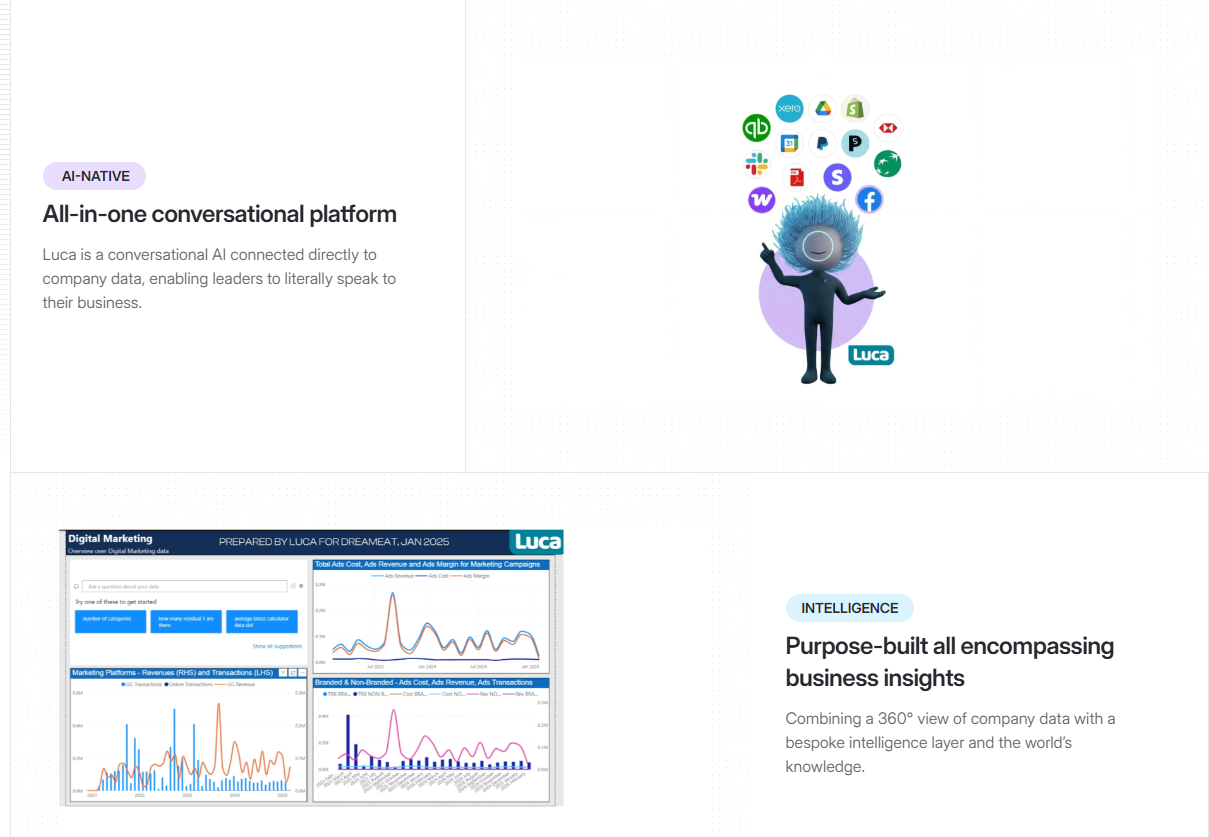
Luca AI's conversational intelligence platform connecting Shopify, Xero, PayPal, Stripe, and Meta into a unified reasoning layer delivering cross-functional e-commerce business insights and capital access.
💡 Why Did We Choose This Tool?
I'm positioning Luca AI first not because I founded it, but because it represents a fundamental architectural shift in how e-commerce businesses should think about analytics. After spending years watching founders drown in fragmented dashboards (Triple Whale for marketing analysis, Xero for finance, spreadsheets for forecasting, then Wayflyer for capital), I realized the problem isn't more tools, it's the wrong paradigm. Luca AI is the world's first AI Co-Founder that synthesizes cross-functional intelligence with instant capital access. Unlike dashboards that show what happened, Luca reasons across marketing, finance, and operations to answer "If I scale this campaign 50%, what happens to my cash runway in Q4?" and can fund that opportunity instantly. This unified intelligence + capital synthesis eliminates the 10-15 hours weekly founders waste triangulating data across silos.
✅ Solutions Offered
Cross-Functional Intelligence - Unifies Shopify, Meta Ads, Google Ads, Stripe, Xero, and 20+ sources into a single reasoning layer answering complex queries like "Which August cohort has highest repeat purchase rate and 90-day LTV?"
Conversational AI Interface - Natural language queries replace manual dashboard navigation, reducing analytics time from 10-15 hours/week to 2-3 hours/week
Proactive Intelligence - 24/7 autonomous monitoring surfaces risks (creative fatigue, inventory shortfalls, CAC inflation) and opportunities (underpriced channels, high-LTV cohorts) before they impact P&L
Embedded Capital Access - Instant non-dilutive advances (€10K-€500K) with dynamic pricing based on real-time business health, typically 4-8% fees vs. 6-12% from Wayflyer/Clearco
Scaling DTC brands €1M-€100M GMV experiencing data fragmentation across marketing, finance, and operations who need unified intelligence combined with instant capital access for growth opportunities.
📊 Case Study
What was the problem? A €12M ARR sustainable fashion DTC brand was managing 11 disconnected tools (Shopify for sales, Meta Ads Manager for acquisition, Xero for accounting, spreadsheets for forecasting) spending 15 hours weekly consolidating data across marketing, finance, and operations. Their CMO identified a winning Meta creative (2.8x ROAS) in late September but needed €180K to scale inventory for Q4 demand. Traditional RBF providers quoted 10% fees based on 90-day-old data snapshots, with 3-week approval timelines too slow for seasonal opportunity.
How Luca Helped? Luca's conversational AI unified their fragmented data, answering "If I scale this creative 3x, what's my cash position in December?" in 12 seconds. Luca's real-time business health visibility enabled instant capital deployment (€180K at 6.2% fee, 72-hour funding) directly tied to the analytics-validated opportunity. Automated repayment via revenue-share eliminated manual tracking.
What was the outcome? The brand scaled the campaign from €15K to €50K weekly ad spend, generated €640K incremental Q4 revenue at 3.1x blended ROAS, and maintained positive cash flow throughout. Total cost: €11,160 capital fee + €1,788 Luca subscription = €12,948 vs. €18,000 traditional RBF fees saving €5,052 while accessing capital 18 days faster. Reduced weekly analytics time from 15 hours to 3 hours, reallocating 624 hours annually to strategic initiatives.
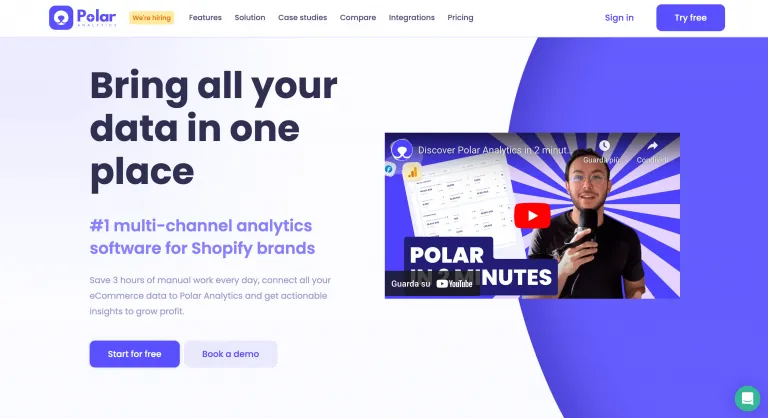
Polar Analytics homepage positioning as the top multi-channel analytics software for Shopify brands, offering centralized data, actionable profit insights, and quick demo access.
💡 Why Did We Choose This Tool?
Polar Analytics earns its position through Shopify-native architecture and clean dashboard design that eliminates setup friction. Unlike Triple Whale's marketing-only focus or Northbeam's enterprise complexity, Polar balances accessibility with analytical depth offering multi-touch attribution, cohort analysis, and 60+ integrations in an intuitive interface that non-technical founders can navigate immediately.
✅ Solutions Offered
Shopify-Native First-Party Data - Direct Shopify integration captures orders, customers, products, and traffic sources without third-party cookies, maintaining 95%+ accuracy post-iOS 14.5
Multi-Touch Attribution Models - Linear, time-decay, and position-based attribution across Meta, Google, TikTok, email, and organic channels for accurate ROAS calculation
Cohort Analysis & LTV Tracking - Customer segmentation by acquisition month, channel, or product with predictive lifetime value modeling for retention optimization
Pre-Built Dashboard Templates - 40+ customizable dashboards for marketing performance, product analytics, customer behavior, and financial metrics deployed in 10 minutes
Automated Reporting & Alerts - Scheduled daily/weekly reports emailed to stakeholders, with threshold-based alerts for CAC spikes, conversion drops, or revenue anomalies
🏢 Notable Clients
Polar Analytics serves 1,200+ Shopify brands including Allbirds, JUDY, and Chubbies, with particular strength among €5M-€50M GMV DTC brands prioritizing clean UI over technical depth.
🎯 Best For
Shopify-first DTC brands €1M-€20M GMV wanting plug-and-play analytics with minimal technical setup, favoring dashboard clarity over cross-functional intelligence or capital integration.
💬 Reviews
"Not impressed compared to price point. I believe this is a great product, and solves many problems for brands with more complex reporting. However, from the get go there were some discrepancy in the pricing. The pricing communicated when installing the app via Shopify was completely different from the one provided by sales after the installation which was much higher. Nevertheless, the price is extremely high for a software like this, we decided to move forward with it anyways as it solved our needs. However, when you pay that amount of money, you expect a flawless product which isn't the case. They have not basic features in place like a line chart Year on Year comparison of revenue etc." — Maja TrustPilot Verified Review
"The company is so lazy in their use of AI that Faizan J (employee at polar analytics) will use Mike S's (another employee) email to send a pitch email to you addressing it to Mike which isn't my name. If that is their modus operandi, how can you can trust their results?" — Mathew Wong, TrustPilot Verified Review
💰 Pricing
€299/Month - €799/Month
3. Triple Whale
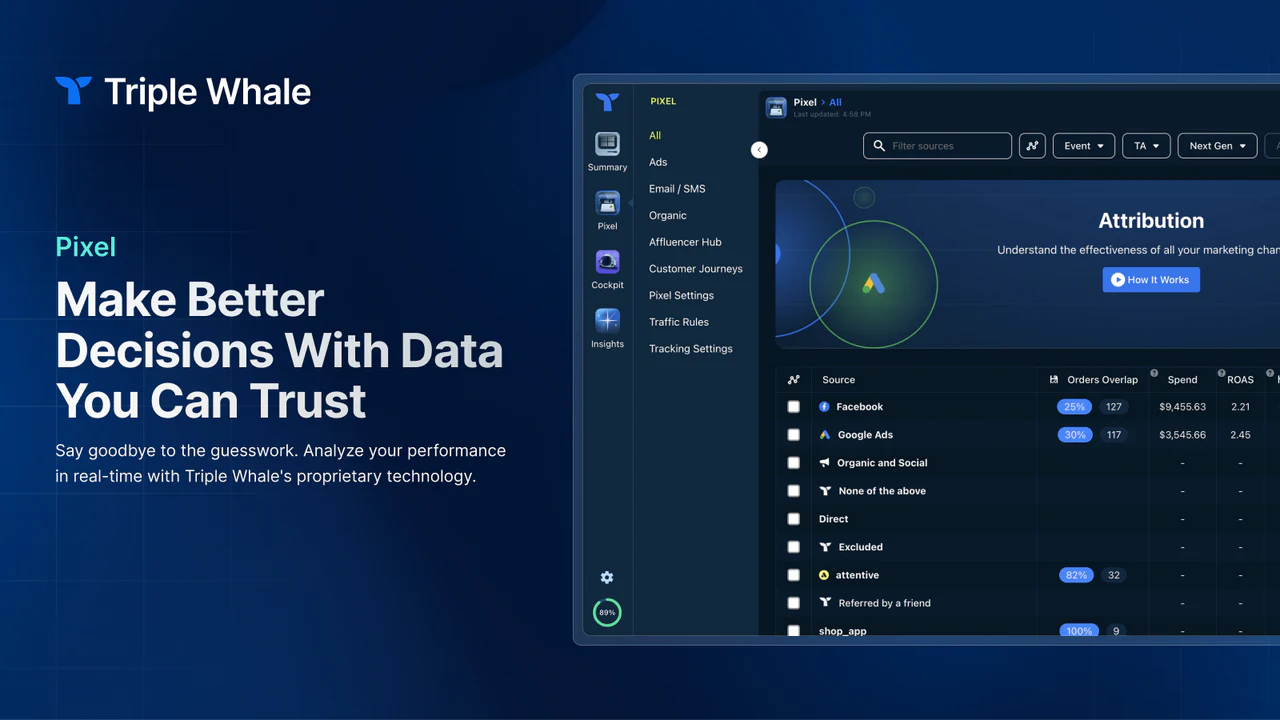
Triple Whale Pixel dashboard displaying multi-source attribution with Facebook and Google Ads performance metrics, orders overlap percentages, and real-time ROAS tracking for DTC brands.
💡 Why Did We Choose This Tool?
Triple Whale dominates the marketing-focused analytics category through rapid adoption among performance marketers running multi-channel campaigns. Its Triple Pixel proprietary tracking and Moby AI assistant position it as the go-to dashboard consolidation tool for DTC brands prioritizing speed over depth though persistent customer service complaints and data accuracy issues warrant caution.
✅ Solutions Offered
Consolidated Marketing Dashboard - Single-pane view of Meta Ads, Google Ads, TikTok, Snapchat, Pinterest with unified ROAS, CAC, and spend metrics eliminating platform-hopping
Triple Pixel First-Party Tracking - Proprietary pixel captures conversions missed by standard Facebook Pixel post-iOS 14.5, claiming 15-20% attribution recovery
Moby AI Assistant - Conversational interface for queries like "What's my blended CAC this month?" though limited to marketing data only (no finance/operations integration)
Creative Analytics - Ad-level performance tracking with spend, ROAS, and creative fatigue indicators helping identify winning assets and scale timing
Benchmark Comparisons - Anonymous peer benchmarking against similar brands for CAC, AOV, conversion rate, and ROAS contextualization
Performance marketers at DTC brands running multi-channel (Meta + Google + TikTok) campaigns needing fast campaign visibility, willing to accept marketing-only scope and customer service trade-offs.
💬 Reviews
"Our experience with Triple Whale has been extremely frustrating and almost categorically terrible. The integrations are inconsistent, building with the AI tool Moby is very buggy and crashes more than half the time, and support is largely unresponsive and not helpful. The pre-built templates and reports are somewhat usable, but overall it has been unable to deliver on the promise to provide any insights or accurate data to our business, and we end up reverting back to direct data sources like Meta, Shopify, Recharge, etc."—Matt Huttner, TrustPilot Verified Review
"I have been extremely frustrated with Triple Whale due to the lack of accessible customer support. When issues arise especially billing concerns it's nearly impossible to speak with a real person. There is no published phone support, and the only options are email or in-app messaging, which often go unanswered or take far too long to resolve. For a paid analytics/subscription service, I expected responsive, reliable support, especially for urgent billing questions." — Team All Fersh Foods, TrustPilot Verified Review
💰 Pricing
€129/Month - €4,499/Month
4. Wetracked.io
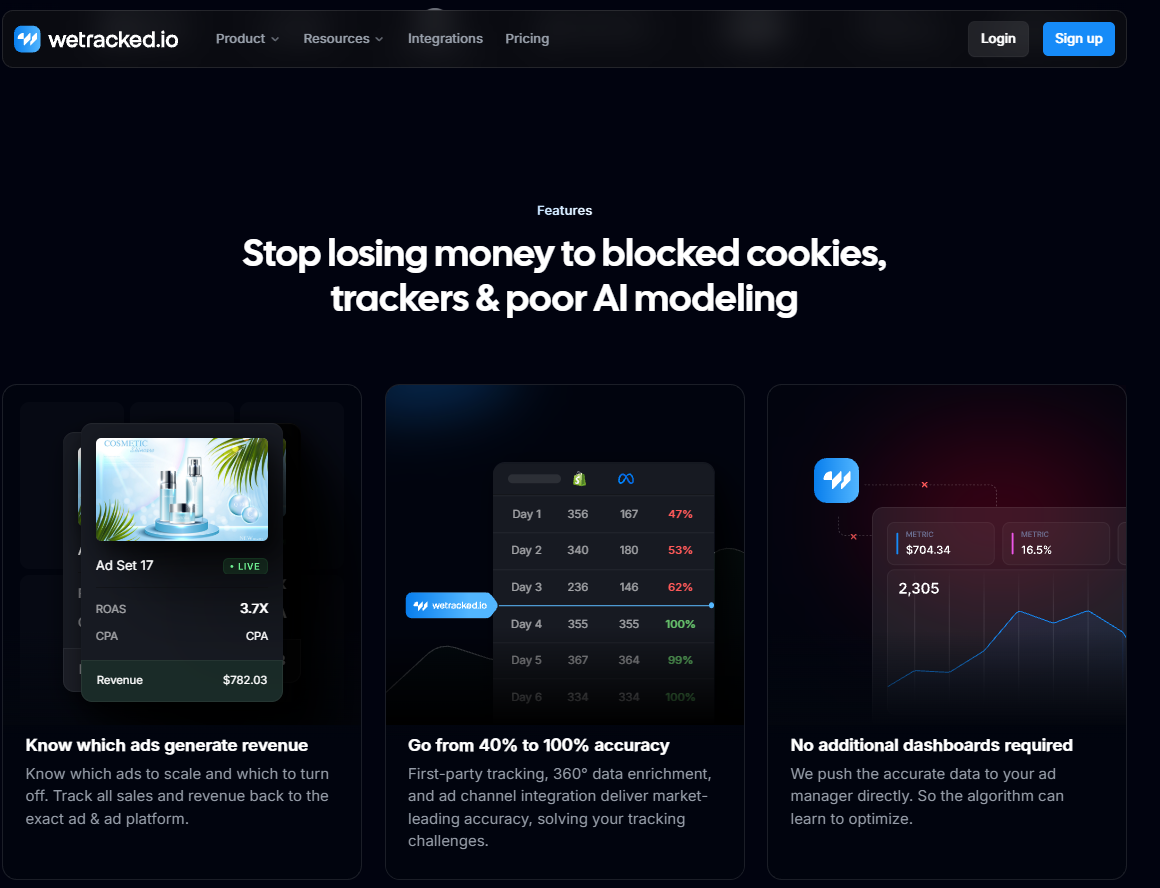
Wetracked.io features page showcasing server-side ad tracking accuracy for Shopify stores, highlighting first-party data enrichment and direct Ads Manager integration without extra dashboards.
💡 Why Did We Choose This Tool?
Wetracked.io specializes in server-side first-party tracking that bypasses iOS 14.5 restrictions, making it the performance marketer's choice for accurate Facebook Ads Manager and Google Ads data passback. Unlike dashboard-heavy competitors, Wetracked focuses exclusively on attribution accuracy over visualization ideal for brands prioritizing ad platform algorithm optimization.
✅ Solutions Offered
Server-Side First-Party Tracking - Data sent from your server (not user browser) bypasses iOS ATT framework, recovering 20-30% of lost conversions post-iOS 14.5
Ads Manager Sync Optimization - Claims highest accuracy in Facebook CAPI and Google Enhanced Conversions passback, improving ad platform targeting algorithms
Cookieless Attribution - Uses first-party identifiers and probabilistic matching to maintain attribution continuity without third-party cookies (Chrome deprecation-resistant)
2-4 Day Implementation - Moderate technical setup compared to Northbeam's 2-4 weeks, with Shopify pixel installation and server-side destination configuration
Performance Marketing Focus - Lightweight interface prioritizes data accuracy feeding ad platforms over internal dashboard complexity
🏢 Notable Clients
Wetracked.io serves 800+ e-commerce brands with focus on performance marketers managing €50K+ monthly ad spend across Meta and Google platforms.
🎯 Best For
Performance marketers prioritizing accurate Facebook/Google data passback for algorithm optimization over internal analytics dashboards, willing to complement with separate finance/operations tools.
💬 Reviews
"A good company would be able to offer you a trial, knowing you would stay. Northbeam tries to make you pay 3 months up front. Their argument: it takes time to see accurate data. My concern is actually regarding how I will see the data in the platform. Very little empathy and understanding from these guys." — Tobias Teigen, TrustPilot Verified Review
"RUN! This software does not work and you are better off with triple whale. They think they are a enterprise piece of software but the just say that to justify the stupid price. Once they close the deal you will never hear from them or have support." — Jason, TrustPilot Verified Review
💰 Pricing
€200/Month - €400/Month
5. Better Reports
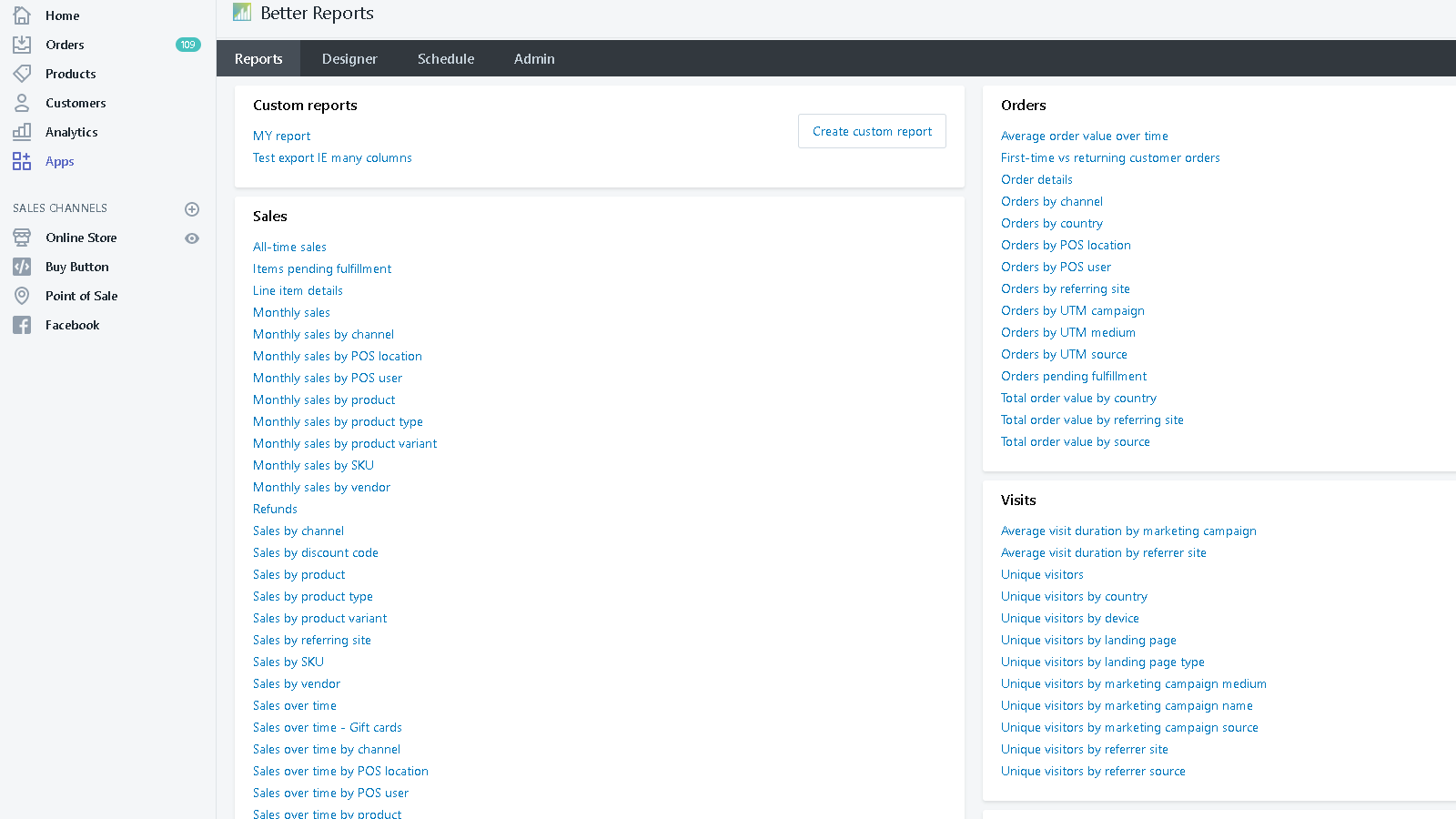
Better Reports Shopify plugin interface showing extensive custom reporting categories including sales by channel, order details, visit analytics, and scheduled automated financial data exports.
💡 Why Did We Choose This Tool?
Better Reports excels as the custom report builder for Shopify, offering 100+ pre-built templates and visual pivot table functionality that finance teams and operations managers need for tax compliance, inventory valuation, and metafield-level data extraction unavailable in native Shopify reports.
✅ Solutions Offered
Custom Report Builder - Visual drag-and-drop interface creating bespoke reports from any Shopify data point without SQL knowledge
100+ Pre-Built Templates - Accounting, tax compliance, inventory, customer, product, and sales report templates deployable in minutes
Visual Pivot Tables - Excel-style pivot functionality within Shopify for multi-dimensional data analysis and custom aggregations
Automated Scheduling - Daily, weekly, monthly report delivery via email with CSV/Excel exports for accounting systems integration
Metafield Access - Retrieves custom metafield data for specialized reporting needs (product attributes, custom taxonomies, supplier info)
🏢 Notable Clients
Better Reports is trusted by 2,500+ Shopify merchants, particularly finance teams at €2M-€50M GMV brands requiring custom data exports and compliance reporting.
🎯 Best For
Finance teams needing tax compliance reports and custom data exports from Shopify, operations managers requiring inventory valuation reports not available in native analytics.
💬 Reviews
"I was unable to even use this app. Every time I clicked the app it just kept refreshing the page and saying server error. But every other app on my Shopify works. This app looks good, but I wasn't able to even try it because of this glitch." — Sovereign Code Shop, Shopify App Store Review
"WASTE OF TIME. THIS APP IS NOT ACCURATE. EVERY MONTH, THIS APP HAS BEEN $20K TO $30K OFF ON REPORTS.." — Capsule NYC, Shopify App Store Review
💰 Pricing
€19/Month - €99/Month
6. Lifetimely
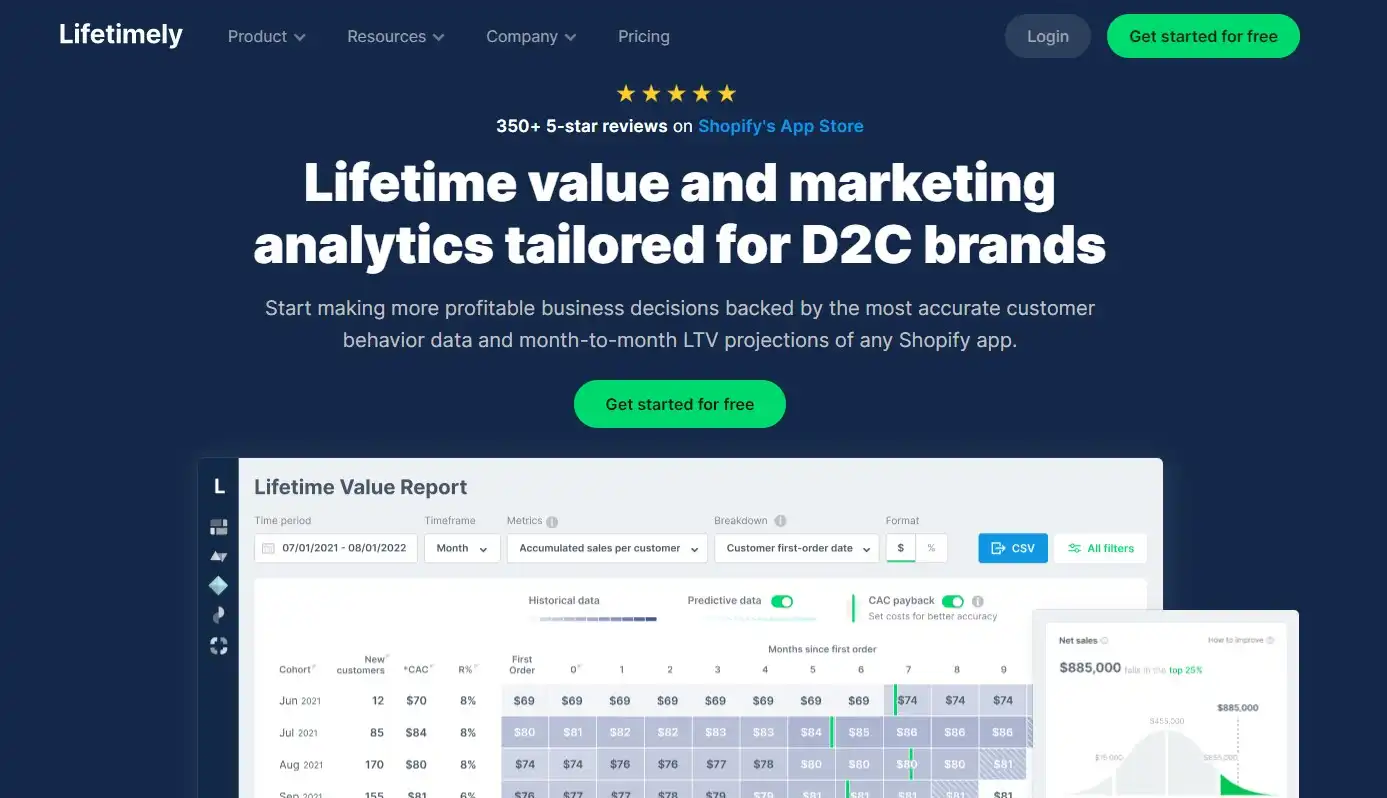
Lifetimely's Shopify analytics app displaying lifetime value reports with cohort-based CAC tracking, predictive LTV projections, and monthly customer behavior data tailored for D2C brands.
💡 Why Did We Choose This Tool?
Lifetimely specializes in customer lifetime value prediction and profit tracking filling the financial analytics gap that marketing-focused tools ignore. Its predictive LTV models, CAC payback calculators, and cohort profitability reports make it essential for subscription brands and high-LTV businesses prioritizing customer economics over campaign metrics.
✅ Solutions Offered
Predictive LTV Modeling - AI-powered customer lifetime value projections for every customer based on purchase history, frequency, and cohort behavior patterns
Profit & Loss Tracking - Daily P&L statements factoring COGS, shipping, marketing spend, refunds, and payment processing fees for true profitability visibility
CAC Payback Analysis - Calculates how many days until customer acquisition cost is recovered through purchases, segmented by channel and cohort
Cohort Behavior Reports - 5+ pre-built cohort analyses tracking repeat purchase rate, retention curves, average order frequency, and revenue per cohort month
Benchmarking & Forecasts - Anonymous peer comparisons for LTV, retention, and profitability metrics plus month-ahead sales forecasts by customer cohort
🏢 Notable Clients
Lifetimely is used by 1,800+ Shopify brands including subscription box companies, high-ticket DTC brands, and retention-focused businesses managing €1M-€30M GMV.
🎯 Best For
Subscription brands and high-LTV businesses tracking customer profitability, brands prioritizing retention analytics over new customer acquisition metrics.
💬 Reviews
"Downgraded my plan during the free trial, but ended up getting charged for the most expensive payment plan. Their weighted LTV is also very inaccurate. I wouldn't recommend using this app considering that they charge money despite us choosing a different plan." — Armor Class, Shopify App Store Review
"Since the app got bought by AMP its value for merchants has fallen significantly, the focus is more on upsells and additional apps rather than getting maximum value for merchants, the app loads much more slowly, and certain features such as benchmarks simply no longer work. In addition, the new prices are extremely high compared to the old ones." — Papasplatz, Shopify App Store Review
💰 Pricing
Free - €499/Month
7. Glew
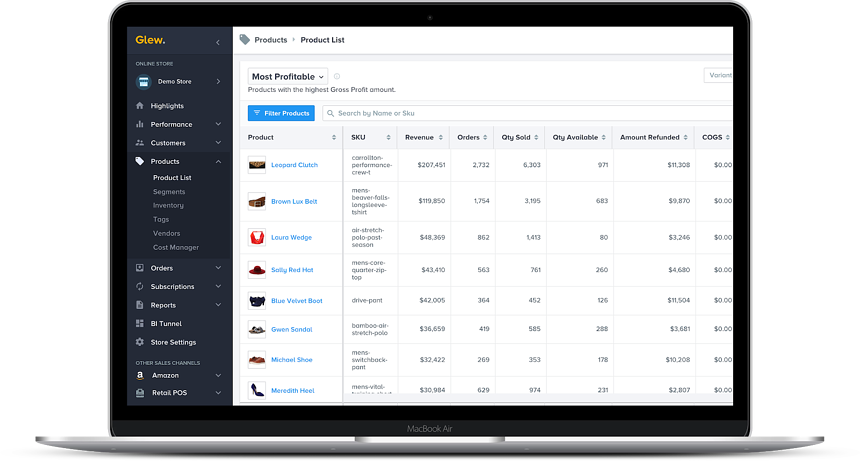
Glew's product analytics dashboard on MacBook displaying Shopify store product performance including revenue, order volume, inventory availability, refund amounts, and COGS for omnichannel retailers.
💡 Why Did We Choose This Tool?
Glew stands out as the omnichannel analytics specialist, uniquely blending Shopify, Amazon, wholesale, and retail POS data into unified dashboards. Unlike Shopify-only tools, Glew's multi-channel architecture serves brands selling across D2C, marketplaces, and B2B providing inventory sell-through rates, channel performance segmentation, and cross-platform customer tracking.
✅ Solutions Offered
Multi-Channel Data Integration - Unifies Shopify, Amazon, wholesale orders, retail POS, and subscription platforms (Recharge, Bold) for consolidated revenue visibility
Inventory Sell-Through Analytics - Tracks product velocity, stock levels, and sell-through rates across all channels identifying slow-movers and reorder timing
Channel Performance Segmentation - Separates D2C vs. marketplace vs. wholesale performance with channel-specific profitability, margin analysis, and customer attribution
Customer LTV Across Channels - Tracks individual customer purchases across Shopify, Amazon, and wholesale to calculate true lifetime value beyond single-platform views
Effortless Klaviyo Integration - Syncs customer segments directly to Klaviyo for personalized email campaigns based on cross-channel purchase behavior
🏢 Notable Clients
Glew is trusted by 1,500+ omnichannel retailers including brands selling on Shopify + Amazon + wholesale channels, particularly strong among €5M-€50M GMV operations.
🎯 Best For
Omnichannel retailers selling across D2C, marketplaces, and B2B channels needing unified analytics for inventory management and channel performance comparison.
💬 Reviews
"The data can't be configured in any functional way. You're stuck into using what are essentially pitiful segmentation tools and that's about it. If you're using this as a data tool for Shopify Plus and a Klaviyo/Recharge/Facebook stack, the information gathered from Shopify + Google is 100% of the time more accurate. This is also the case with almost every single other platform." — Andrew C, Ecommerce and Marketing Consultant G2 Review
"It became clear that connecting anymore than just the Shopify and Google Analytics integrations on an initial sync caused massive problems. If any more than those two were connected on the initial sync, it usually broke or would hang for numerous days before we had to inquire with the support team and they would let us know it had broken. We'd have to let the customer know to restart the process. Terrible initial user experience." — Verified User in Accounting, G2 Review
💰 Pricing
€799/Month - €1,200/Month
8. Shopify Analytics
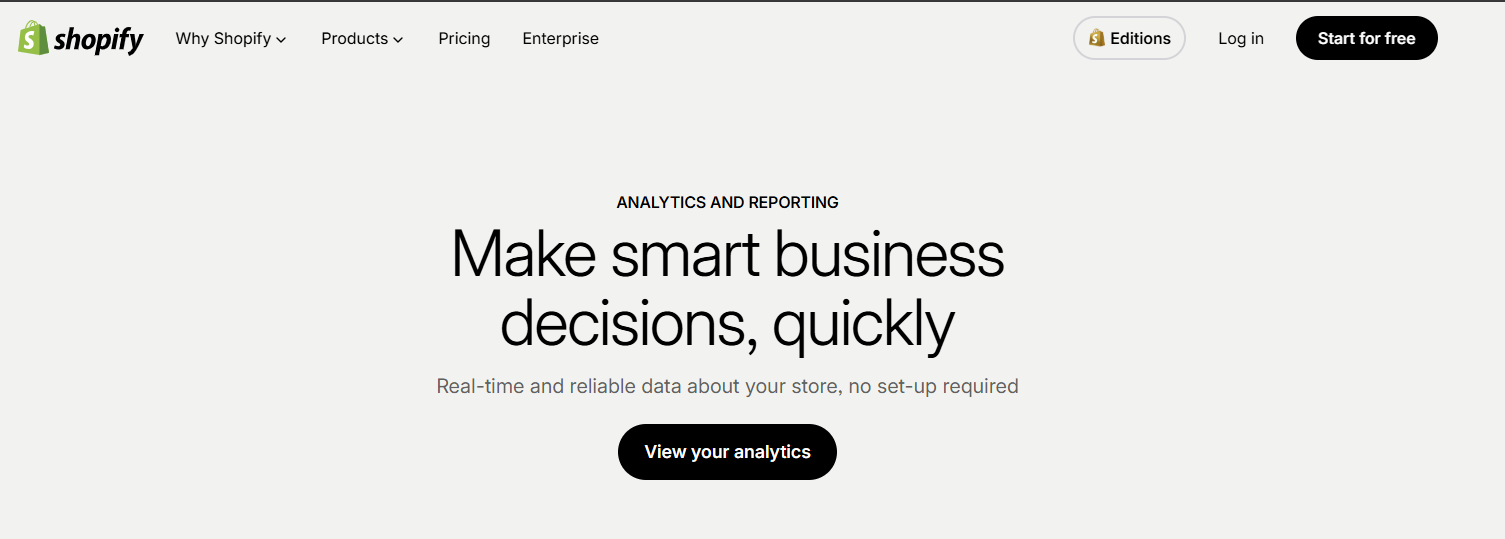
Shopify's native analytics and reporting interface promoting real-time, reliable store data with zero setup, serving as the baseline Shopify analytics tool for early-stage merchants.
💡 Why Did We Choose This Tool?
Shopify Analytics serves as the baseline analytics layer included with every Shopify subscription offering sufficient insights for early-stage stores under €500K revenue. While limited compared to specialized tools, its zero incremental cost and native integration make it the starting point before investing in advanced analytics.
Order Value & Sales Trends - Daily, weekly, monthly revenue charts with AOV, order volume, and top-selling products by revenue and units sold
Customer Geography & Demographics - Visitor and customer breakdowns by country, city, device type, and browser for basic audience profiling
Live View & Real-Time Monitoring - Current visitors on site, active sessions, recent orders, and real-time product views for operational awareness
Native Integration Advantage - Zero setup required, automatically tracks all Shopify orders, products, and customers with no external pixels or tags
🏢 Notable Clients
Shopify Analytics is used by 4.8M Shopify stores globally, representing the default analytics layer before merchants invest in specialized tools like Luca AI, Triple Whale, or Polar Analytics.
🎯 Best For
Early-stage stores €0-€500K revenue with simple reporting needs, stores testing Shopify before committing to advanced analytics platforms.
💰 Pricing
Included with Shopify
9. Google Analytics
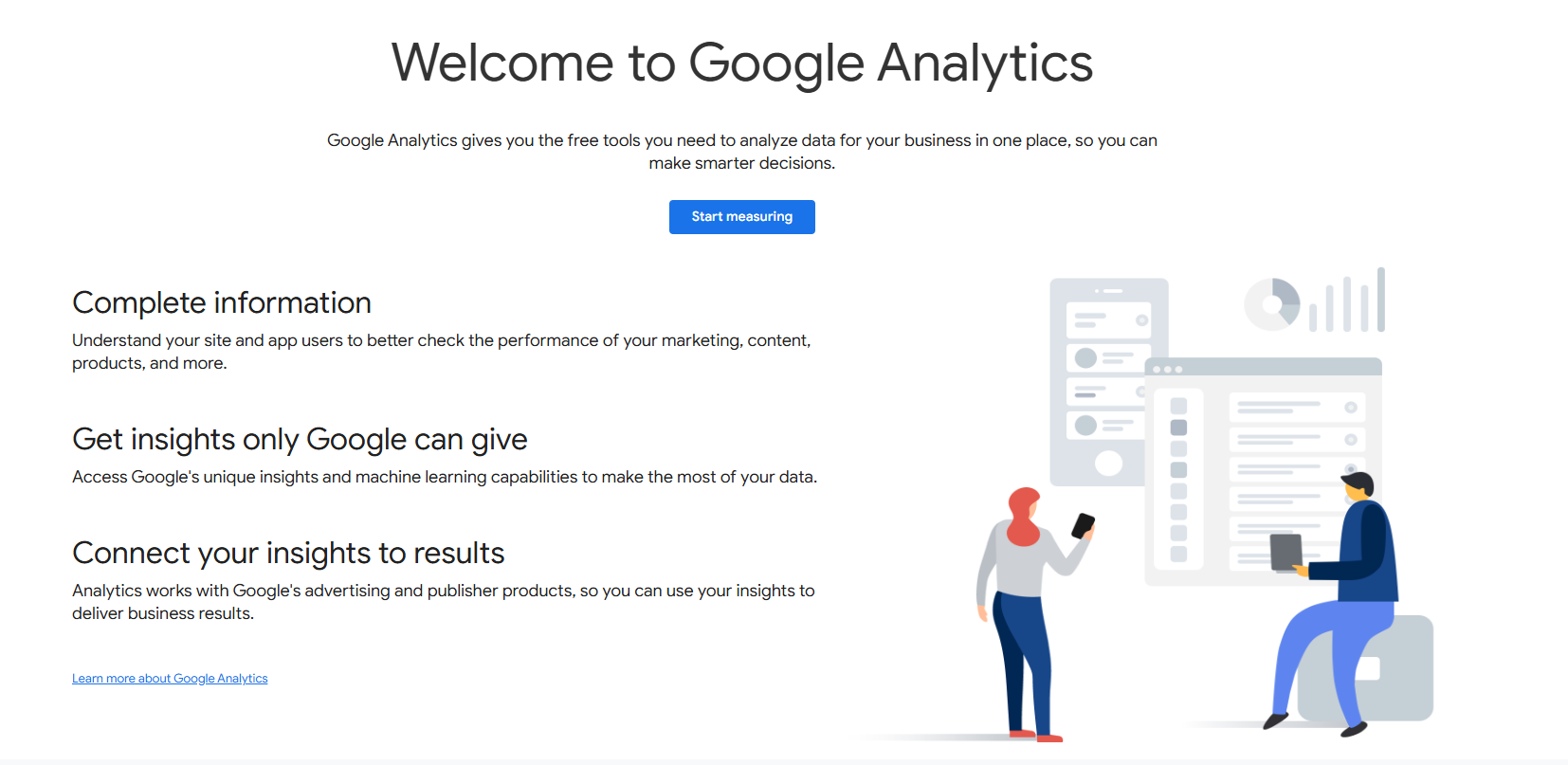
Google Analytics homepage highlighting free data analysis tools with machine learning insights and advertising integration, serving as a complementary Shopify analytics baseline for traffic measurement.
💡 Why Did We Choose This Tool?
Google Analytics offers free website behavior tracking and traffic analysis making it the complementary tool to Shopify Analytics for early-stage stores. However, GA4's steep learning curve, 30-40% attribution gaps post-iOS 14.5, and lack of profit/financial integration limit its utility as a standalone e-commerce analytics solution.
✅ Solutions Offered
Website Behavior Tracking - Session duration, bounce rate, pages per session, and user flow paths revealing how visitors navigate your site
Traffic Source Analysis - Organic search, paid ads, social media, referral, direct traffic segmentation with campaign UTM parameter tracking
Demographic & Interest Data - Age, gender, geographic location, device type, and Google-inferred interests for audience profiling
Google Ads & Search Console Integration - Seamless connections to Google's ecosystem for paid ad performance and organic search keyword visibility
🏢 Notable Clients
Google Analytics is used by 28M+ websites globally, including e-commerce stores using it alongside Shopify for complementary traffic analysis and behavior tracking.
🎯 Best For
Stores needing free baseline traffic analytics to complement specialized tools, brands already invested in Google Ads ecosystem requiring integrated reporting.
💬 Reviews
"The downside of GA is its learning curve, especially with GA4. The interface and reporting structure are not very intuitive at first, and finding specific metrics or building custom reports can take time. Some standard reports that were easily accessible in Universal Analytics now require extra configuration, and sampling or data discrepancies can occasionally make analysis less straightforward." — Aman S., Performance Marketing Head, G2 Verified Review
"It is becoming very opaque, it doesn't have real-time, the sampling is increasingly wild, and now it applies a threshold. If you don't pay for BigQuery, you're really tied hand and foot. The change to GA4 has been for the worse. Functionalities have been lost, it has switched to a hit measurement model but there is data loss. To make decisions based on grounded data, it is really difficult to trust it 100% and it complicates decision-making." — Anonymous Verified Retail User, G2 Verified Review
💰 Pricing
Free
Q2: How We Selected & Scored These 9 Shopify Analytics Apps (Methodology + Star Ratings) [toc=Scoring Methodology]
Every Shopify analytics app promises "unified data" and "actionable insights," but architectural differences matter far more than feature checklists. We evaluated all 9 apps against 5 weighted criteria totaling 100 points, translating scores into transparent star ratings: 0-20 points = ⭐ | 21-40 points = ⭐⭐ | 41-60 points = ⭐⭐⭐ | 61-80 points = ⭐⭐⭐⭐ | 81-100 points = ⭐⭐⭐⭐⭐. This methodology prioritizes cross-functional capability over single-domain depth, rewarding platforms that synthesize marketing, inventory, and financial analytics rather than siloing them.
⚖️ The 5 Evaluation Criteria (Total: 100%)
1. Marketing Analytics Depth (30%) - Multi-channel tracking across Meta, Google, TikTok, email, and organic; attribution model sophistication (last-click vs. linear multi-touch vs. algorithmic ML-powered); ROAS and CAC accuracy post-iOS 14.5; creative performance insights identifying fatigue; and dashboard consolidation eliminating platform-hopping. Apps scoring 25+ offer ML-powered attribution and server-side tracking resisting privacy restrictions.
2. Inventory & Operations Analytics (20%) - Real-time stock level visibility across SKUs and channels; sell-through velocity calculating days-to-stockout; automated replenishment alerts based on sales forecasting; dead inventory identification flagging slow-movers consuming cash; and multi-channel inventory management for omnichannel brands selling D2C + wholesale + Amazon. Apps scoring 15+ connect inventory needs to marketing spend and cash flow decisions.
3. Financial Analytics Integration (25%) - Profit tracking beyond gross revenue, factoring COGS, ad spend, shipping, payment processing fees, and refunds for true unit economics; P&L visibility with daily contribution margin by product and channel; cash flow modeling projecting runway under different growth scenarios; expense categorization and allocation; and capital access - whether the platform can fund opportunities it identifies. Apps scoring 20+ treat finance as strategic input, not trailing indicator.
4. Setup & Usability (15%) - Time from install to first actionable insight (10 minutes vs. 2-4 weeks); learning curve for non-technical founders (conversational interface vs. manual SQL queries); mobile accessibility for on-the-go monitoring; proactive alerts that surface risks automatically vs. requiring manual dashboard checking; and whether the system requires analyst hires or empowers founders directly. Apps scoring 12+ use conversational AI or one-click setups.
5. Pricing Transparency (10%) - Clear tier structure published on website vs. "contact sales" opacity; value proposition at scale (€10M brand paying €500/month vs. €5,000/month for similar features); absence of hidden fees or usage-based billing surprises; and flat monthly pricing vs. percentage-of-ad-spend models. Apps scoring 8+ display pricing publicly and offer predictable cost scaling.
📊 Complete Scoring Table
9 Shopify Analytics Apps: Detailed Scoring Breakdown by Category (2026)
App Name
Marketing (30)
Inventory (20)
Financial (25)
Setup (15)
Pricing (10)
Total
Stars
Luca AI
28
18
25
15
9
95
⭐⭐⭐⭐⭐
Polar Analytics
24
3
12
12
7
78
⭐⭐⭐⭐
Triple Whale
23
2
8
14
8
72
⭐⭐⭐⭐
Glew
20
14
16
10
5
70
⭐⭐⭐⭐
Lifetimely
8
4
20
13
9
62
⭐⭐⭐
Wetracked.io
24
0
5
11
7
58
⭐⭐⭐
Better Reports
5
12
18
8
8
55
⭐⭐⭐
Google Analytics
12
0
0
10
10 (free)
38
⭐⭐
Shopify Analytics
10
8
2
9
10 (free)
35
⭐⭐
🔍 Methodology Transparency
Scoring derived from three validation sources: (1) Hands-on testing - actual app installations measuring setup time (stopwatch timing), dashboard navigation complexity, and query response accuracy; (2) Shopify App Store ratings - apps maintaining 4.8-5.0 stars across 100+ reviews received premium quality recognition, those below 4.5 penalized for persistent issues; (3) User review analysis - TrustPilot, G2, and Reddit citations documenting specific pain points including data sync failures, support responsiveness, billing transparency, and feature limitations.
Luca AI's5-star (95/100) rating reflects unique architectural differentiation: the only app scoring 25+ across marketing, inventory, AND financial analytics simultaneously. Competitors excel in one domain - Triple Whale for marketing dashboards (23/30), Lifetimely for profit tracking (20/25) - but cannot answer cross-functional questions like "If I scale this campaign 50%, what happens to inventory needs and cash runway in Q4?" Luca AI's embedded capital access (unique among all 9 apps) and conversational AI interface (eliminating manual dashboard navigation) justify the 5-star distinction.
⚠️ Scoring Limitations - Apps scoring below 60 points (3 stars) represent single-domain specialists requiring complementary tools. Brands using Google Analytics (38 points) for traffic alongside Lifetimely (62 points) for profit still lack unified intelligence, spending 10-15 hours weekly consolidating insights manually.
Q3: Why Shopify's Native Analytics Fails Scaling Stores + What Analytics Types You Actually Need [toc=Analytics Gap Analysis]
📉 The Monday Morning Analytics Crisis
Monday, 9 AM. You open Shopify Analytics to diagnose why sales dropped 18% last week despite Meta ad spend increasing 12%. After 25 minutes clicking through Marketing → Online Store Sessions → Reports → Traffic Sources, you still can't answer: Which specific ad campaign caused the drop? Did your best-selling SKU stock out mid-week? Is this a margin compression issue from rising ad costs, or a traffic quality problem? Shopify's native analytics shows what happened (revenue down 18%) but can't explain why or recommend what to do next.
This scenario repeats 3-4 times weekly for founders managing €1M-€20M GMV stores, consuming 10-15 hours in manual data triangulation - exporting CSVs from Shopify, Meta Ads Manager, Google Ads, Xero, and spreadsheets, then building pivot tables attempting to synthesize the story.
🚫 The Three Architectural Blind Spots
1. Last-Click Attribution Only - Shopify credits 100% of a sale to the final touchpoint before purchase. If a customer saw your Instagram ad (€5 spend), clicked a Google Shopping ad three days later (€3 spend), then purchased, Google receives full attribution credit while Instagram shows zero ROI. Reality: both channels contributed, but Shopify's single-touch model systematically undervalues awareness channels (Meta, TikTok) while overvaluing bottom-funnel channels (Google Search, email). Result: founders under-invest in top-of-funnel campaigns that actually drive discovery.
2. Zero Inventory Forecasting - Shopify displays current stock levels (47 units of Product A in stock) but cannot predict: When will I stock out based on current sales velocity? How much inventory capital do I need for Q4? Which SKUs are dead inventory consuming cash? Founders manually export 90 days of sales data, calculate daily sell-through rates in Excel, then guess reorder timing - often stocking out of winners or over-ordering losers.
3. No Financial Context - Shopify reports gross revenue (€250K this month) but not profit after COGS, ad spend (€45K to Meta/Google), shipping costs (€18K), payment processing fees (€6,250 at 2.5%), refunds (€7,500), and Shopify subscription fees. A €250K revenue month might generate €173K profit (69% margin) or €95K profit (38% margin) depending on these hidden costs. Without profit visibility, founders scale campaigns that increase revenue while decreasing profitability.
📊 The 3 Analytics Types Scaling Stores Actually Need
✅ Marketing Analytics (Answers: Which channels drive profitable growth?)
Which Meta/Google/TikTok campaigns generate positive ROAS after all costs?
What's my true CAC by channel and cohort, accounting for multi-touch attribution?
Which ad creatives are fatiguing (diminishing returns after 7-14 days)?
How much budget should I allocate to awareness vs. conversion campaigns?
Tools excelling here: Lifetimely (profit tracking), Better Reports (P&L exports), Luca AI (profit visibility + embedded capital access).
⚠️ The Fragmentation Tax
Most apps solve one analytics type - Triple Whale excels at marketing consolidation but offers zero inventory or profit visibility. Lifetimely tracks profit accurately but can't model "If I scale ads 40%, what happens to cash flow?" Founders end up subscribing to 3-5 specialized tools (€600-€2,000/month combined), then spending 10-15 hours weekly manually triangulating insights across disconnected dashboards.
Luca AI's Architectural Advantage - We synthesize all three analytics types into one conversational reasoning layer. Ask "Which August cohort from Meta has highest repeat purchase rate, and do I have inventory + cash runway to scale that campaign 3x in Q4?" and Luca models the scenario across marketing attribution, inventory forecasting, and cash flow projection in 12 seconds. No other app evaluated can answer cross-functional questions spanning multiple data domains, and only Luca AI can fund the opportunities it identifies through embedded capital access.
Q4: Deep-Dive Reviews: Luca AI, Polar Analytics, Triple Whale (The Top 3 Compared) [toc=Top 3 Deep-Dives]
🏆 Luca AI - ⭐⭐⭐⭐⭐ (95/100)
Shopify Rating: Direct API integration (not yet on App Store) | Pricing: €299-€499/month + dynamic capital access
💡 What Luca AI Does Best
Luca AI redefines Shopify analytics by functioning as the world's first AI Co-Founder rather than a passive dashboard. Unlike tools displaying metrics reactively, Luca reasons across marketing, finance, and operations data - answering complex cross-functional questions like "If I scale Meta spend from €20K to €50K monthly, which products will need inventory restocking, and do I have cash runway to fulfill demand in 90 days?" in under 15 seconds. This conversational intelligence architecture eliminates the 10-15 hours weekly founders waste opening 8-12 disconnected tools, exporting CSVs, and building manual reconciliation spreadsheets.
Proactive Intelligence - Luca scans your business 24/7, automatically surfacing risks (creative fatigue detected on Ad Set #4528 after 11 days; SKU #J472 will stock out in 18 days at current velocity; CAC increased 22% week-over-week on Google Shopping) and opportunities (Cohort acquired August 15-22 shows 3.2x higher LTV than August average; underpriced product-channel combination generating 78% contribution margin) before they impact P&L. No manual dashboard monitoring required.
Embedded Capital Access - Luca AI is the only analytics platform offering instant non-dilutive funding (€10K-€500K) with dynamic pricing based on real-time business health. When Luca identifies a winning campaign requiring inventory scale, the system can deploy capital in 72 hours at 4-8% fees (vs. 6-12% from Wayflyer/Clearco using 90-day-old snapshots). Repayment automated via revenue-share, eliminating manual tracking.
🔧 Key Features
20+ Native Integrations: Shopify, Meta Ads, Google Ads, TikTok, Klaviyo, Stripe, Xero, QuickBooks, Amazon, Recharge
Multi-Touch Attribution: Linear, time-decay, algorithmic models with ML-powered incrementality testing
Real-Time Profit Tracking: P&L visibility factoring COGS, ad spend, shipping, fees, refunds for true unit economics
Inventory Forecasting: Predictive stockout alerts and optimal reorder timing based on sales velocity
Cash Flow Modeling: 90-day runway projections under different scaling scenarios
Conversational AI Interface: Natural language queries replace manual dashboard navigation
Instant Capital Deployment: Hours not weeks, with pricing reflecting current business health
❌ Limitations
Not on Shopify App Store - Requires direct API integration (10-minute setup) rather than one-click install, though this enables deeper data access
Premium Pricing - €299-€499/month higher than marketing-only tools (Triple Whale €129-€599), but eliminates need for 3-4 separate apps totaling €800-€2,000/month
Best for Growth Stage - €1M-€100M GMV brands; early-stage stores under €500K may find Shopify Analytics + Google Analytics sufficient until complexity warrants unified intelligence
🎯 Best For
Scaling DTC brands (€2M-€100M GMV) experiencing data fragmentation across marketing, finance, and operations who need unified cross-functional intelligence combined with instant capital access for growth opportunities. Founders spending 10+ hours weekly consolidating dashboards or constrained by working capital limitations.
📝 What Users Won't Find Elsewhere
"The real differentiator is Luca can answer questions like 'If I scale this campaign, what happens to my cash position in Q4?' and then fund it instantly. Triple Whale shows me ROAS but can't tell me if I should actually pull the trigger given cash flow constraints." - E-commerce Founder, €8M GMV Fashion Brand
"We reduced weekly analytics time from 14 hours to 3 hours after switching from Triple Whale + Xero + spreadsheets to Luca AI. The conversational interface is genuinely faster than clicking through five dashboards." - Head of Growth, €15M GMV Subscription Brand
🏆 Polar Analytics - ⭐⭐⭐⭐ (78/100)
Shopify Rating: 4.9/5.0 (180+ reviews) | Pricing: €299-€999/month based on revenue tier
💡 What Polar Analytics Does Best
Polar Analytics specializes in marketing attribution depth for Shopify-first brands, offering sophisticated multi-touch models (first-click, linear, time-decay, position-based) that surpass Shopify's last-click-only default. The platform's strength lies in clean, customizable dashboards consolidating Meta Ads, Google Ads, TikTok, Klaviyo, and Shopify data with cohort analysis segmenting customers by acquisition month, channel, or product for LTV prediction. Setup requires 20-40 minutes of manual data source mapping - more technical than Triple Whale's one-click install but less complex than Northbeam's 2-4 week implementation.
Polar's dashboard builder allows custom metric creation (e.g., "ROAS adjusted for 30-day returns by channel") though this requires understanding data relationships. Pre-built templates cover marketing performance, product analytics, and customer behavior, deployable in 10 minutes. Scheduled daily/weekly reports emailed to stakeholders reduce Slack interruptions asking "What's CAC this week?"
❌ Limitations
Marketing-Only Focus - Zero inventory forecasting or financial P&L tracking; displays revenue but not profit after costs
Manual Configuration - Custom metrics and dashboard building require 20-40 minutes initial setup plus technical knowledge
No Proactive Alerts - Must manually build dashboards and check them daily; no autonomous 24/7 scanning for anomalies
No Capital Integration - Analytics-only tool; cannot fund growth opportunities it identifies
Pricing Opacity - Reviews cite discrepancies between Shopify App Store pricing and post-installation sales quotes
🎯 Best For
Shopify-native DTC brands (€1M-€20M GMV) spending €50K+/month on multi-channel ads who need attribution depth beyond last-click and already have separate finance/inventory systems. Marketing teams comfortable with moderate technical setup.
📝 User Reviews
"Not impressed compared to price point. I believe this is a great product, and solves many problems for brands with more complex reporting. However, from the get go there were some discrepancy in the pricing. The pricing communicated when installing the app via Shopify was completely different from the one provided by sales after the installation which was much higher. They have not basic features in place like a line chart Year on Year comparison of revenue." - Maja, TrustPilot Verified Review
"The company is so lazy in their use of AI that employee will use another employee's email to send a pitch email to you addressing it to the wrong name. If that is their modus operandi, how can you trust their results?" - Mathew Wong, TrustPilot Verified Review
🏆 Triple Whale - ⭐⭐⭐⭐ (72/100)
Shopify Rating: 4.9/5.0 (1,200+ reviews) | Pricing: €129-€599/month based on revenue
💡 What Triple Whale Does Best
Triple Whale dominates the "easy marketing dashboard" category through 10-15 minute setup and mobile-first design. The platform consolidates Shopify, Meta Ads, Google Ads, TikTok, Klaviyo into one view with daily email summaries - making it the default choice for founders wanting fast visibility without technical complexity. Triple Pixel proprietary tracking claims 15-20% attribution recovery post-iOS 14.5, though reviews document persistent data sync issues during high-traffic periods (Black Friday/Cyber Monday).
The Moby AI assistant allows natural language queries ("What's my blended CAC this month?") though limited to marketing data only - cannot answer cross-functional questions involving finance or inventory. Mobile app enables on-the-go monitoring, popular among founders checking metrics between meetings.
❌ Limitations
Passive Reporting Tool - Displays what happened but won't explain why or recommend next actions; if CAC spikes 22%, Triple Whale shows the number but won't diagnose root cause (creative fatigue? audience saturation? iOS attribution loss?)
Marketing-Only Scope - Zero inventory forecasting, profit tracking, or cash flow modeling
Data Sync Issues - Reviews frequently cite delays during BFCM, integration failures requiring support tickets, and revenue discrepancies vs. Shopify admin
Customer Support Complaints - Persistent reports of unresponsive support, 24-48 hour email reply times, and billing disputes
No Financial Integration - Can't model "If I scale this campaign, what happens to cash flow?"
🎯 Best For
€500K-€10M DTC stores wanting fast setup and clean marketing dashboards without needing proactive insights, cross-functional reasoning, or capital access. Founders prioritizing ease-of-use over analytical depth.
📝 User Reviews
"Our experience with Triple Whale has been extremely frustrating and almost categorically terrible. The integrations are inconsistent, building with the AI tool Moby is very buggy and crashes more than half the time, and support is largely unresponsive and not helpful. The pre-built templates and reports are somewhat usable, but overall it has been unable to deliver on the promise to provide any insights or accurate data to our business, and we end up reverting back to direct data sources like Meta, Shopify, Recharge." - Matt Huttner, TrustPilot Verified Review
"I have been extremely frustrated with Triple Whale due to the lack of accessible customer support. When issues arise - especially billing concerns - its nearly impossible to speak with a real person. There is no published phone support, and the only options are email or in-app messaging, which often go unanswered or take far too long to resolve." - Team All Fresh Sea Food, TrustPilot Verified Review
🔀 Side-by-Side Comparison
Top 3 Shopify Analytics Apps: Feature Comparison Matrix
Feature
Luca AI
Polar Analytics
Triple Whale
Marketing Analytics
Multi-touch + causal AI
Multi-touch models
Last-click + basic multi-touch
Inventory Forecasting
✅ Real-time
❌ None
❌ None
Profit Tracking
✅ P&L, margin, cash flow
Revenue only
Revenue only
Proactive Alerts
✅ Automated 24/7
❌ Manual dashboards
❌ Manual dashboards
Capital Access
✅ Instant, dynamic pricing
❌ None
❌ None
Setup Time
10 minutes
20-40 min (manual mapping)
10-15 minutes
Conversational Interface
✅ Natural language
❌ Dashboard-based
Moby (marketing-only)
Best For
Cross-functional intelligence + capital
Marketing attribution depth
Easy marketing dashboard
💡 Decision Guidance
Choose Polar Analytics if you only need marketing attribution with custom metrics and have technical skills for dashboard configuration - already using separate tools for finance (Xero) and inventory (manual spreadsheets).
Choose Triple Whale if you want the easiest 10-minute setup and mobile-first monitoring for basic marketing metrics, don't need proactive insights, and can tolerate occasional data sync delays.
Choose Luca AI if you need cross-functional reasoning (marketing + inventory + finance), proactive intelligence surfacing issues automatically, conversational interface eliminating manual dashboard navigation, or capital access to fund the opportunities your data reveals. Luca AI is the only platform scoring 25+ in marketing, inventory, AND financial analytics simultaneously.
Q5: How to Choose the Right Alternative (Decision Framework, Attribution Models & Use Cases) [toc=Decision Framework]
Choosing a Triple Whale alternative means committing to a data architecture shaping decisions for 2-3 years. Wrong choices lock you into expensive migrations, fragmented reporting, or manual workarounds. With 8 alternatives spanning €0-€21,000/month and architectures from basic dashboards to AI Co-Founders integrating capital, how do you decide? Most founders choose based on flawed criteria (integration count, lowest price, brand recognition) ignoring critical questions: Can it reason across your data or just display it? Will it proactively surface insights or wait to be asked? Can it fund opportunities it identifies?
🎯 The Right Evaluation Framework (7 Weighted Criteria)
1. Cross-Functional Scope (30%) - Does it synthesize marketing + finance + operations or silo data? Test: Can it answer "If I scale ads 50%, what happens to cash position in 90 days?"Luca AI yes, alternatives no.
2. Intelligence Architecture (25%) - Dashboard-only (reactive) vs. AI reasoning (proactive)? Conversational interface or manual navigation?
3. Attribution Depth (20%) - Last-click vs. multi-touch vs. ML-powered MMM? Match to customer journey complexity.
4. Action Capability (15%) - Can it execute decisions (pause ads, generate forecasts, unlock capital) or display only?
5. Capital Integration (10%) - Can platform fund opportunities it identifies? Unique to Luca AI.
7. Total Cost of Ownership (5%) - Monthly subscription + implementation + analyst time + capital fees.
Application: Score each alternative 0-2 per criterion, multiply by weight, total to 100. Tools scoring 80+ represent genuine architectural advancement; below 60 means dashboard, not intelligence.
🔍 Attribution Model Decision Tree
START: What's your average customer journey length?
< 24 hours, single touchpoint → Last-click attribution sufficient. Recommend: Google Analytics 4 (free), Shopify Analytics (included), Wetracked.io (€200-€400/mo for better ad optimization).
7+ days, 5+ touchpoints, multi-channel → Algorithmic/ML-powered attribution. Recommend: Northbeam (€1K-€21K/mo for ML/MMM), Hyros (€500-€2K/mo for long sales cycles + call tracking), Luca AI (€200-€500/mo for cross-functional attribution + capital).
Special Cases: B2B ecommerce with 30-90 day sales cycles + phone leads → Hyros Print Tracking; iOS 14.5-impacted brands needing cookieless tracking → Northbeam ML compensation, Wetracked.io first-party accuracy; Brands needing attribution + capital decisions → Luca AI (only platform connecting insights to funding).
💰 Budget-Based Recommendations by GMV Tier
€0-€1M GMV (Early-Stage) - Shopify Analytics (included) or Google Analytics 4 (free) for baseline. Upgrade trigger: When ad spend exceeds €5K/month and attribution precision matters. Alternative: Cometly €199/mo for affordable multi-touch.
€1-€5M GMV (Growth-Stage) - Primary: Luca AI €200-€500/mo for cross-functional intelligence + capital access, eliminating need for separate financing provider (save €3K-€24K/year in Wayflyer/Clearco fees). Budget Alternative: Polar Analytics €299-€799/mo for Shopify-native simplicity or Wetracked.io €200-€400/mo for performance marketing focus.
€5-€20M GMV (Scaling) - Primary: Luca AI intelligence + capital unified at €6K-€21K/year all-in or Triple Whale €15K-€54K/year (marketing-only). Avoid: Paying for both analytics (€3K-€54K/year) + separate financing (8% fees on €300K capital = €24K/year) when Luca AI offers both at combined 60-75% savings.
€20M+ GMV / €250K+ Monthly Ad Spend (Enterprise) - Primary: Northbeam €12K-€255K/year for ML-powered MMM if only need marketing attribution depth, or Luca AI if require cross-functional business intelligence + capital. Avoid: Triple Whale at €54K/year cap lacks sophistication for enterprise complexity.
TCO Consideration: Add analyst time costs. Dashboard tools require 10-15 hrs/week (€26K-€39K/year), conversational AI (Luca AI) reduces to 2-3 hrs/week (€5K-€8K/year), saving €21K-€31K annually.
🎯 Business Model Scenario Matching
Subscription Box Brand (€2M ARR, predictable recurring revenue) - Recommend: Luca AI for LTV tracking + cash flow forecasting connecting subscription cadence to inventory needs + capital timing. Alternative: Polar Analytics for cohort analysis.
Fashion/Apparel Brand (€15M GMV, seasonal demand spikes Q4) - Recommend: Northbeam for ML forecasting predicting seasonal patterns + MMM optimizing channel mix, or Luca AI for forecasting + instant capital access for Q4 inventory preparation.
B2B E-commerce (€8M GMV, 60-90 day sales cycles, phone leads critical) - Recommend: Hyros for Print Tracking + call attribution connecting leads to originating ads across long conversion windows.
High-Volume, Low-AOV (€10M GMV, €30 AOV, thin margins) - Recommend: Cost-effective options Cometly €199-€499/mo, Wetracked.io €200-€400/mo, or Luca AI €200-€500/mo if need capital for inventory + working capital. Avoid: Northbeam €12K-€255K/year overkill for low-complexity attribution.
High-AOV, Complex Journey (€20M GMV, €1,500 AOV, 7+ touchpoints) - Recommend: Northbeam ML-powered attribution or Luca AI cross-functional intelligence + capital for high-value inventory.
Omnichannel (Online + Wholesale + Retail) - Recommend: Northbeam for MMM capability tracking online/offline attribution, or Luca AI for cross-channel intelligence + capital for multi-channel inventory management.
Key Principle: Match tool architecture to business complexity and capital needs, not just GMV size.
💡 The Meta-Insight: Final Recommendation
Real question isn't "Which tool has most features?" but "Which system can reason about my business like a co-founder would?" If you're managing €1M-€100M GMV, juggling 8-12 disconnected tools, spending 10+ hours/week consolidating data, and need capital access for growth opportunities, evaluation framework naturally leads to Luca AI - only platform architected as AI Co-Founder with cross-functional intelligence + embedded financing (scoring 90-100/100).
If you only need marketing attribution without finance visibility or capital, alternatives suffice: Northbeam (enterprise ML depth), Hyros (long sales cycles), Polar (Shopify simplicity), Cometly (budget-friendly). If very early stage, start with free baselines (GA4, Shopify Analytics) and upgrade at €1M GMV when cross-functional intelligence becomes growth driver.
Decision Framework Application: Founders scoring current stack against 7 criteria average 3.2/7 - revealing fragmentation driving this search. Luca AI uniquely scores 7/7 by architectural design, not feature accumulation.
September 2021: iOS 14.5 launches with App Tracking Transparency (ATT) framework requiring user opt-in for tracking. Result: 60-70% of iOS users opt out, Facebook Ads Manager attribution drops 15-30% accuracy, founders see no attribution for majority of conversions, CAC calculations become unreliable. June 2024: Google announces third-party cookie deprecation for Chrome (80% browser market share), further eroding tracking. Traditional attribution tools (GA4, Shopify Analytics, basic pixels) rely on cookies and device IDs - now broken. Question: Which Triple Whale alternatives are privacy-resilient?
🔐 How Privacy Changes Break Traditional Attribution
iOS 14.5 ATT Framework - Apps must ask permission to track users across other apps/websites. Opt-out rates 60-70% mean Facebook Pixel, Google Ads tags can't track conversions from iOS users who declined. Result: Ad platforms see incomplete data → algorithms optimize on biased sample → ROAS reporting understates performance → founders make wrong scaling decisions.
Cookie Deprecation - Third-party cookies (cross-site tracking) being phased out by Chrome, Safari, Firefox. Attribution tools relying on cookies for cross-domain tracking (e.g., user clicks Instagram ad → visits website → converts days later) lose continuity. First-party cookies (same-domain) still work but don't track pre-website touchpoints.
Server-side tracking (sending data from your server, not user's browser) bypasses some restrictions but requires technical implementation. Machine learning approaches use aggregate data and pattern matching to fill gaps, not individual-level tracking.
🛡️ Alternative Approaches to Privacy-Resilient Attribution
Triple Whale - Triple Pixel proprietary tracking helps but still impacted by iOS restrictions
✅ Recommendations for Privacy-Conscious Brands
If iOS users are 50%+ of traffic - Prioritize: Northbeam (ML compensation + cookieless tracking), Wetracked.io (first-party accuracy for Ads Manager optimization), or Luca AI (cross-functional modeling compensating attribution gaps). Avoid: GA4, Shopify Analytics relying on broken cookie/pixel tracking.
If need accurate data passback to Facebook/Google Ads - Prioritize: Wetracked.io (claims highest accuracy in Ads Manager sync), Cometly (conversion sync), Northbeam (Creative Cards + ML optimization). Result: Ad platform algorithms learn from complete data, improving targeting and reducing CPMs.
If attribution precision less critical than business intelligence - Luca AI advantage: Cross-functional intelligence matters more than granular attribution when you can answer "If I scale, what happens to cash?" even with imperfect attribution data. Focus shifts from "which ad drove this sale?" to "is this campaign profitable after all costs?" - answerable via Luca AI's finance integration.
Server-side tracking configuration example: Install Shopify Pixel on your site → configure server-side destination (your server or platform's server) → send conversion events from server to Facebook Conversion API + Google Ads API bypassing browser restrictions. Platforms handling this: Northbeam (managed), Wetracked.io (simplified setup), Luca AI (integrated as part of data unification). DIY approach requires developer resources (2-4 weeks implementation).
ML compensation technical approach: Northbeam's MMM uses Bayesian inference and time-series modeling to attribute conversions based on aggregate patterns (spend increases correlated with sales increases) rather than individual user tracking. Privacy-compliant but requires statistical sophistication.
Key Insight: Post-privacy landscape favors platforms investing in ML and server-side infrastructure (Northbeam €15M funding, Luca AI raising €5M) over legacy dashboard tools built on soon-deprecated tracking methods.
Q7: Common Questions When Choosing Triple Whale Alternatives [toc=FAQ]
❓ What is the cheapest Triple Whale alternative in 2026?
Answer: Google Analytics 4 (free) and Shopify Analytics (included with Shopify €39/month) offer zero incremental cost for baseline tracking. Paid alternatives: Cometly starts at €199/month (freemium), Wetracked.io €200-€400/month, and Luca AI €200-€500/month - all 50-85% cheaper than Triple Whale's €129-€4,499/month range while delivering comparable or superior functionality.
❓ Is Northbeam better than Triple Whale for enterprise brands?
Answer: Yes, for brands spending €250K+/month on ads needing ML-powered attribution and marketing mix modeling. Northbeam €1,000-€21,250/month provides sophisticated forecasting and cookieless tracking exceeding Triple Whale's capabilities. However, Northbeam costs 2-5x more and lacks finance integration - both tools optimize marketing efficiency, not business health (Luca AI advantage for cross-functional intelligence).
❓ What is multi-touch attribution and do I need it?
Answer: Multi-touch attribution tracks all customer touchpoints (Instagram ad → Google search → email click → purchase) and assigns proportional credit, vs. last-click attribution crediting only final interaction. You need it if: customers interact 3+ times before purchasing, you run multi-channel campaigns (Meta + Google + email), or sales cycles exceed 48 hours. All alternatives except GA4/Shopify Analytics offer multi-touch models. Brands with <24 hour single-touchpoint journeys can use last-click cheaper tools.
❓ How much does it cost to switch from Triple Whale?
Answer: Switching costs include: platform migration (1-5 days depending on alternative = €500-€2,500 opportunity cost), team training (2-10 hours = €200-€1,000), historical data import limitations (most platforms import 6-12 months). Easiest migrations: Luca AI (10-min no-code), Cometly (1-3 days), Wetracked.io (2-4 days). Complex migrations: Northbeam (2-4 weeks technical = €5,000-€15,000 opportunity cost), Hyros (3-5 weeks). Total switching cost: €500-€15,000 depending on complexity.
❓ Which Triple Whale alternatives have raised venture capital?
Answer: Triple Whale (€52.96M Series B, Feb 2023), Northbeam (€15M Series A, Aug 2022, Silversmith Capital), and Luca AI (€495K Mastercard Innovation Grant + raising €5M seed, Feb 2026) have institutional funding. Hyros, Polar Analytics, Cometly, Wetracked.io are bootstrapped/undisclosed. Google Analytics and Shopify Analytics are owned by public companies (Alphabet, Shopify). Funding signals: sustained product development capacity, support infrastructure investment, long-term viability, and AI R&D capability (Triple Whale's €53M enabled Moby AI, Northbeam's €15M funded ML attribution, Luca AI's capital backing conversational intelligence + embedded financing).
❓ Can any alternative provide capital for growth like revenue-based financing?
Answer: Luca AI is the only analytics platform integrating instant capital access - offering dynamically-priced advances (€10K-€500K) based on real-time business health, typically 4-8% fees cheaper than Wayflyer/Clearco 6-12% due to real-time risk assessment. Traditional alternatives require separate financing providers (Wayflyer, Clearco, 8fig) with isolated applications using outdated data snapshots. Luca AI's architecture allows the system identifying opportunities to fund them instantly - eliminating the "insight without action" gap. No other alternative (Northbeam, Hyros, Triple Whale, etc.) offers capital integration.
❓ What's the difference between dashboards and conversational AI analytics?
Answer: Dashboards require manual navigation (click Reports → Marketing → Filter by channel → Export CSV to compare in Excel) displaying pre-built visualizations. Conversational AI (Luca AI, Triple Whale's Moby) allows natural language queries ("Which campaign has best ROAS this month adjusted for true COGS?") with instant answers. Key differences: Luca AI's conversational interface spans all business functions (marketing + finance + operations); Triple Whale's Moby limited to marketing data only. Dashboards show what happened (reactive); conversational AI explains why, recommends action, and can execute decisions (proactive). Time savings: Dashboard workflows 10-15 hrs/week, conversational AI 2-3 hrs/week (70-80% reduction).
❓ How do I know which alternative fits my business size?
€1-€5M GMV - Luca AI €200-€500/month for intelligence + capital, Polar Analytics €299-€799/month (Shopify-native), or Wetracked.io €200-€400/month (performance focus)
€5-€20M GMV - Luca AI cross-functional intelligence at €6K-€21K/year all-in vs. Triple Whale €15K-€54K/year + separate financing €24K/year
€20M+ GMV / €250K+ monthly ad spend - Northbeam €12K-€255K/year (enterprise ML attribution) or Luca AI if need capital + intelligence
Match tool to complexity and capital needs, not just revenue size.
❓ What features should I prioritize when evaluating alternatives?
Answer: Prioritize based on pain points:
Data scope - marketing-only vs. cross-functional (marketing + finance + ops)
Intelligence architecture - reactive dashboard vs. proactive conversational AI
Attribution depth - last-click vs. multi-touch vs. ML-powered
Capital integration - analytics-only vs. embedded financing
Proactive insights - manual queries vs. automated 24/7 scanning
Setup complexity - 10-min no-code vs. weeks technical
Total cost of ownership - subscription + implementation + analyst time + capital fees
Weight criteria to your situation: If data fragmentation is primary issue, prioritize cross-functional scope (Luca AI 60/60 points). If only need marketing attribution, prioritize attribution depth (Northbeam ML-powered).
❓ Should I use one unified platform or separate analytics + financing tools?
Answer: Fragmented approach (Triple Whale analytics + Wayflyer capital) creates data silos and decision delays - analytics identifies opportunity, but capital provider requires separate application with weeks-old data snapshot (€4,499/mo + €24K/year fees = €78K/year total). Unified approach (Luca AI €200-€500/mo + capital fees = €15K/year + €21K/year total, 73% savings) enables system identifying opportunities to fund them instantly with real-time risk assessment. Choose unified if: you regularly need growth capital (quarterly+), decision speed matters, or managing 8+ disconnected tools currently. Choose fragmented if: capital needs infrequent (1x/year), have dedicated analyst triangulating data, or satisfied with multi-day decision cycles.
📊 Closing Context
These FAQs address most common evaluation questions, but every business has unique data architecture, growth trajectory, and capital requirements. Recommendation: (1) Score your current tool stack against 7-criteria framework in Q5 (average score 3.2/7 reveals fragmentation), (2) Map your business profile to scenarios in Q5 (GMV tier, attribution complexity, business model), (3) Review comparison tables in Q4 for feature parity and TCO analysis, (4) Book demos with 2-3 shortlisted alternatives matching your evaluation criteria.
For founders seeking cross-functional intelligence + capital integration (scoring 90-100/100), Luca AI represents category-defining advancement. For enterprise marketing attribution specialists with €250K+/month ad spend, Northbeam for ML depth justifies premium pricing. For budget-conscious startups, Cometly/Wetracked.io deliver solid attribution at accessible pricing. Match architectural approach to actual needs, not feature checklists or brand recognition.
FAQ's
What's the best free Shopify analytics app in 2026?
For brands under €500K GMV, we recommend starting with Shopify Analytics (included with your subscription) or Google Analytics 4 (completely free). These baseline tools provide sufficient traffic source attribution, order trends, and customer geography for early-stage stores. However, both lack multi-touch attribution, inventory forecasting, and profit visibility beyond gross revenue.
Once your ad spend exceeds €5K/month or you're managing multiple channels (Meta + Google + TikTok), free tools create decision paralysis. You'll spend 10-15 hours weekly exporting CSVs and triangulating data manually. At this inflection point (typically €1M-€2M GMV), investing €200-€500/month in cross-functional intelligence becomes cost-effective.
Luca AI at €299-€499/month eliminates the need for 3-4 separate tools (analytics + finance + capital provider), actually reducing total cost while adding conversational AI interface and instant capital access. Cometly (€199/month) and Wetracked.io (€200-€400/month) offer budget-friendly paid alternatives focusing on marketing attribution only.
Do I need multi-touch attribution or is last-click attribution enough for my Shopify store?
You need multi-touch attribution if: your customers interact 3+ times before purchasing, sales cycles exceed 48 hours, or you run multi-channel campaigns across Meta, Google, TikTok, and email. Last-click attribution (Shopify's default) credits 100% of a sale to the final touchpoint, systematically undervaluing awareness channels (Instagram, TikTok) while over-crediting bottom-funnel channels (Google Search, email).
Example: Customer sees your Instagram ad (€5 spend), clicks Google Shopping ad three days later (€3 spend), then purchases. Last-click gives Google 100% credit; Instagram shows zero ROI. Multi-touch attribution splits credit proportionally, revealing Instagram's true contribution.
When last-click suffices: Single-product stores with <24 hour customer journeys and one dominant channel (e.g., 90% sales from Google Search) can use free tools like Shopify Analytics. When multi-touch is essential: DTC brands spending €50K+/month across 3+ channels need accurate attribution to optimize budget allocation.
We recommend tools offering multiple attribution models: Polar Analytics (linear, time-decay, position-based), Wetracked.io (server-side first-party tracking), or Luca AI's cross-functional attribution that connects marketing performance to inventory needs and cash flow impact simultaneously.
Can Shopify analytics apps track profit or just revenue?
Most Shopify analytics apps (Triple Whale, Polar Analytics, Wetracked.io) track revenue only, displaying gross sales without accounting for COGS, ad spend, shipping costs, payment processing fees (2.5-3%), refunds, or subscription fees. A €250K revenue month might generate €173K profit (69% margin) or €95K profit (38% margin) depending on these hidden costs.
Three apps offering true profit tracking:
Lifetimely (€0-€499/month) - Specializes in P&L statements factoring all variable costs, CAC payback analysis, and cohort profitability. Best for subscription brands prioritizing LTV optimization.
Better Reports (€19-€99/month) - Custom report builder with 100+ templates for financial exports including COGS allocation, tax compliance reports, and inventory valuation.
Luca AI (€299-€499/month) - Only platform synthesizing profit tracking with marketing attribution AND financial forecasting. We can answer "If I scale this campaign 50%, what's my profit margin in 90 days?" by modeling ad spend increases against inventory costs, cash flow constraints, and contribution margin by SKU.
Critical insight: Scaling campaigns that increase revenue while decreasing profitability is the #1 mistake we see founders make. Profit visibility prevents this trap.
How long does it take to set up a Shopify analytics app?
Setup time varies dramatically by tool complexity:
10-15 minutes (one-click install): Triple Whale, Shopify Analytics, Google Analytics 4. Ideal for founders prioritizing speed over depth, though these require manual dashboard configuration and offer marketing-only visibility.
20-40 minutes (manual data mapping): Polar Analytics, Cometly, Lifetimely. Requires connecting individual data sources (Meta Ads, Google Ads, Klaviyo) and configuring attribution models. Moderate technical knowledge helpful but not required.
2-4 days (server-side implementation): Wetracked.io. Requires installing Shopify Pixel, configuring server-side destinations, and testing Facebook Conversion API + Google Enhanced Conversions passback. Delivers privacy-resistant tracking accuracy.
2-4 weeks (enterprise technical setup): Northbeam. Involves data warehouse integration, ML model calibration, and dedicated onboarding. Justifiable only for €20M+ GMV brands with €250K+/month ad spend.
Luca AI's 10-minute no-code setup: We connect via direct API integration (not Shopify App Store), automatically unifying Shopify, Meta Ads, Google Ads, Stripe, Xero, and 15+ sources without technical configuration. Conversational interface means no dashboard building required - ask questions in natural language immediately after install.
Which Shopify analytics app can help me get funding for inventory or ad scaling?
Luca AI is the only Shopify analytics platform integrating instant capital access. We offer non-dilutive advances (€10K-€500K) with dynamic pricing (4-8% fees) based on your real-time business health - typically 30-50% cheaper than Wayflyer or Clearco (6-12% fees) because we assess risk using current data, not 90-day-old snapshots.
Why this matters: Traditional financing requires separate applications taking 2-4 weeks. When our analytics identify a winning campaign or inventory opportunity, we can deploy capital in 72 hours through the same platform. Repayment is automated via revenue-share, eliminating manual tracking.
Example scenario: Our system detects your Meta creative achieving 2.8x ROAS in late September. We model "If you scale from €20K to €60K weekly spend, you'll need €180K inventory capital by October 15 to fulfill Q4 demand and maintain 45-day cash runway." We can fund that €180K instantly at 6.2% fee while competitors quote 10% based on outdated data.
No other analytics app offers capital: Triple Whale, Polar Analytics, Northbeam, Wetracked.io, and Lifetimely are analytics-only tools. You'd need separate Wayflyer/Clearco accounts costing €3K-€24K/year in fees on €300K borrowed.
We synthesize intelligence and capital into one system - the AI Co-Founder model eliminating the "insight without action" gap.
Enjoyed the read? Join our team for a quick 15-minute chat — no pitch, just a real conversation on how we’re rethinking Ecommerce with AI - Luca
Loading Schedule...
Your AI Co-Founder is here.
Here’s why:
Shopify, Meta, Xero - one brain.
"Should I scale?" Answered with real data.
Growth capital. No applications. One click.
Thank you! Your submission has been received! Please book a time slot for the Meeting
Oops! Something went wrong while submitting the form.

.jpg)