Q1. What is conversational analytics for ecommerce, really (and why does the term mean two different things)? [toc=1. What It Really Means]
Conversational analytics for ecommerce means two things wearing one name. First, asking your store, ads, and finance data questions in plain English and getting a reasoned answer instead of building a dashboard. Second, mining customer chats, reviews, and tickets for intent and sentiment at scale. Operators need both: the data tells you what happened, the conversations tell you why.
🌀 Two jobs, one confusing label
Picture a founder doing $300K a month on Shopify. It is Monday, 7am. She opens five tabs, exports three CSVs, and braces for what I call the Monday morning Excel shudder. She is not short on data. She is drowning in it, and none of it tells her what to do next.
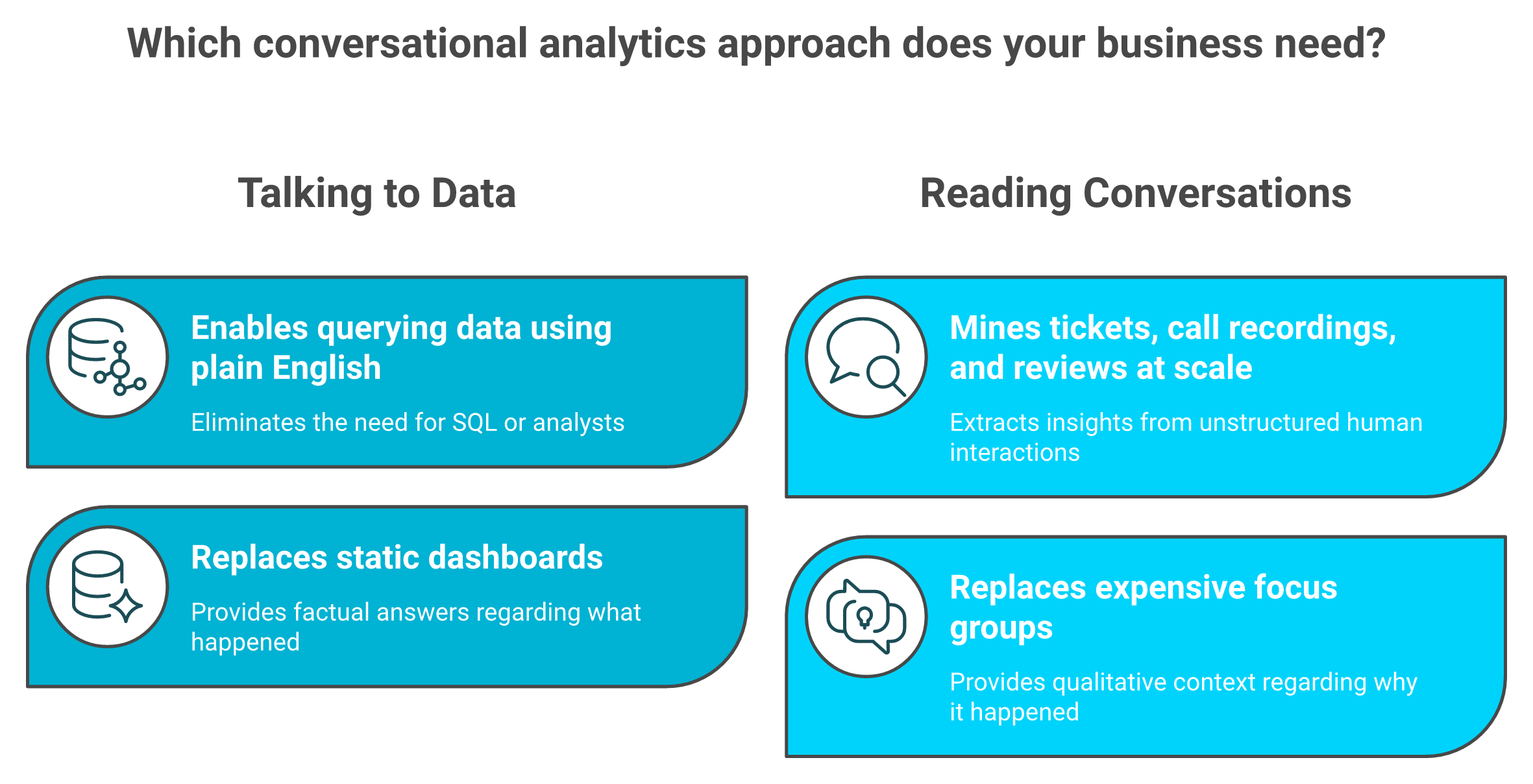
That is the gap the term tries to fill. But "conversational analytics" splits cleanly into two jobs that most articles blur together. Knowing which one you need saves you from buying the wrong tool.
- Talking to your data. You type "what was my blended CAC last month by channel?" and get a reasoned answer, no SQL, no analyst.
- Reading your conversations. You point AI at support tickets, call recordings, and reviews to surface intent and sentiment no human team could process by hand.
🧩 Concept, example, application
Here is the concept in plain terms. The first job replaces the dashboard you stare at. The second job replaces the focus group you can't afford.
Now the example. A marketer reviews maybe five call recordings a week by hand. An AI layer can read 5,000 a day and pull out the pattern no person on your team would ever catch. That is not a faster human. That is a different category of seeing.
The application is where it pays off. The data tells you sales dipped 12% on Tuesday. The conversations tell you it dipped because 40 customers complained about a shipping delay in chat. One without the other leaves you guessing.
⚙️ Why operators need both halves
I might be wrong on the exact split for your store, but from what surfaces when you actually run this, the two halves answer different questions. What happened lives in your numbers. Why it happened usually lives in what your customers said.
This is where the category gets muddy. Most analytics tools bolted a chat box on after the fact. At Luca, we built the reasoning layer first, which is why we say most analytics tools added AI, while Luca is AI. That distinction sets up everything in the rest of this piece, including the dashboard problem we tackle next.
Q2. Why are your dashboards quietly costing you money? [toc=2. The Dashboard Tax]
Dashboards cost you money because they are descriptive, not prescriptive. They show what happened, then leave you to triangulate the why at 11pm on Sunday. The cost is not just the three hours of mining. It is the decisions you delay or get wrong because the chart never tells you to act. Conversational analytics flips this: ask, get reasoning, decide.
📊 The thing every serious operator believes
Most good operators believe a clean dashboard is how you run a tight ship. You build the views, you check them daily, you feel in control. I believed this too for years.
Here is where I think the standard read gets it backwards. A dashboard is a rear-view mirror with great resolution. It shows you the crash in stunning detail, after it happens. If you have ever felt this, you are not alone, and our breakdown of why e-commerce founders are drowning in data goes deeper.
⏰ The three-hour tax nobody prices in
The real cost is time and timing. If you dig through dashboards to answer one question, it takes hours. Asked conversationally, the same answer takes minutes.
That gap is not just convenience. It is the difference between catching a ROAS dip on Tuesday morning and noticing it Friday after you have already burned the budget. Plenty of operators are paying premium prices for dashboards that still leave them stranded.
"The integrations are inconsistent, building with the AI tool Moby is very buggy and crashes more than half the time, and support is largely unresponsive... it has been unable to deliver on the promise to provide any insights or accurate data."
Matt Huttner Triple Whale Trustpilot Verified Review
"Since day one, the data has been inaccurate. Daily revenue totals are wrong, entire order blocks are missing... Triple Whale shows orders from external marketplaces as if they were real conversions."
XTRA FUEL, 1/5 stars Triple Whale Trustpilot Verified Review
🔔 From watching charts to getting pinged
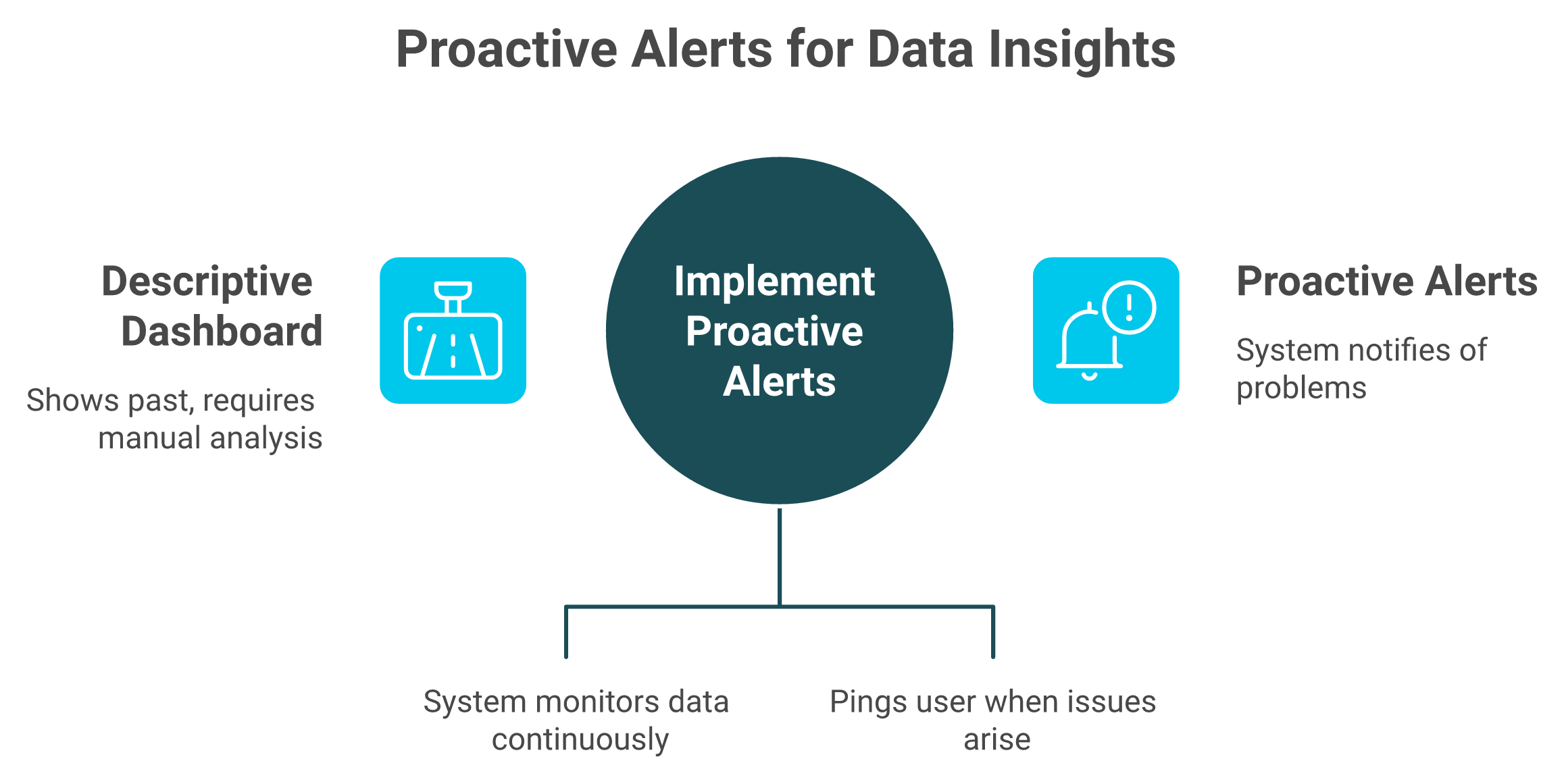
When the numbers you stare at are wrong, the staring itself becomes the liability. A descriptive dashboard is a silent killer of insight because it hands you noise and calls it visibility.
So flip the model. Instead of you checking a cohort chart every morning, the system watches and pings you only when something breaks. We built Luca to do exactly this: it scans your data 24/7 and messages you when ROAS dips or inventory falls below your threshold. Call it cohort-level vigilance without the cohort-level dashboard. You stop being the night watchman and let the machine take the shift.
Q3. How does asking your store data a question in plain English actually work? [toc=3. How It Works]
It works in four moves: connect your sources (Shopify, Meta, Google, Klaviyo, accounting, 3PL), normalize them so "revenue" means one thing everywhere, ask a question in plain English, and get a reasoned answer with the why. The hard part competitors skip is normalization on ingestion, which lets you skip the data-cleanup year and ask on day one.
🧵 The stitching you do by hand right now
Here is the reality for most operators below $10M. Your data lives in eight to twelve tools, and "revenue" means something slightly different in each one.
So you export. You paste into a master sheet. You reconcile Shopify against Stripe against your ad platforms, and by the time the numbers agree, the week is over. That manual triangulation is the tax nobody put in the pitch deck, and it is why a unified e-commerce tech stack matters so much.
🔢 The four moves under the hood
Asking your data a question replaces that grind. Here is the actual mechanism, in plain terms.
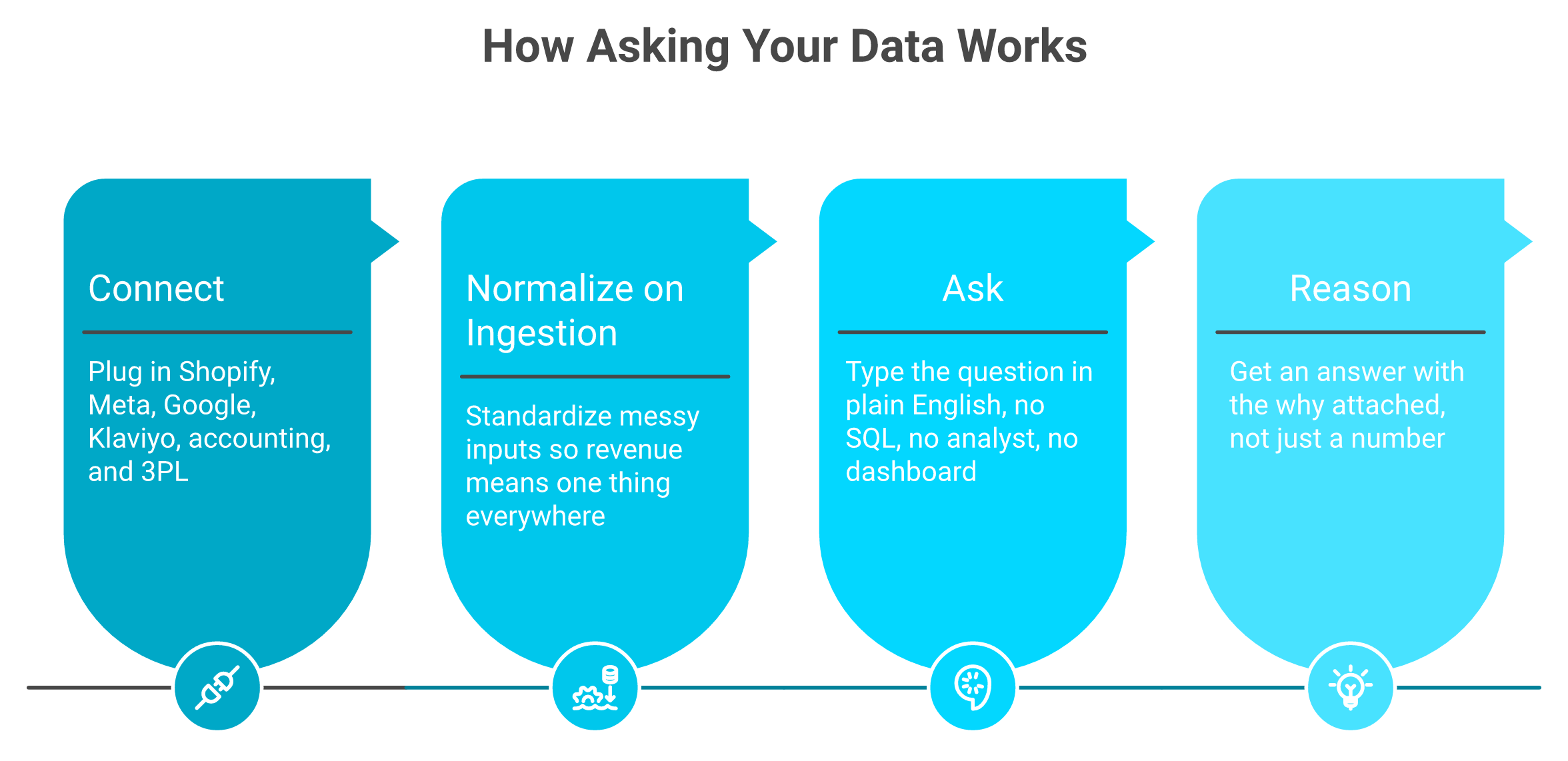
- Connect. Plug in your sources: Shopify, Meta, Google, Klaviyo, accounting, and your 3PL.
- Normalize on ingestion. The system standardizes messy inputs (retail weeks like 554 and 332 that are non-standard across brands) so one definition holds everywhere.
- Ask. You type the question in plain English, no SQL, no analyst, no dashboard to build.
- Reason. You get an answer with the why attached, not just a number.
That second step is the unglamorous moat. Skip normalization and you spend a data-cleanup year before you ask a single useful question.
🧠 Why a trained ecom layer beats generic AI
I could be off here, but from what surfaces when you actually run this, the difference between a general chatbot and an ecom-trained layer is context. ChatGPT is a blank slate every conversation. It knows nothing about your store until you re-explain it, every time.
To be clear about what we built: Luca is an AI layer over a unified data warehouse, not an attribution pixel. It normalizes and standardizes your data on ingestion, so the promise is plain. Plug in. Ask. Act. Treat it like onboarding a sharp new hire, not flipping a switch. Even a brilliant PhD fails on day one if you skip the onboarding, and your data layer is no different.
Q4. What questions should you actually ask, and what do answers look like? [toc=4. Questions Worth Asking]
Ask the questions that move your bank account: which SKUs are truly profitable after returns, shipping, support, and ad spend; what is my real blended CAC; what is driving my margin decline. The best answers come back with reasoning, the root cause, and the influencing levers, not just a number, so you can reallocate budget the same morning.
💰 Ask money questions, not metric questions
Most operators ask their data vanity questions. How much revenue last week? What was my ROAS? Those feel productive and change nothing.
The questions that move your bank account are the ones about true profit. A founder on Shopify Community put the real one plainly: which products are actually profitable after returns, support, and ad spend. That is the question that reorders your whole week, and it is the heart of tracking e-commerce unit economics.
"I run a small ecommerce store and I'm trying to improve conversions... Hard to tell which ones are actually good. Pricing feels expensive long-term. Reviews are mixed and sometimes feel fake."
r/ShopifyeCommerce Reddit Thread
📋 The question bank to run this week
Here is the set I would paste in first. Notice each one demands reasoning, not a single number.
- Which SKUs are truly profitable after returns, shipping, support, and ad spend?
- What is my real blended CAC by channel this month, accounting for attribution?
- What is driving my margin decline, and which lever moves it most?
- Which cohort is quietly churning before I see it in topline revenue?
- If I cut my bottom 10% of SKUs, what happens to revenue versus margin?
A good answer names the root cause and the influencing components, then tells you what to do. A weak tool just hands you another chart. This is exactly where financial management intelligence earns its keep.
⚡ What this speed actually feels like
I might be hedging here, but from sitting beside operators, the speed is the part people underestimate until they feel it. One operator described landing a new customer in South Africa and knowing his bottom-line net profit in five minutes. Before, that meant calling an expert and waiting two days.
That is the gap between profitable on paper and broke in reality. You can hand Luca a standing task ("send me a weekly CAC report with graphs, reasoning, and charts, accounting for Meta and Google spend plus my attribution model"), and it pushes the answer to you. One caveat I hold firmly: the buyer's judgment stays human. The tool surfaces the root cause and the levers. You still make the call.
Q5. How do you turn customer conversations, not just store data, into revenue signals? [toc=5. Mining Conversations]
Your customer conversations are unstructured gold: tickets, chat logs, reviews, and call recordings carry the why behind every metric. Conversational analytics reads thousands daily, surfacing intent shifts, recurring objections, and sentiment swings no human team could process. The payoff is catching a product or messaging problem in the conversations before it shows up as a revenue dip.
💬 The "why" lives in what they say
Your store data tells you what happened. Your customer conversations tell you why it happened. Most operators mine the first and ignore the second.
Think about it in plain terms. A 12% sales dip is a fact. Forty chat messages about a broken size chart is the cause. The numbers point at the wound, but the conversations name the knife.
🔍 Reading 5,000 chats nobody has time for
Here is where scale changes the game. A marketer might review five call recordings a week by hand. Point AI at the same pile, and it reads 5,000 a day, pulling out patterns no person on your team could surface.
That breadth catches things you would never spot manually. In one case, an AI reading competitor data flagged that a rival had inflated prices by 30% just to "discount" them back by 30%. That is competitive intelligence hiding inside conversations and pages, not in your dashboard.
This is also why store owners distrust surface metrics. The signal they want is buried in mixed, messy feedback.
"I run a small ecommerce store... Reviews are mixed and sometimes feel fake. Hard to tell which ones are actually good."
r/ShopifyeCommerce Reddit Thread
⚠️ Where chatbots help and where they irritate
I will take a position the category dodges. Most AI chatbots irritate customers more than they help. I get a little annoyed myself the moment I spot a generic bot.
So use conversation AI where it earns its place. Read and analyze at scale, yes. Front a customer with a bot only if it genuinely contributes and offers an easy, obvious path to a human.
At Luca, we fold conversation-driven signals like CS ticket spikes into the same reasoning layer as your sales data, so a support surge becomes an early warning, not a surprise. My read right now is that discovery itself is shifting toward chat, which makes reading these conversations a competitive edge, not a nice-to-have.
Q6. Which conversational analytics tools fit your ecommerce stack? [toc=6. Tool Comparison]
Pick by the question you keep failing to answer. Luca fits operators who want plain-English reasoning across the whole business. Triple Whale Moby fits marketing-only charting. Drew AI and Oogwai fit lighter Shopify-data Q&A. ChatGPT answers generic questions but cannot see your data. Most scaling operators outgrow the single-domain tools within a quarter.
🧭 Decide by the question that keeps stumping you
Do not pick a tool by its feature list. Pick it by the one question you keep failing to answer cleanly.
If that question lives entirely in marketing, a charting tool works. If it crosses marketing, finance, and operations, you need something that reasons across all three, not a prettier dashboard. Our roundup of ecommerce analytics platforms goes deeper on this.
📊 The honest comparison
We built Luca as an AI layer over a unified data warehouse, not an attribution pixel, which is why it can reason across functions and push goal-driven alerts instead of just plotting charts. ✅ Most analytics tools added AI as a feature. Luca is AI at the core.
⚠️ The native vertical AI trap
Here is a warning worth the section. Bolt-on AI inside a single vertical tool is often weak, and operators feel it fast.
One operator described their inventory system's built-in AI forecasting as "rubbish," hallucinating and "telling fibs" until they shut it down. Triple Whale's own reviews echo the trust problem on the analytics side, which is worth weighing if you are scanning Triple Whale alternatives.
"Since day one, the data has been inaccurate. Daily revenue totals are wrong... Triple Whale shows orders from external marketplaces as if they were real conversions. Completely fake data."
XTRA FUEL, 1/5 stars Triple Whale Trustpilot Verified Review
"The integrations are inconsistent, building with the AI tool Moby is very buggy and crashes more than half the time... unable to deliver any insights or accurate data."
Matt Huttner Triple Whale Trustpilot Verified Review
I could be off on any single tool's latest release, but the pattern holds: depth and accuracy beat a chat box stapled onto a chart.
Q7. Do you still need a third-party tool now that Shopify Sidekick is native? [toc=7. Sidekick vs Third-Party]
Sidekick is free and native, and for single-store Shopify questions it is often enough. It stops where your business does not: it cannot join Klaviyo, Meta, Google, and your accounting into one answer about true profit. The line is simple. If every question lives inside Shopify, stay native. The moment your real questions cross sources, you need a tool that sees across them.
✅ Where Sidekick is genuinely enough
Let me give Shopify its due. Sidekick now ships free in the admin, and for quick questions about your store it works well.
Ask it "what were my top-selling products last quarter?" and it queries your store data and answers. For a standard merchant without analytics staff, that saves real hours. If your whole world lives inside Shopify, you may not need to pay for anything else. We unpacked the launch in our take on Shopify's Winter '26 AI Sidekick.
❌ Where it hits a wall
The wall is integration depth. Sidekick lives inside the Shopify admin and cannot pull Klaviyo, Meta, or your accounting tool into one synthesized answer.
That matters because your real money questions cross sources. "What is my true profit after ad spend and email-driven returns?" needs data Sidekick cannot see. It also struggles with depth, surfacing correlations but not causation, and merchants have flagged it hallucinating technical data with "no setting" to stop it. A unified e-commerce tech stack closes that gap.
🧭 The decision rule
Here is how I would call it, plainly.
- Every question lives inside Shopify, and you want quick answers. ✅ Stay native with Sidekick.
- Your questions cross Klaviyo, Meta, Google, or accounting. ❌ Sidekick can't see across them.
- You need causation, forecasting, or cohort work, not just trend-spotting. ❌ Reach for a dedicated layer.
This is exactly the gap Luca fills: it connects those sources into one model so the cross-source profit question actually gets answered. My honest take is don't pay for what Shopify gives you free. Pay only when your questions outgrow a single store's data.
Q8. Can you trust the answers, and what data are you exposing when you connect your store? [toc=8. Trust and Data Safety]
Trust it for reasoning and triage, not blind execution. It still hallucinates, especially weak native vertical AI, so keep a human as QA on anything that ships to a customer or moves money. On data, know what you authorize. Shopify's connector model defines exactly which scopes a tool can read, so grant the minimum and review access before you plug in.
🎯 The confident answer is the dangerous one
A wrong answer delivered with confidence is the real risk. The tool sounds sure, you act, and the mistake ships.
So set the rule up front. Trust conversational analytics for reasoning and triage. Do not trust it for blind execution on anything customer-facing or cash-moving.
⚠️ Don't let the AI be the QA
Here is the scene that makes the point. A high-end bike brand published a homepage image of a $20,000 bike with the rear derailleur mounted on the front wheel.
A brand of that scale could not catch a basic product error before it went live. The lesson is blunt: don't remove the QA, and never let the AI be the QA. Before you act on a number, validate the first few answers against figures you already trust, and check that the tool reports sample size and significance. This is where process troubleshooting discipline pays off.
🔒 Know what you're handing over
Now the part operators skip. When you connect a tool, you are granting it read access to real business data.
Shopify's connector model spells out exactly which scopes a tool can read, so grant the minimum it needs and review that access before you plug in. We designed Luca around a progressive autonomy model, where it moves from insight, to recommendation, to approval-gated action, so a human stays in the loop on anything that matters. I might be conservative here, but with your customer data and your P&L on the line, least privilege is the only sane default.
Q9. When the data says scale, can you fund it fast enough to matter? [toc=9. Funding the Insight]
When an opportunity is real, the constraint is speed and cost of capital, not insight. Traditional revenue-based financing means an application, a wait, and a fixed rate priced on a snapshot. The alternative is capital that disburses fast, prices to your current performance, and lets you draw small and often, so cash never sits idle eating fees.
💸 The bottleneck is the bank account, not the idea
You spotted a winning campaign. The numbers are clean. Now the only question that matters is whether you can fund it this week, not next month.
Here is my governing claim. Once the opportunity is obvious, capital competes on two things only: how fast it lands, and what it costs. Everything else is noise. This is the heart of our intelligence-capital thesis.
⏰ Three pillars where capital actually wins or loses
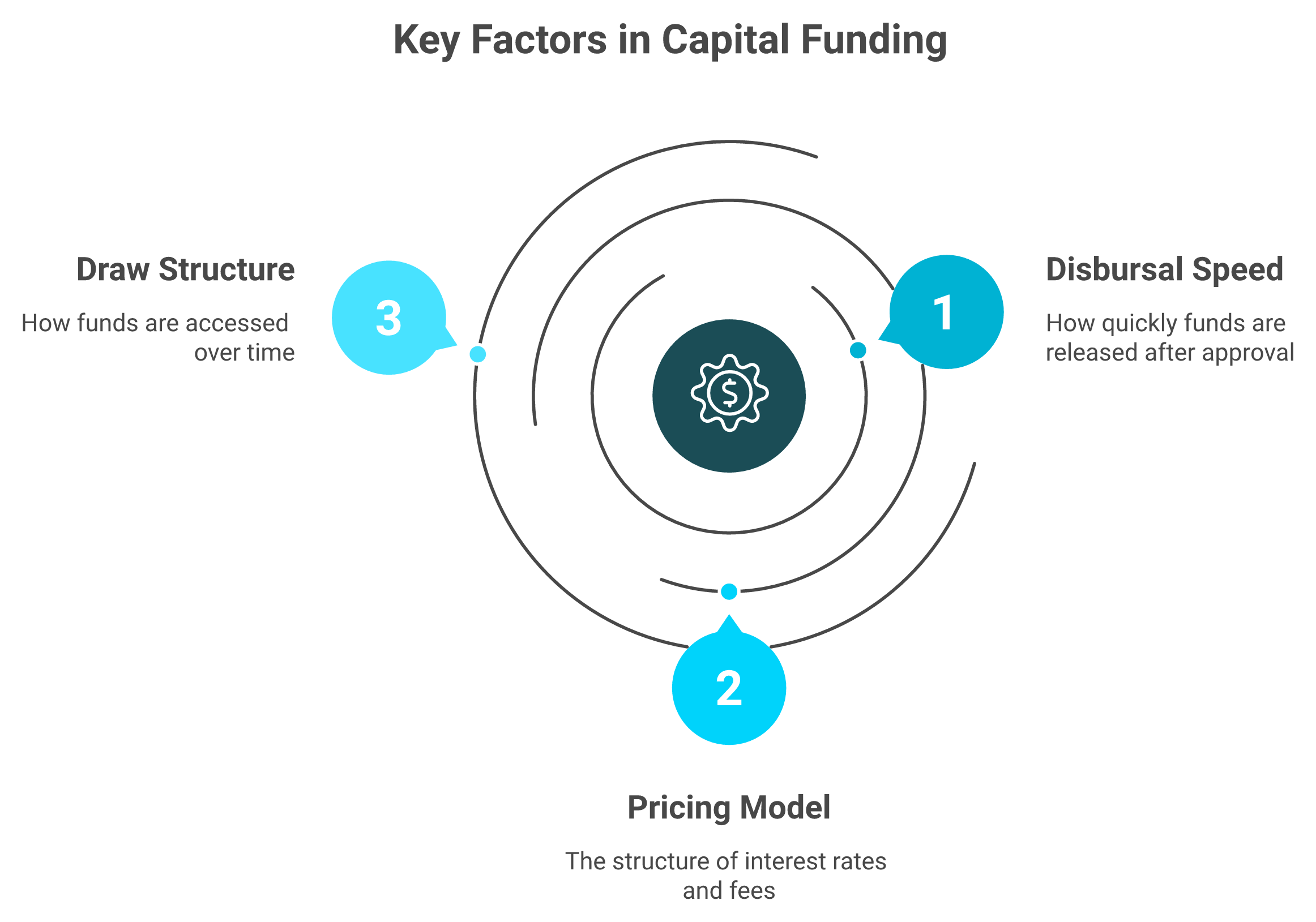
Judge any funding option against these, in order.
- Disbursal speed. Money that arrives in 24 hours beats money that arrives in three weeks, after the ad window has closed.
- Pricing model. A rate locked to a single application snapshot is rigid. Pricing that updates with your current performance is fairer.
- Draw structure. Small, frequent draws keep cash working. One large advance often leaves money sitting idle while you still pay fees on all of it.
The pain shows up loudly in reviews of traditional providers. Operators report rates and repayments changing after they signed, which is why so many scan Wayflyer alternatives.
"After my funds were transferred... my interest rate went up and they changed my repayment plan and increased my repayment amount from the original signed amount. And I have never missed a payment."
Al T Wayflyer Trustpilot Verified Review
"You immediately start paying off the entire balance of the funding even if you have only drawn down a small component. At times you might have paid back more than you have drawn."
Scott Wayflyer Trustpilot Verified Review
💰 Reinvest the surplus, don't park it
Here is the discipline I would hold any operator to. A surplus is fuel, not a trophy.
If you see a $100,000 surplus, don't drop it in checking and call it a win. Put it back into the future soil: inventory, the winning campaign, the next hire. ⚠️ And stop using "we're just reinvesting our profits" as an excuse to avoid tracking net contribution margin (your true profit per order after all variable costs). On the capital side, Luca offers instant, dynamically priced draws with no application, so funding moves at the speed your data does. Money follows speed.
Q10. How do you roll this out without breaking your week? [toc=10. Your 30-Day Rollout]
Roll it out like onboarding a sharp new hire, not flipping a switch. Week one: connect your core sources and validate three answers against numbers you trust. Week two: set outlier alerts so the system pings you instead of you checking. Week three: add conversation mining. Week four: expand scope. Expect an onboarding curve, not instant magic.
🧠 Treat it like a hire, not a switch
The biggest rollout mistake is expecting magic on day one. New AI is like a brilliant PhD on their first morning.
Tell that hire "you're smart, now write this email," and even they will fumble. They need an onboarding process, context, and a few corrections. Your data layer is no different, which is exactly how an AI co-founder for e-commerce is meant to work.
📅 The four-week plan
Here is the sequence I would run, one move per week, so nothing breaks.
- Week 1, connect and validate. Plug in Shopify and your core sources, then ask three questions you already know the answer to. Confirm it matches.
- Week 2, set your sentries. Create outlier alerts (for example, ping me if ROAS drops below 2.0 or inventory falls under 500 units). Now the system watches, not you.
- Week 3, add conversation mining. Point it at tickets and reviews to surface the why behind your metrics.
- Week 4, expand scope. Add standing weekly reports and let it flag patterns across months.
One small move that pays off fast: give it a persona for repetitive internal questions. One operator named theirs "Harry" and told new staff to "ask Harry," cutting roughly 100 questions a day off her plate. This is the kind of leverage agentic AI for ecommerce founders unlocks.
⚽ Where this is heading
My read right now is that ecom analytics is moving the way soccer moved to tiki-taka: quick passes, fast forward attack, robust and powerful. The operators who win the next 18 months will ask and act in the same breath, not stare at charts.
I built Luca to be the teammate you onboard, not the dashboard you buy and forget. ✅ Connect it, correct it for a week, and let it run point. So here is the question I am sitting with, and I would genuinely like your answer: what is the one question about your store you have never been able to answer cleanly? Tell me what you're building, and let's see if it can.