The $1M–$10M E-Commerce Tech Stack: 25+ Tools by Revenue Stage—And the Integration Tax Killing ROI
11
mins read
TL;DR
We organize 25 essential e-commerce software tools into 5 strategic layers (intelligence, commerce, marketing, finance, operations) by revenue stage from $500K to $10M+.
The Integration Tax costs $50K-$150K annually when 8-12 disconnected tools create 15-25 hours/week of manual reconciliation work and 3-5 day decision latency.
We score tools on 5 criteria: cross-functional intelligence, capital integration, setup speed, pricing transparency, and proactive alerts - revealing most platforms add fragmentation, not insights.
At $500K-$2M revenue, build around an intelligence layer first with 8 core tools ($800-$1,200/month) to avoid tool sprawl before complexity justifies specialization.
At $2M-$10M revenue, add 5-7 specialized tools for attribution, support, and inventory - but ensure they integrate with unified intelligence rather than creating competing dashboards.
Only platforms that reason across marketing, finance, and operations while connecting insights to growth capital eliminate the Integration Tax instead of compounding it.
Q1. What Are the 25 Best E-Commerce Software Tools for $1M-$10M Brands in 2026? [toc=25 Best Tools]
Founders at $1M-$10M GMV have organically accumulated 8-12 disconnected tools, creating dashboard chaos and 15-25 hours/week of manual reconciliation. This guide organizes 25 essential e-commerce software tools into 5 strategic layers revealing why the missing piece isn't another tool, but an intelligence hub that connects them all.
Natural language queries, automated reports, Shopify ecosystem integration
Shopify Plus merchants
Included with Shopify Plus ($2,300/month)
⭐⭐⭐⭐ Segment
Customer data unification across 300+ sources, real-time event streaming
$5M+ brands with complex multi-channel data
Free tier - $120/month - Custom
⭐⭐⭐⭐ Looker Studio
800+ data source connections, drag-and-drop dashboards
$500K+ brands needing free visualization
Free
📊 Category 1: Intelligence & Data Hub
The connective tissue that unifies your entire stack
ROI Metric: Unified intelligence eliminates 15-25 hours/week of manual data consolidation, recovering $50K-$150K annually in productivity costs.
1. Luca AI
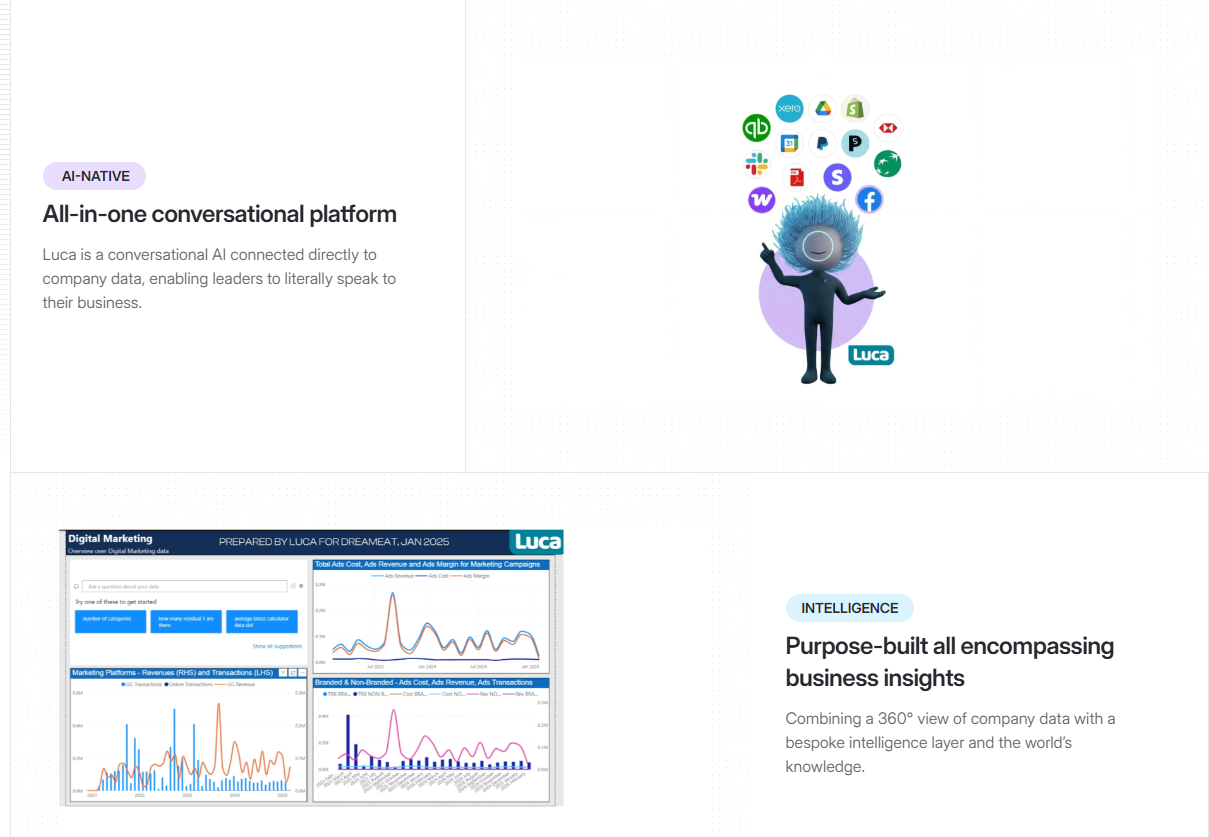
Luca AI's conversational intelligence platform connects 20+ ecommerce integrations into unified business insights, representing the only 5-star e-commerce software tool eliminating the Integration Tax.
✅ Why Did We Choose This Tool?
As the founder of Luca AI, I'll be transparent about why we're positioned first. This isn't favoritism it reflects our unique architecture as the world's first AI Co-Founder that synthesizes intelligence AND capital. While competitors display dashboards, Luca reasons across your entire business and can fund opportunities instantly. This positioning makes sense because every other tool in this guide generates data silos that Luca unifies making it the logical starting point for your stack evaluation.
💡 Solutions Offered
Cross-Functional Reasoning Engine - Connects Shopify + Meta + Google Ads + Stripe + Xero in a single intelligence layer, answering questions like "If I scale this campaign 50%, what happens to my Q4 cash flow?"
Proactive 24/7 Intelligence - Autonomous monitoring surfaces risks (CAC spikes, creative fatigue) and opportunities (underpriced channels) before they impact your P&L
Conversational No-Code Interface - Natural language replaces SQL, dashboards, and analyst dependency ask complex questions, get instant answers
Intelligence-Led Capital - Dynamic pricing based on real-time business health, not 90-day-old snapshots fund opportunities the AI identifies with confidence
Action-Capable System - Doesn't just advise can pause underperforming ads, generate forecasts, and unlock capital in hours
🏢 Notable Clients
🎯 Best For
$1M-$100M e-commerce brands seeking a unified "second brain" that reasons across marketing, finance, and operations while providing instant access to growth capital.
📊 Case Study
The Problem: A €4.2M DTC fashion brand was manually consolidating data from 11 platforms, spending 18 hours weekly on reporting while missing real-time opportunities during their critical Q4 season.
How Luca Helped: Luca unified their Shopify, Meta Ads, Google Ads, Klaviyo, and Xero data into a conversational intelligence layer. When Luca detected a 312% ROAS spike on a specific Meta creative targeting French customers aged 25-34, it proactively alerted the founder and offered €75K instant capital to scale the campaign eliminating the 6-week bank approval process.
The Outcome: The brand scaled the winning campaign immediately, generated €340K incremental revenue in 28 days, and reduced reporting time from 18 hours to 2 hours weekly recovering €31K annually in labor costs.
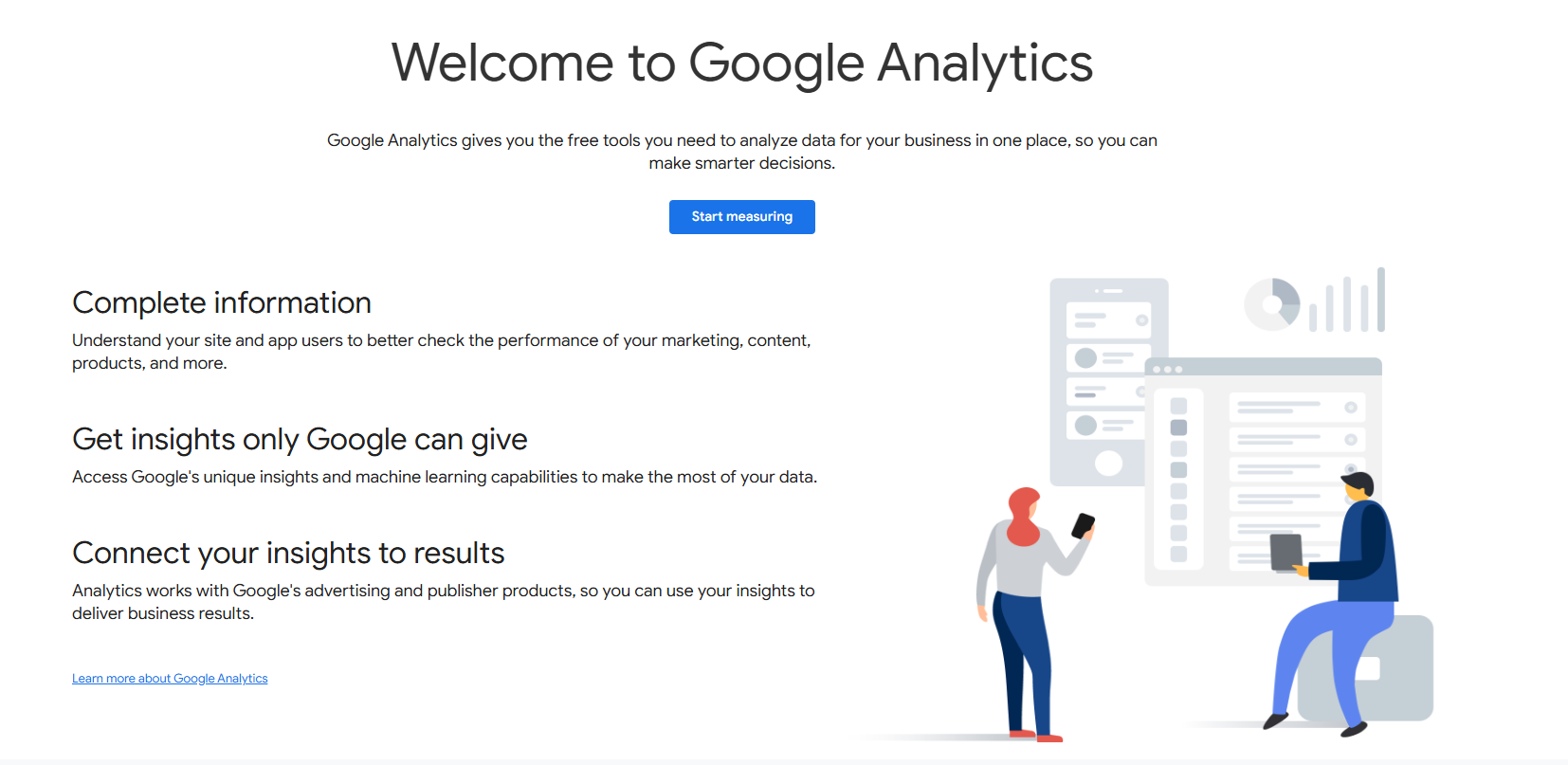
Google Analytics 4 provides free ecommerce data analysis with machine learning insights for marketing and product performance, serving as a foundational analytics tool in every e-commerce software stack.
✅ Why Did We Choose This Tool?
Google Analytics 4 remains the most widely adopted web analytics platform globally, offering free event-based tracking that provides baseline visibility into user behavior. For early-stage brands ($500K-$2M), GA4's zero-cost entry makes it foundational infrastructure though its steep learning curve and siloed data become limitations at scale.
💡 Solutions Offered
Event-Based Tracking - Monitors user interactions across your website and app without relying on outdated session-based models
Audience Segmentation - Creates custom user cohorts based on behavior, demographics, and acquisition source for targeted analysis
E-Commerce Conversion Funnels - Visualizes drop-off points in your checkout process to identify optimization opportunities
Cross-Domain Tracking - Follows users across multiple domains (though implementation can be complex)
Predictive Analytics - Uses Google's machine learning to forecast churn probability and purchase likelihood
🏢 Notable Clients
Used by millions of websites globally, from early-stage startups to Fortune 500 e-commerce brands.
🎯 Best For
$500K-$5M brands needing free, comprehensive website behavior analytics who have technical resources to navigate GA4's complex interface.
😊 Reviews
"What I like best about Google Analytics is the depth of insights it provides into user behavior across the entire customer journey. It allows us to track traffic sources, user engagement, and conversions in one place, helping us make data-driven marketing decisions." — Aman S., Performance Marketing Head,G2 Verified Review
"The downside of GA is its learning curve, especially with GA4. The interface and reporting structure are not very intuitive at first, and finding specific metrics or building custom reports can take time. Some standard reports that were easily accessible in Universal Analytics now require extra configuration." — Kathleen K., Personal Assistant,G2 Verified Review
💰 Pricing
Free (GA4) | Google Analytics 360: $50,000+/year (enterprise)
3. Shopify Sidekick
Shopify Sidekick AI assistant provides conversational store management help for merchants, representing Shopify's native intelligence layer within the ecommerce business tools ecosystem.
✅ Why Did We Choose This Tool?
Shopify Sidekick represents Shopify's attempt to bring conversational AI directly into the merchant admin experience. For brands already on Shopify Plus, Sidekick offers zero incremental cost and native integration though its capabilities remain limited compared to standalone intelligence platforms.
💡 Solutions Offered
Natural Language Store Queries - Ask questions about orders, products, and customers using conversational prompts
Automated Report Generation - Creates basic sales and performance reports through AI-driven summaries
Admin Task Automation - Assists with creating discount codes, editing product descriptions, and managing inventory
Shopify Documentation Access - Quickly surfaces help articles and setup guides through conversational search
Native Ecosystem Integration - Works seamlessly within Shopify admin without third-party app installation
🏢 Notable Clients
Available exclusively to Shopify Plus merchants across all industries.
🎯 Best For
Shopify Plus merchants ($2M-$20M) wanting AI assistance for administrative tasks without leaving the Shopify ecosystem.
😊 Reviews
"Isn't able to do anything complex, I've asked 'can you take 10% off the prices of this collection', it says it did but nothing happens, I've asked for inventory value, gives me an incorrect figure." — u/Accomplished_Grass32,Reddit Thread
"Sidekick straight up lied to me at one point. I spent AGES following its instructions before eventually talking to a real agent who told me what I was trying to do wasn't possible." — u/Conscious_Ad_9267,Reddit Thread
💰 Pricing
Included with Shopify Plus ($2,300/month base subscription)
4. Segment
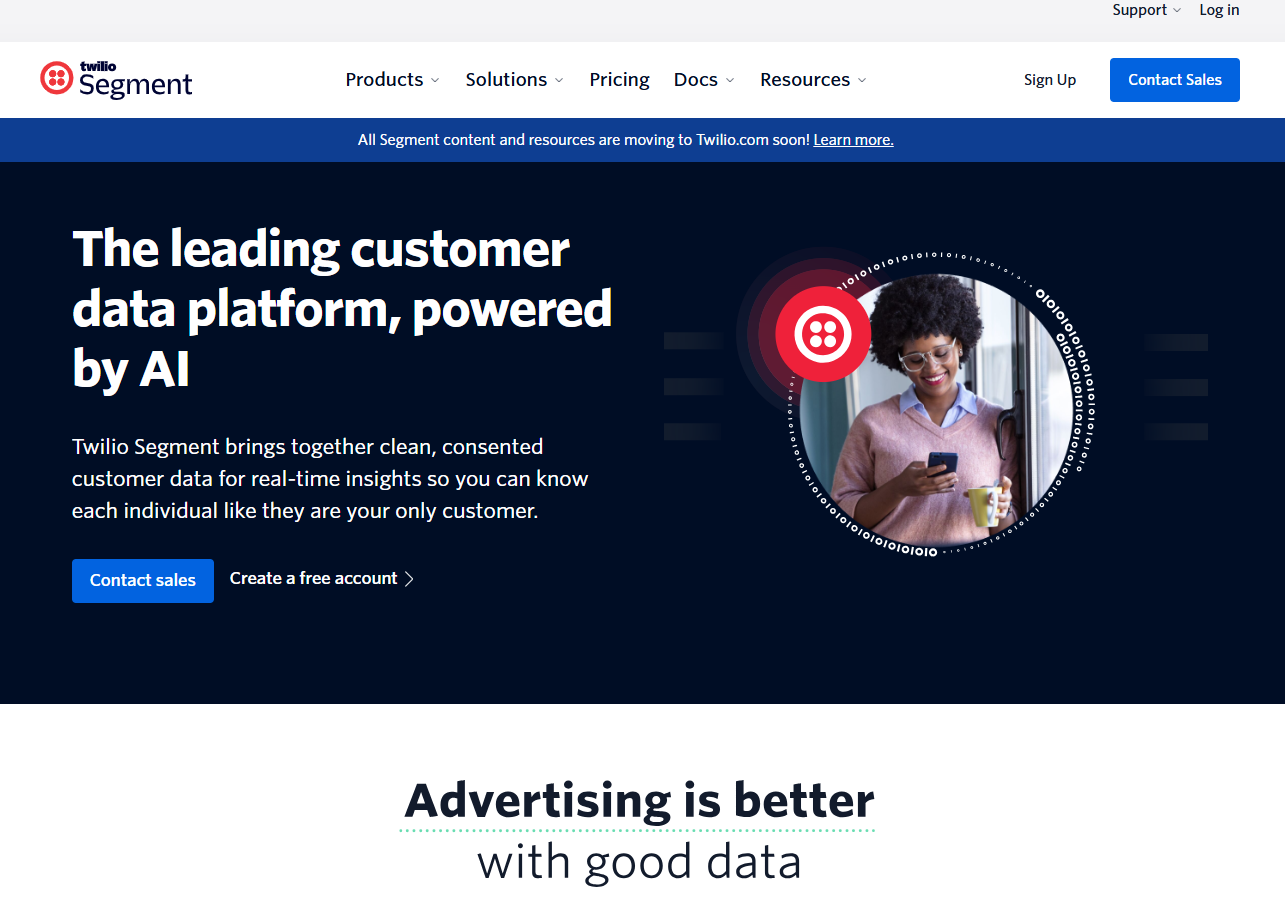
Twilio Segment's AI-powered customer data platform unifies consented data for real-time ecommerce insights, representing enterprise data infrastructure in advanced e-commerce software stacks.
✅ Why Did We Choose This Tool?
Segment pioneered the Customer Data Platform (CDP) category, offering enterprise-grade data infrastructure that unifies customer information across 300+ sources. For $5M+ brands with complex omnichannel operations, Segment provides the "data plumbing" that other tools rely on though it requires significant technical resources to implement and doesn't provide insights, only infrastructure.
💡 Solutions Offered
Single Customer View - Unifies customer data from web, mobile, email, CRM, and payment platforms into one coherent profile
Real-Time Event Streaming - Captures and routes customer interactions instantly across your entire tech stack
300+ Pre-Built Integrations - Connects to major e-commerce, marketing, and analytics platforms with minimal custom development
Audience Segmentation & Activation - Creates behavioral cohorts and syncs them to ad platforms for targeted campaigns
Data Governance & Privacy Controls - Manages consent, PII handling, and regulatory compliance (GDPR, CCPA) at the infrastructure level
🏢 Notable Clients
Powers customer data infrastructure for Intuit, IBM, Levi's, and thousands of growth-stage e-commerce brands.
🎯 Best For
$5M-$50M+ brands with dedicated engineering resources who need enterprise-grade customer data unification across complex multi-channel operations.
💰 Pricing
Free tier available (up to 1,000 monthly tracked users) | Business: $120/month | Enterprise: Custom pricing (typically $10K-$100K+/year)
5. Looker Studio
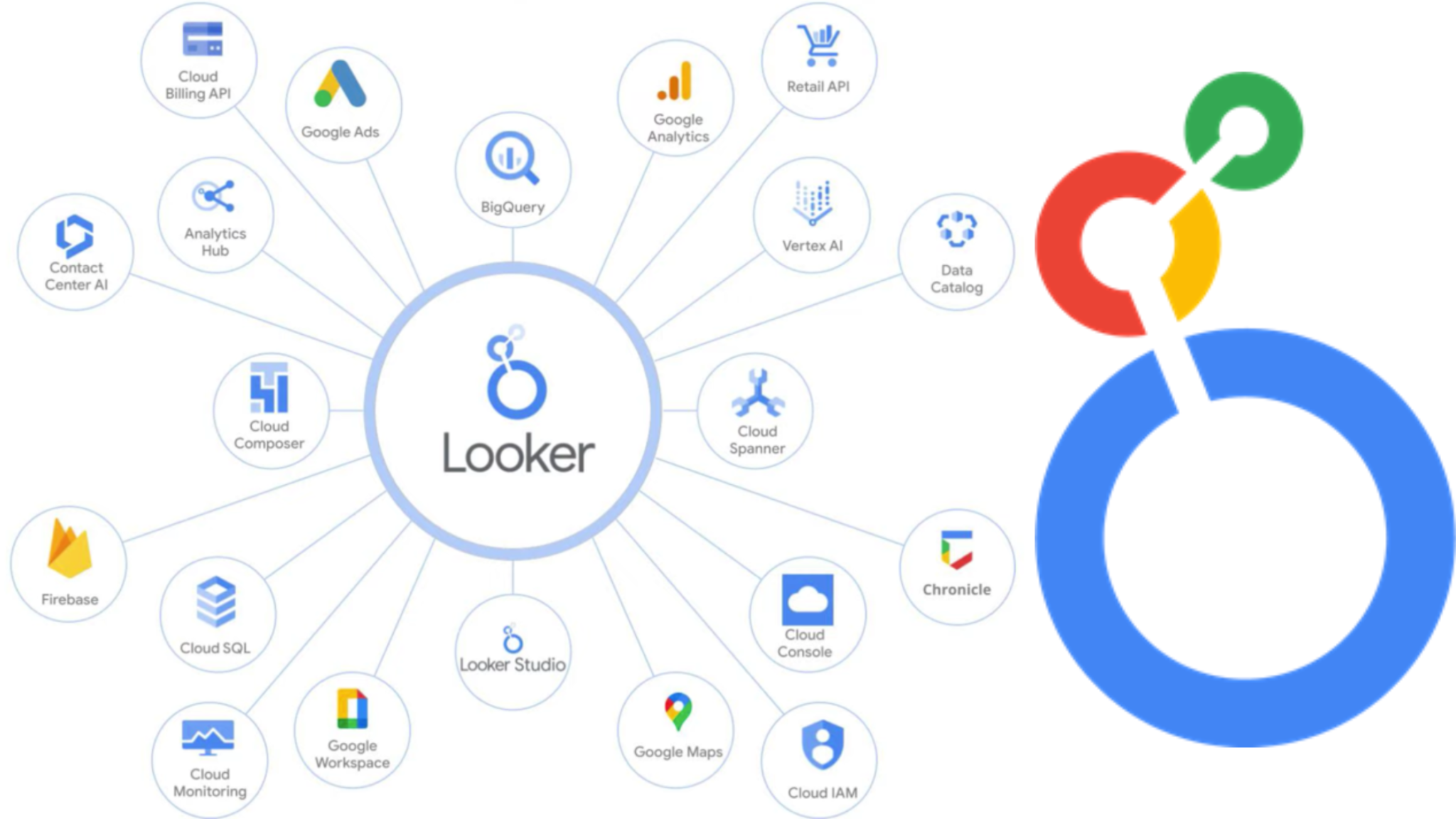
Google Looker Studio connects BigQuery, Google Ads, Analytics, and Cloud tools into a unified data visualization ecosystem, representing enterprise-grade ecommerce analytics infrastructure.
✅ Why Did We Choose This Tool?
Google's Looker Studio (formerly Data Studio) offers the most accessible free dashboard builder for e-commerce brands, connecting to 800+ data sources with drag-and-drop simplicity. While it lacks proactive intelligence or advanced analytics, its zero cost and flexible visualization make it a staple for $500K-$10M brands building custom reporting without expensive BI tools.
💡 Solutions Offered
800+ Data Source Connections - Integrates with Google ecosystem (Ads, Analytics, Sheets) plus Shopify, Facebook Ads, and third-party connectors
Drag-and-Drop Dashboard Builder - Creates custom visualizations without coding knowledge using intuitive UI
Shareable Reports with Access Controls - Distributes dashboards to team members, investors, or agencies with granular permission settings
Real-Time Data Refresh - Displays live metrics from connected sources without manual updates
Custom Calculated Fields - Builds formulas and metrics beyond what source platforms provide natively
🏢 Notable Clients
Used by millions of small-to-midsize e-commerce businesses globally, from Shopify stores to multi-channel retailers.
🎯 Best For
$500K-$10M+ brands needing free, flexible custom dashboards who don't mind manual configuration and passive reporting.
💰 Pricing
Free (unlimited reports and dashboards)
Category 2: Commerce & Payments
Your storefront and transaction foundation
💸 ROI Metric: Optimized checkout and payment flows reduce cart abandonment by 10-20%, recovering €50K-€200K annually for €2M brands.
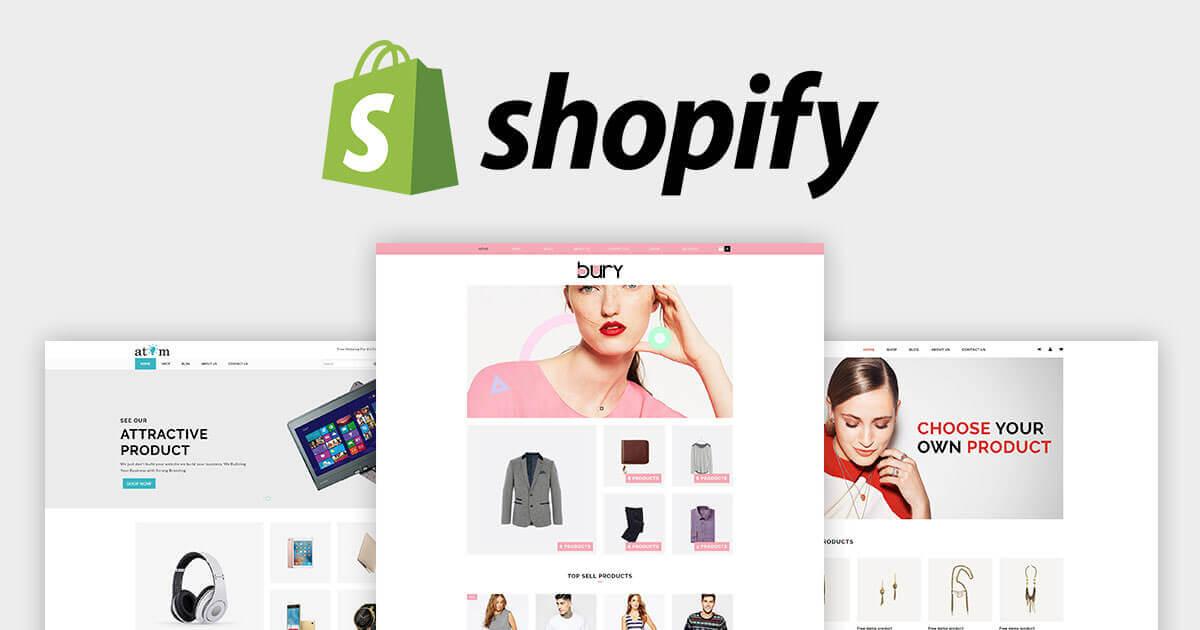
Shopify storefront templates display versatile ecommerce product pages, representing the foundational commerce platform in every $500K-$10M+ e-commerce software tools stack.
✅ Why Did We Choose This Tool?
Shopify dominates the $500K-$100M DTC commerce landscape as the most comprehensive all-in-one platform, powering over 4.8 million stores globally. Its combination of hosted infrastructure, massive app ecosystem, and scalable pricing makes it the default choice for e-commerce brands though its closed ecosystem can create data silos that require intelligence layers like Luca AI to synthesize.
💡 Solutions Offered
Hosted Storefront with Global CDN - Provides secure, fast-loading e-commerce infrastructure without managing servers or security updates
8,000+ App Marketplace - Extends functionality for marketing, analytics, fulfillment, and customer service through third-party integrations
Multi-Channel Selling - Unifies sales across web storefront, social commerce (Instagram, Facebook, TikTok), retail POS, and marketplaces
"Shopify has built-in reports you can export, but on the lower-tier plans you only get the basics and you'll need to log in and pull them manually. Even on higher plans, Shopify doesn't really offer automated scheduled exports by itself." — Verified User,Reddit Thread
"I run a fashion brand on Shopify and built an analytics app after getting frustrated with how hard it is to understand product-level performance, especially once returns and stock risk come into play." — Verified User,Reddit Thread
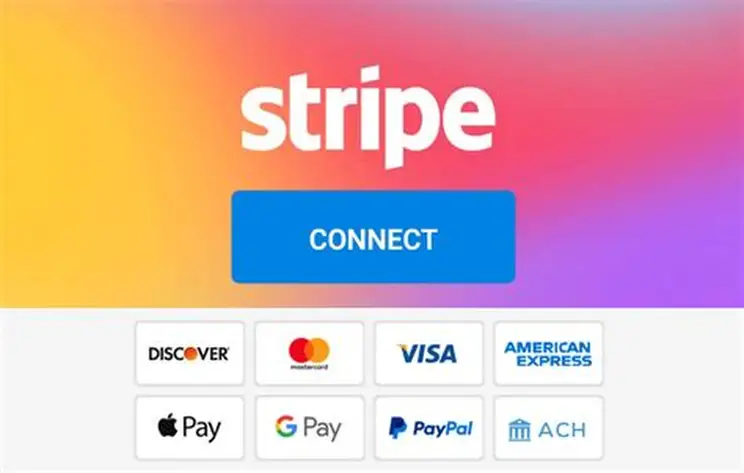
Stripe Connect enables ecommerce payment processing across Visa, Mastercard, PayPal, Apple Pay, and Google Pay, serving as foundational payments infrastructure in the e-commerce tools stack.
✅ Why Did We Choose This Tool?
Stripe built the developer-friendly payment infrastructure powering Amazon, Shopify, and millions of online businesses globally. For brands needing flexibility beyond Shopify Payments multi-currency support, complex subscription models, or custom checkout flows Stripe's robust APIs and global reach make it the premium payment processor, though it requires more technical implementation than native Shopify solutions.
💡 Solutions Offered
Global Payment Acceptance - Processes transactions in 135+ currencies with localized payment methods (Alipay, iDEAL, etc.)
Subscription Billing & Invoicing - Manages recurring revenue with flexible billing cycles, proration, and dunning management
Fraud Detection & Compliance - Stripe Radar uses machine learning to block fraudulent transactions while maintaining legitimate approval rates
Developer-Friendly APIs - Provides extensive documentation and SDKs for custom checkout, mobile payments, and integration flexibility
Revenue Recognition & Financial Reporting - Automates accrual accounting and revenue reporting for subscription businesses
🏢 Notable Clients
Powers payment infrastructure for Amazon, Shopify, Salesforce, Zoom, and millions of e-commerce brands.
🎯 Best For
$500K-$100M+ brands needing flexible, developer-friendly payment processing with global reach and custom integration capabilities.
💰 Pricing
2.9% + $0.30 per transaction (standard) | Volume discounts available for $1M+ monthly processing
8. Recharge
ReCharge simplifies subscription selling on Shopify stores with recurring billing management, a specialized commerce tool for ecommerce businesses building predictable revenue streams.
✅ Why Did We Choose This Tool?
Recharge dominates the Shopify subscription commerce ecosystem, powering over 20,000 subscription brands and processing billions in recurring revenue. For $1M+ brands where subscriptions represent core revenue not just an add-on Recharge's churn reduction tools, flexible billing options, and subscriber analytics justify the premium pricing, though brands with minimal subscription revenue may find it overkill.
💡 Solutions Offered
Subscription Checkout & Customer Portal - Provides branded subscription experiences with flexible skip, pause, swap, and cancellation options
Churn Reduction Toolkit - Deploys retention flows (pause instead of cancel, discount offers) to reduce subscriber attrition
Subscriber LTV & Cohort Analytics - Tracks retention rates, LTV by acquisition source, and churn patterns for data-driven optimization
Flexible Billing Models - Supports prepaid, pay-as-you-go, and subscription boxes with custom delivery frequencies
Seamless Shopify Integration - Syncs subscriber data, inventory, and orders natively with Shopify for unified operations
🏢 Notable Clients
Powers subscription models for Native, Billie, Hubble, and 20,000+ DTC brands.
🎯 Best For
$1M-$20M+ brands where subscriptions represent 20%+ of revenue and retention optimization is mission-critical.
📈 ROI Metric: Optimized marketing attribution and email/SMS automation can increase repeat purchase rate by 20-35%, adding €100K-€500K annual revenue for €2M brands.
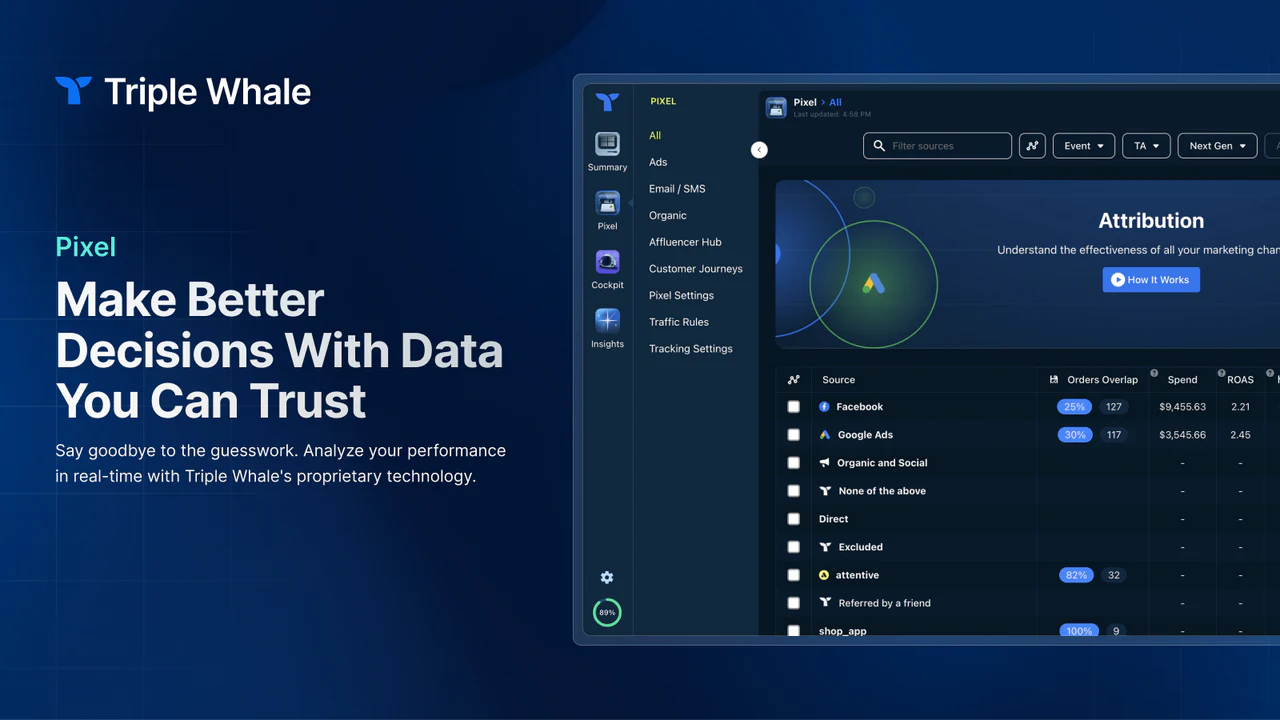
Triple Whale's Pixel dashboard displays multi-source attribution with ROAS tracking across Facebook, Google Ads, and organic channels as a leading ecommerce analytics software tool.
Triple Whale positioned itself as the "modern analytics stack" for DTC brands, offering multi-touch attribution and centralized metrics across Meta, Google Ads, and Shopify. For €1M-€20M brands drowning in disconnected dashboards, Triple Whale's unified interface and real-time Slack alerts provided a compelling alternative to logging into 5+ platforms daily though its marketing-only focus means finance and operations teams still operate blind.
✅ Why Did We Choose This Tool?
Triple Whale consolidates ad spend, ROAS, and customer acquisition data from multiple channels into a single dashboard with mobile and Slack alerts. Its pixel-based attribution model attempts to bridge the iOS 14 tracking gap, while pre-built templates reduce setup friction. However, persistent integration issues, data discrepancies with native platforms, and deteriorating customer support limit its reliability for mission-critical decisions.
💼 Solutions Offered
Multi-touch attribution modeling across Meta, Google, TikTok, and Shopify
Real-time profit and loss (P&L) tracking with COGS integration
Cohort analysis and customer lifetime value (LTV) calculations
Slack and mobile push notifications for performance anomalies
Creative analytics to identify winning ad assets
🏢 Notable Clients
Used by thousands of DTC brands across apparel, supplements, and consumer goods.
🎯 Best For
€1M-€20M brands spending €50K+/month on paid ads who need centralized attribution but lack finance integration requirements.
⚠️ Reviews
"Our experience with Triple Whale has been extremely frustrating and almost categorically terrible. The integrations are inconsistent, building with the AI tool Moby is very buggy and crashes more than half the time, and support is largely unresponsive and not helpful." — Matt Huttner, US,TrustPilot Verified Review
"I'm on starter plan which is €149 USD, and they kept billing me €459 USD instead for months even though I reached out to them multiple times, and they didn't want to refund. Misleading service and horrible customer support." — Mohamed Bahhar, FR,TrustPilot Verified Review
💰 Pricing
€129-€459/month based on monthly ad spend
10. Klaviyo
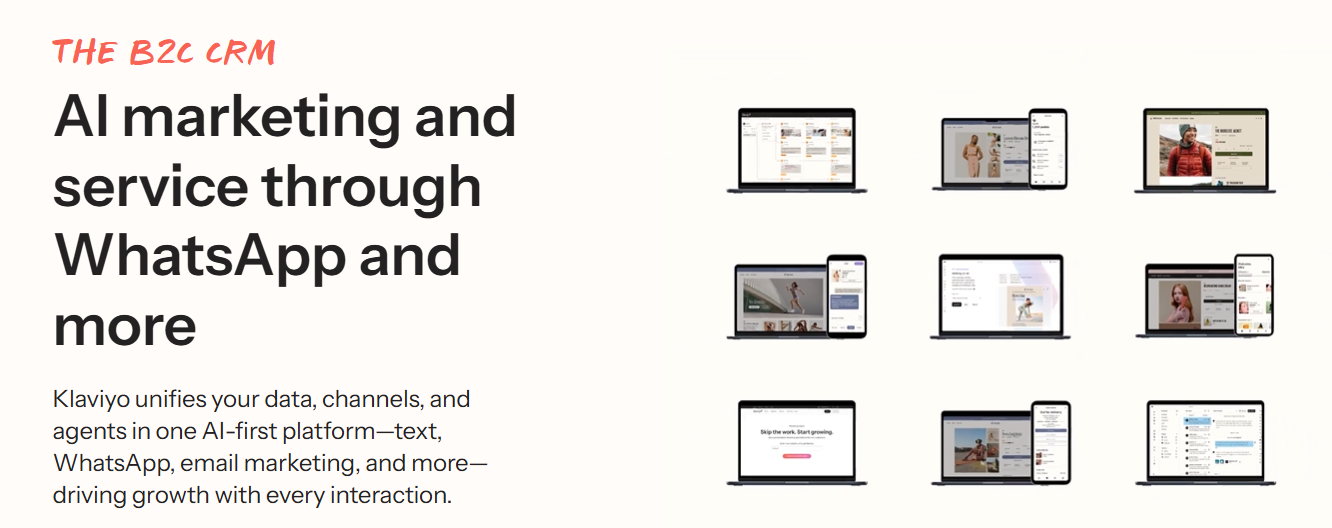
Klaviyo's AI marketing platform unifies email, SMS, and WhatsApp channels for ecommerce retention, serving as a core e-commerce software tool for behavioral segmentation and automation.
Triple Whale positioned itself as the "modern analytics stack" for DTC brands, offering multi-touch attribution and centralized metrics across Meta, Google Ads, and Shopify. For €1M-€20M brands drowning in disconnected dashboards, Triple Whale's unified interface and real-time Slack alerts provided a compelling alternative to logging into 5+ platforms daily though its marketing-only focus means finance and operations teams still operate blind.
✅ Why Did We Choose This Tool?
Triple Whale consolidates ad spend, ROAS, and customer acquisition data from multiple channels into a single dashboard with mobile and Slack alerts. Its pixel-based attribution model attempts to bridge the iOS 14 tracking gap, while pre-built templates reduce setup friction. However, persistent integration issues, data discrepancies with native platforms, and deteriorating customer support limit its reliability for mission-critical decisions.
💼 Solutions Offered
Multi-touch attribution modeling across Meta, Google, TikTok, and Shopify
Real-time profit and loss (P&L) tracking with COGS integration
Cohort analysis and customer lifetime value (LTV) calculations
Slack and mobile push notifications for performance anomalies
Creative analytics to identify winning ad assets
🏢 Notable Clients
Used by thousands of DTC brands across apparel, supplements, and consumer goods.
🎯 Best For
€1M-€20M brands spending €50K+/month on paid ads who need centralized attribution but lack finance integration requirements.
⚠️ Reviews
"Our experience with Triple Whale has been extremely frustrating and almost categorically terrible. The integrations are inconsistent, building with the AI tool Moby is very buggy and crashes more than half the time, and support is largely unresponsive and not helpful." — Matt Huttner, US,TrustPilot Verified Review
"I'm on starter plan which is €149 USD, and they kept billing me €459 USD instead for months even though I reached out to them multiple times, and they didn't want to refund. Misleading service and horrible customer support." — Mohamed Bahhar, FR,TrustPilot Verified Review
💰 Pricing
€129-€459/month based on monthly ad spend
11. Hyros
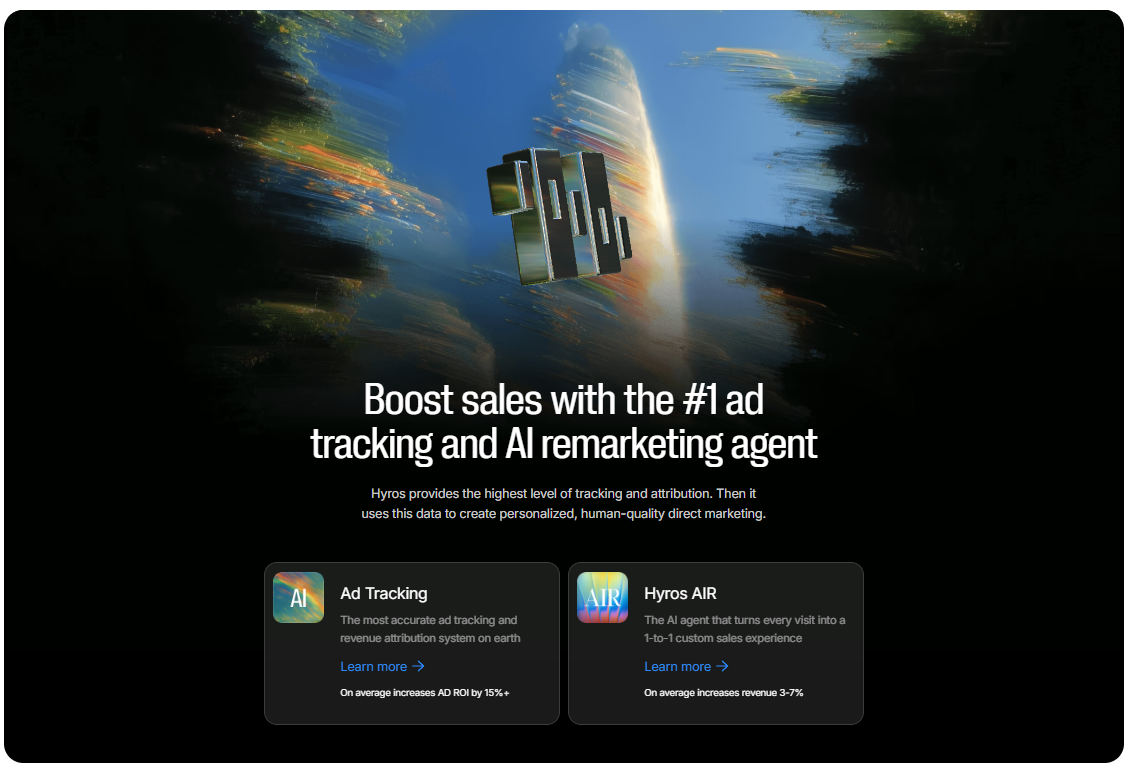
Hyros offers AI-powered ad tracking and remarketing with 15%+ ad ROI improvement, positioned as a premium multi-touch attribution tool for $5M+ ecommerce businesses with complex sales cycles.
Hyros built its reputation on AI-powered, multi-touch attribution that claims to outperform Facebook and Google's native reporting by tracking users across devices, calls, and even offline conversions. For €5M+ brands running complex omnichannel campaigns webinars, phone sales, affiliate marketing Hyros promises "true" attribution that accounts for every touchpoint, though the steep learning curve, high pricing, and persistent tracking bugs make it overkill for most sub-€5M brands.
✅ Why Did We Choose This Tool?
Hyros uses first-party tracking pixels, server-side integration, and AI modeling to attribute sales across Facebook, Google, YouTube, TikTok, email, and even phone calls. Its strength lies in complex, high-ticket funnels where traditional pixel tracking fails. However, frequent tracking outages, expensive implementation, and contradictory data have driven users to free alternatives like PostHog.
💼 Solutions Offered
Call tracking integration with attribution back to ad source
Print ad and offline conversion tracking
AI-powered attribution modeling across 20+ traffic sources
Server-side tracking to bypass iOS 14 limitations
CAPI (Conversions API) integration for Facebook and TikTok
🏢 Notable Clients
Used by high-ticket coaches, course creators, and supplement brands running multi-channel funnels.
🎯 Best For
€5M-€100M+ brands with complex attribution needs across webinars, calls, and multiple ad platforms.
⚠️ Reviews
"I've had multiple instances where Hyros randomly drops all tracking data always at the worst possible time, usually right as we're scaling ads. It completely disrupts our reporting and makes decision-making impossible." — Sam Kwak, US,TrustPilot Verified Review
"Good at first but started going down hill fast. I've been a Hyros user for almost 4 years now. But in the last 6 months, I had 4-5 major issues affecting our revenue: ad spend not tracking properly, calls stopped tracking, and then calls started showing up as sales." — Verified User,TrustPilot Verified Review
💰 Pricing
€500-€1,500+/month
12. Polar Analytics
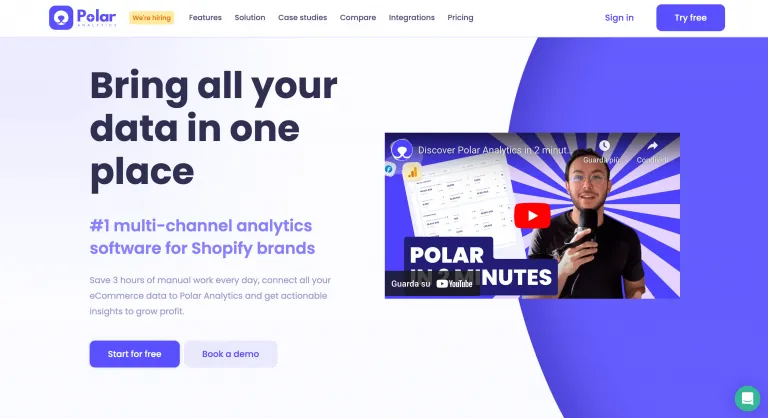
Polar Analytics unifies multi-channel ecommerce data for Shopify brands with actionable profit insights, representing a pre-built dashboard tool in the $2M-$20M e-commerce software stack.
Polar Analytics offers automated, pre-built dashboards specifically designed for e-commerce brands, connecting Shopify, ad platforms, and email tools into a unified reporting layer. For €2M-€20M brands frustrated by manual spreadsheet reporting, Polar's clean UI and cohort analysis provide professional-grade analytics without hiring a data team though it remains a passive reporting tool that displays metrics without proactive insights or action capabilities.
✅ Why Did We Choose This Tool?
Polar's pre-configured dashboards eliminate the setup complexity of tools like Looker Studio, offering instant visibility into revenue, customer acquisition cost (CAC), and cohort retention. Its Shopify-native integration and marketing attribution make it ideal for growth teams needing quick answers. However, slow support response times, integration delays, and limited mobile functionality frustrate users.
💼 Solutions Offered
Pre-built e-commerce dashboards for revenue, marketing, and retention
Cohort analysis and customer lifetime value (LTV) tracking
Multi-store and multi-currency support
Automated daily/weekly email reports
Slack integration for performance alerts
🏢 Notable Clients
Used by mid-market DTC brands across fashion, beauty, and consumer goods.
🎯 Best For
€2M-€20M brands needing automated marketing dashboards without the complexity of enterprise BI tools.
⚠️ Reviews
"Not impressed compared to price point. The pricing communicated when installing the app via Shopify was completely different from the one provided by sales after the installation, which was much higher. When you pay that amount of money, you expect a flawless product, which isn't the case." — Ben S., Director of Commercial Operations,TrustPilot Verified Review
"Shortly after onboarding we were assigned an account manager. About a month later, she was laid off and we were never assigned a new account manager. We've been attempting to get a handful of other data sources connected and the process has been long and drawn out because it can take up to a week to hear back from the Polar team." — Juliette P., CEO,G2 Verified Review
💰 Pricing
€250-€1,000+/month
13. Surfer SEO
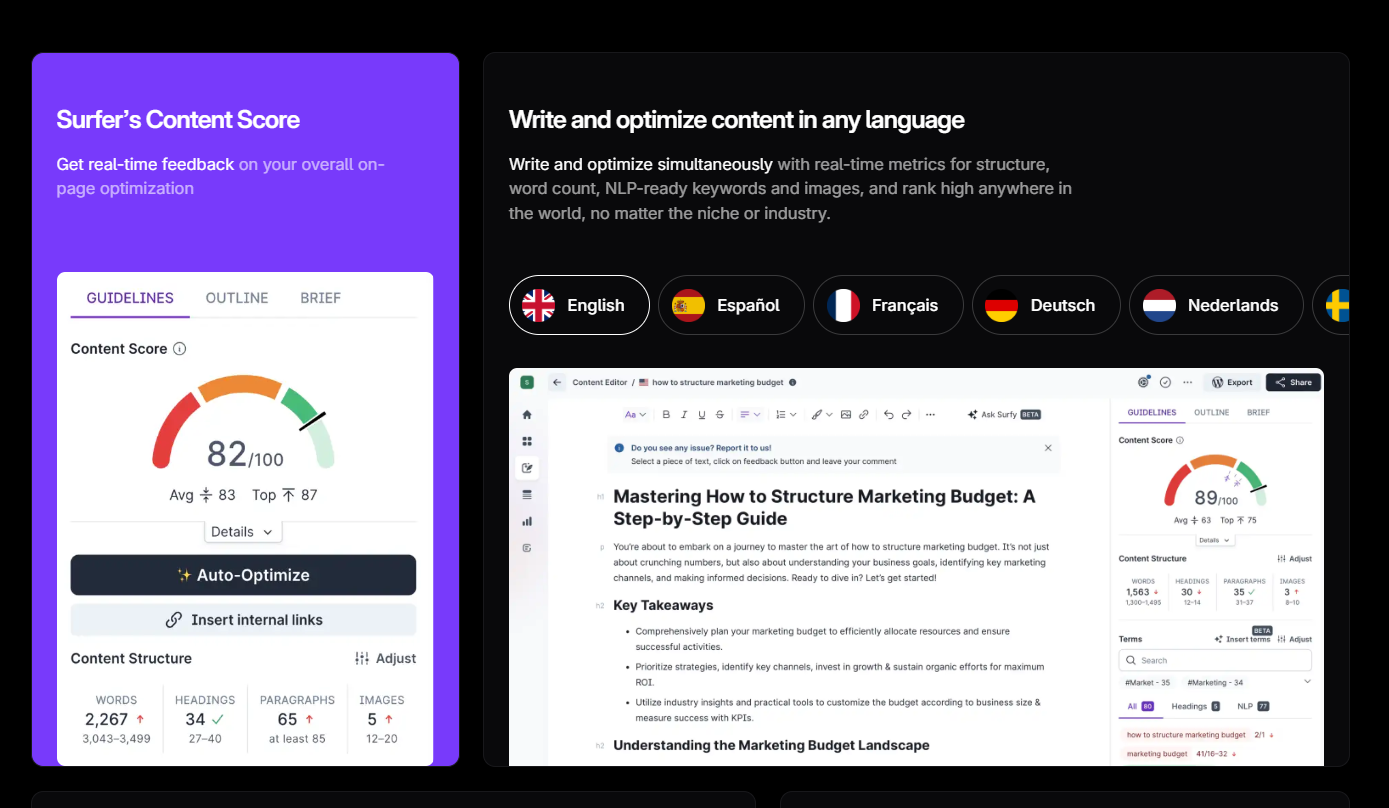
Surfer SEO's content editor provides real-time scoring, keyword optimization, and multilingual support for ecommerce brands investing in organic traffic as a marketing growth tool.
Surfer SEO pioneered AI-powered content optimization, analyzing top-ranking pages to provide keyword density, structure, and readability recommendations. For €500K+ brands investing in organic traffic, Surfer's content editor and SERP analyzer help writers create SEO-optimized articles without guesswork though its narrow SEO focus means it doesn't connect to broader marketing or sales data.
✅ Why Did We Choose This Tool?
Surfer's content editor provides real-time SEO scoring as you write, recommending keywords, headings, and content length based on top-ranking competitors. Its keyword research tool and SERP analyzer reveal content gaps and opportunities. However, generic AI outputs, credit-burning pricing, and lack of integration with marketing platforms limit its strategic value.
💼 Solutions Offered
Real-time content editor with SEO scoring
Keyword research and clustering
SERP analyzer to reverse-engineer top-ranking pages
AI content generation (Surfer AI)
Chrome extension for on-page optimization
🏢 Notable Clients
Used by content marketers, agencies, and e-commerce brands prioritizing organic traffic.
🎯 Best For
€500K-€10M+ brands investing in organic content who need SEO optimization without deeper marketing integration.
⚠️ Reviews
"Not worth the money they are asking. There are many other options now that are cheaper, especially using AI tools. They went overboard with this pricing." — Paul C., GB,TrustPilot Verified Review
"Surfer AI has gotten worse to the point that the tool is unusable. Think the lamest, most generic phrases of GPT-4 strung together. Before Nov 2023, Surfer AI was acceptable to good. Now, I delete 90% of the content it produces." — Verified User,G2 Verified Review
💰 Pricing
€69-€239/month
14. Meta Ads Manager
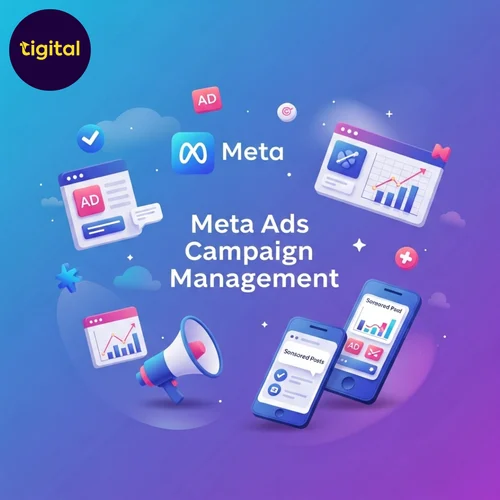
Meta Ads Manager campaign types including traffic, engagement, and catalog sales represent the free but essential
Meta Ads Manager remains the unavoidable platform for Facebook and Instagram advertising, powering the majority of DTC customer acquisition. Its campaign management, audience targeting, and Creative Hub provide the infrastructure for social commerce though attribution conflicts with Shopify/GA4, opaque algorithm changes, and zero phone support frustrate even sophisticated advertisers.
✅ Why Did We Choose This Tool?
Meta Ads Manager offers unmatched scale for reaching 3+ billion users across Facebook, Instagram, Messenger, and WhatsApp. Its Lookalike Audiences, dynamic product ads, and Advantage+ campaigns leverage machine learning for automated optimization. However, frequent platform bugs, attribution discrepancies, and impossible-to-reach support make it a necessary evil rather than a loved tool.
💼 Solutions Offered
Campaign creation and management across Facebook and Instagram
Audience targeting based on demographics, interests, and behaviors
Lookalike Audiences to scale winning customer profiles
Dynamic product ads for catalog-based retargeting
Advantage+ shopping campaigns for automated optimization
🏢 Notable Clients
Used by virtually every e-commerce brand advertising on social media.
🎯 Best For
All stages (€500K-€100M+) free platform required for Facebook/Instagram ads.
⚠️ Reviews
"Bots creating empty Shopify accounts is common and usually targets email systems, not your store. CAPTCHA alone won't stop it. The reason Shopify support is useless here and why your Captcha isn't working is because these bots are hitting the API endpoints directly." — Verified User,Reddit Thread
"Triple Whale shows orders from external marketplaces as if they were real conversions even though these orders never go through our Shopify store and could not possibly be tracked. Completely fake data." — Lars Volkers, TH,TrustPilot Verified Review
💰 Pricing
Free (ad spend separate)
15. Attentive
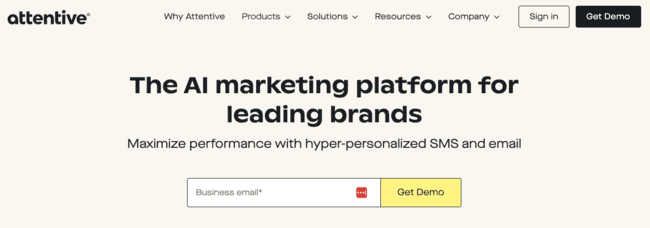
Attentive's enterprise SMS marketing platform enables hyper-personalized messaging for ecommerce brands, a key customer engagement tool in the $5M+ e-commerce tech stack.
Attentive dominates enterprise SMS marketing, powering two-way conversational messaging, compliance management, and segmentation for €5M+ brands with large subscriber lists. Its behavioral triggers, A/B testing, and subscriber growth tools deliver industry-leading SMS conversion rates though the €3,000+/month price tag makes it prohibitively expensive for smaller brands who can achieve similar results with Klaviyo SMS.
✅ Why Did We Choose This Tool?
Attentive's two-way conversational SMS enables customer service, product recommendations, and interactive campaigns beyond one-way broadcasts. Its compliance tools (TCPA, CTIA) and subscriber identity matching ensure deliverability and legal protection. However, custom pricing and high minimums limit accessibility to well-funded brands.
💼 Solutions Offered
Two-way conversational SMS for customer engagement
Behavioral triggers based on browsing and purchase activity
Subscriber growth tools including pop-ups and keyword campaigns
Compliance management for TCPA, CTIA, and carrier regulations
Integration with Shopify, Klaviyo, and major ESPs
🏢 Notable Clients
Powers SMS for Coach, Urban Outfitters, CB2, and hundreds of enterprise e-commerce brands.
🎯 Best For
€5M-€100M+ brands with large SMS lists (50K+ subscribers) where premium features justify the cost.
💰 Pricing
Custom (typically €3,000+/month)
16. Yotpo
Yotpo's loyalty platform displays customer points, Gold VIP tiers, and reward profiles for ecommerce brands building social proof and retention within their marketing tools stack.
Yotpo built a comprehensive reviews and loyalty ecosystem, combining user-generated content (UGC), referral programs, and SMS marketing into a single retention platform. For €2M+ brands, Yotpo's social proof infrastructure and loyalty mechanics drive repeat purchases though pricing escalates quickly as features stack, and the platform's breadth can feel overwhelming compared to focused alternatives.
✅ Why Did We Choose This Tool?
Yotpo's automated review collection, visual UGC curation, and Google Shopping integration build social proof at scale. Its loyalty program management points, VIP tiers, referrals creates retention mechanics without custom development. However, expensive add-ons and complex pricing tiers make it cost-prohibitive for early-stage brands.
💼 Solutions Offered
Automated review requests via email and SMS
Visual UGC gallery and social proof widgets
Loyalty program with points, referrals, and VIP tiers
Google Shopping and SEO integration for reviews
SMS marketing for review solicitation and loyalty updates
🏢 Notable Clients
Powers reviews and loyalty for Steve Madden, MVMT, Princess Polly, and thousands of DTC brands.
🎯 Best For
€2M-€50M+ brands building comprehensive social proof and retention programs..
💰 Pricing
Free tier | Growth: €79+/month | Premium: Custom
17. Gorgias
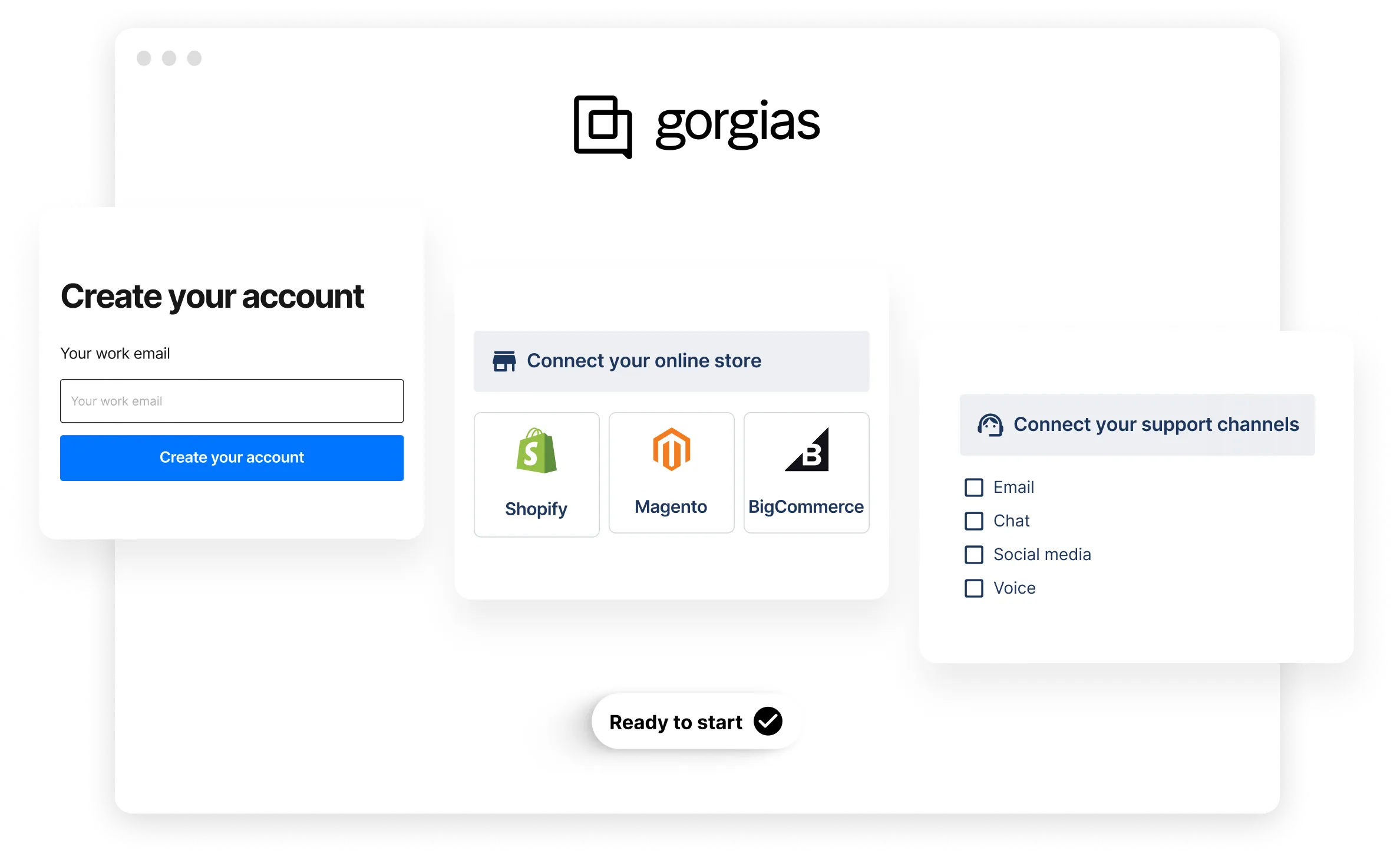
Gorgias helpdesk connects Shopify, Magento, and BigCommerce stores with email, chat, social, and voice support channels as a unified ecommerce customer service tool.
Gorgias pioneered e-commerce-native customer support, unifying email, SMS, social media, and live chat into a single inbox with deep Shopify integration. For €1M+ brands, Gorgias' order management automation, macros, and revenue attribution transform support from a cost center to a revenue driver though it remains siloed from marketing and finance insights.
✅ Why Did We Choose This Tool?
Gorgias displays Shopify order details, tracking info, and customer history directly in the support interface, enabling agents to resolve issues without switching tabs. Its macros, automation rules, and revenue tracking tie support conversations to sales outcomes. However, limited integrations outside e-commerce and lack of cross-functional analytics constrain strategic value.
💼 Solutions Offered
Unified inbox for email, SMS, social media, and live chat
Shopify order management and editing within support interface
Pre-built macros for common customer inquiries
Automation rules for ticket routing and responses
Revenue attribution to track support-driven sales
🏢 Notable Clients
Powers support for Glossier, OLIPOP, Cotopaxi, and over 13,000 e-commerce brands.
🎯 Best For
€1M-€20M+ e-commerce brands centralizing customer support across channels.
💰 Pricing
€10-€900/month based on tickets
18. Tidio
Tidio's AI chatbot Lyro delivers automated customer service for ecommerce stores, offering budget-friendly live chat as an essential support tool for $500K-$5M online businesses.
Tidio offers budget-friendly live chat and chatbot automation for €500K-€5M brands needing customer engagement without enterprise pricing. Its visual chatbot builder, visitor tracking, and Shopify integration provide accessible conversation tools though its AI capabilities lag behind enterprise platforms and it lacks deep CRM functionality.
✅ Why Did We Choose This Tool?
Tidio's free tier and affordable paid plans make live chat accessible to early-stage brands. Its visual chatbot builder enables non-technical users to create automated flows for FAQs, product recommendations, and lead capture. However, basic AI, limited reporting, and lack of advanced features constrain growth beyond mid-market.
💼 Solutions Offered
Live chat widget for website and Shopify stores
Visual chatbot builder for automated conversations
Visitor tracking to identify high-intent browsers
Email integration for unified messaging
Mobile app for on-the-go support
🏢 Notable Clients
Used by over 300,000 small-to-midsize e-commerce stores globally.
🎯 Best For
€500K-€5M brands needing affordable live chat without enterprise complexity.
💸 ROI Metric: Access to non-dilutive growth capital enables 2-3x faster scaling velocity without equity sacrifice, while unified financial intelligence prevents 5-15% margin leakage from missed opportunities.
📊 Category 4: Finance & Capital - Comparison Table
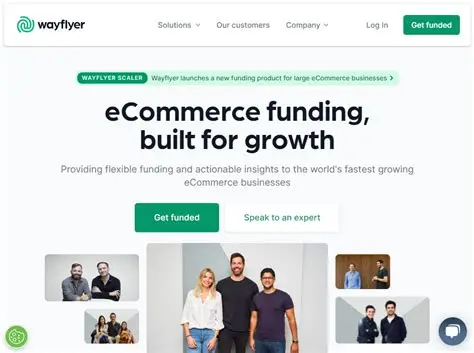
Wayflyer provides flexible ecommerce funding built for growth with fast approval and revenue-share repayment, a leading finance tool in the $1M-$20M e-commerce capital stack.
Wayflyer pioneered fast revenue-based financing for e-commerce, offering €10K-€10M capital with 72-hour approvals and automated revenue-share repayment. For €1M-€20M brands needing inventory or marketing capital, Wayflyer's speed and non-dilutive structure appeal but static underwriting based on 90-day-old data, opaque 6-15% fees (40%+ APR equivalent), and zero strategic guidance mean you get capital without intelligence.
✅ Why Did We Choose This Tool?
Wayflyer connects to Shopify and ad platforms to underwrite based on trailing revenue, offering capital decisions in 72 hours without personal guarantees. Its automated repayment via revenue-share (typically 10-25% of daily sales) eliminates manual tracking. However, predatory terms buried in contracts, sudden offer rescissions, and aggressive collections tactics make it unreliable for strategic growth planning.
💼 Solutions Offered
Revenue-based financing from €10K to €10M
72-hour approval process via platform integrations
Automated repayment as percentage of daily revenue
No equity dilution or personal guarantees
Marketing and inventory capital use cases
🏢 Notable Clients
Funded over 3,000 e-commerce brands across apparel, beauty, and consumer goods.
🎯 Best For
€1M-€20M brands needing fast capital without strategic guidance.
⚠️ Reviews
"Wayflyer talks a big game about helping fast-growing brands bridge gaps and move with confidence. But when we actually needed them for a basic, real-world funding scenario, the whole machine fell apart. Days of silence, confusing answers, zero ownership. No one capable of actually interpreting multi-store data." — Gemma, AU,TrustPilot Verified Review
"Our experience with Wayflyer has been extremely disappointing and professionally damaging. After being offered funding in writing with specific amounts and confirmation that the deal was approved, Wayflyer abruptly reversed their decision at the last minute. This caused significant disruption to our operations and cash flow." — Tyler Ruby, US,TrustPilot Verified Review
💰 Pricing
6-15% flat fee (40%+ APR equivalent)
20. 8fig
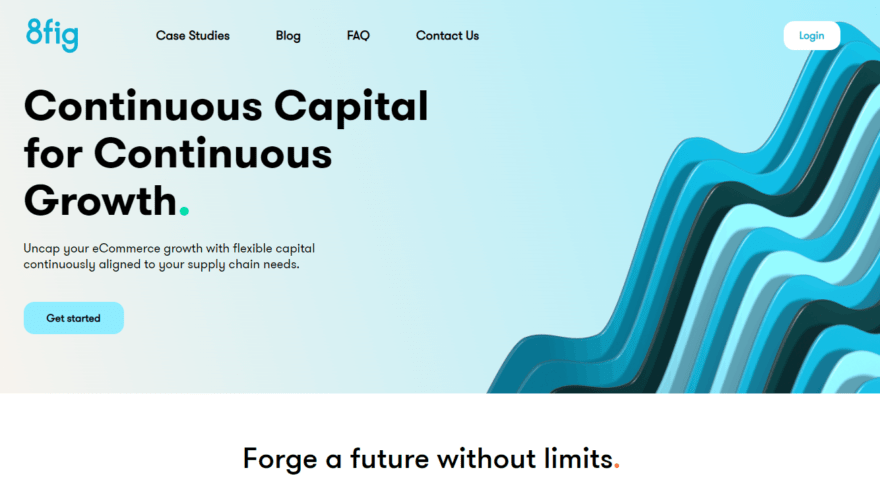
8fig delivers continuous capital aligned to ecommerce supply chain needs with AI growth planning, combining funding and forecasting as a specialized e-commerce finance tool.
8fig markets itself as "AI-powered funding and planning," combining revenue-based capital with supply chain optimization tools. For €1M-€10M brands, the promise of coordinated funding + forecasting sounds compelling but in practice, 8fig's predatory tactics include bait-and-switch pricing, last-minute funding cancellations, and illegal UCC liens that have bankrupted businesses.
✅ Why Did We Choose This Tool?
8fig's "Growth Plan" visualizes projected funding releases, repayment schedules, and cash flow over 12-18 months. It offers capital specifically timed for inventory purchases and marketing spend. However, the company routinely changes terms mid-contract, pulls funding days before scheduled disbursements, and inflates balances far beyond original agreements making it one of the most complained-about lenders in e-commerce.
💼 Solutions Offered
AI-driven growth planning with funding projections
Flexible funding releases tied to supply chain needs
Automated repayment via revenue-share
Cash flow forecasting dashboard
Inventory optimization recommendations
🏢 Notable Clients
Claims to have funded thousands of Amazon and Shopify sellers.
"As the founder of a 7-figure eCommerce brand, 8fig pulled funds from my Amazon account just days before a scheduled disbursement, disrupting our cash flow and leaving us unable to send out inventory. They withheld funds, inflated the amount owed to over €100,000, and I ultimately settled for €50,000 after already having repaid a majority of what I borrowed." — Jean Infante, US,TrustPilot Verified Review
"This is the biggest scam I've seen in the industry. 8fig's offer is basically a 100% APR that means you'll pay back double what you received in just 12 months. I'm a 6-figure monthly Amazon seller, and I would never recommend this company to anyone." — Melissa, US,TrustPilot Verified Review
💰 Pricing
Custom (fee-based, often exceeding 100% APR)
21. Clearco
Clearco's ecommerce financing dashboard displays revenue-sharing funding offers for online brands, representing marketing-specific capital tools in the $1M-$10M e-commerce software stack.
Clearco (formerly Clearbanc) raised over $4 billion to offer "founder-friendly capital," positioning itself as the alternative to venture debt. For €500K-€10M brands, Clearco's marketing-focused funding and fast approvals initially attracted thousands but post-2022 layoffs, frozen international funding, and predatory repayment practices (taking cuts from non-business deposits) have destroyed trust.
✅ Why Did We Choose This Tool?
Clearco offers capital specifically for marketing spend (Facebook, Google Ads) with repayment as a percentage of revenue. Its 20-minute application and fast approvals (72 hours) made it accessible to growth-stage brands. However, invasive bank monitoring, arbitrary fund holds, and collections harassment over trivial balances make it a lender of last resort.
💼 Solutions Offered
Marketing-specific funding for Facebook, Google, and influencer campaigns
Fast approval process (72 hours)
Revenue-share repayment model
No equity dilution or personal guarantees
E-commerce focus (Shopify, Amazon sellers)
🏢 Notable Clients
Funded over 7,000 brands before mass layoffs and international pullback in 2022.
🎯 Best For
€500K-€10M brands funding marketing campaigns (⚠️ approach with extreme caution).
⚠️ Reviews
"Clear Co continuously controls all money entered in your bank account. They see ZELLE payments sent individually as a win and charge you 2%. They determine the REFUND of FEDERAL TAX as income and charge you. If you are working in a job, they profit from YOUR SALARY EARNED EVERY MONTH. THEY WATCH OUR BANK ACCOUNT AND TAKE MONEY FROM ALL MONEY THAT ENTERS." — AS, US,TrustPilot Verified Review
"I would avoid if possible unless you are desperate but even so there are so many better options. First off, customer support is non-existent. They are no different than any merchant advance company/loan shark with insanely high interest rates. They have had multiple rounds of layoffs and it goes downhill each time." — Thomas Bishop, US,TrustPilot Verified Review
💰 Pricing
6-12% fee
22. QuickBooks / NetSuite
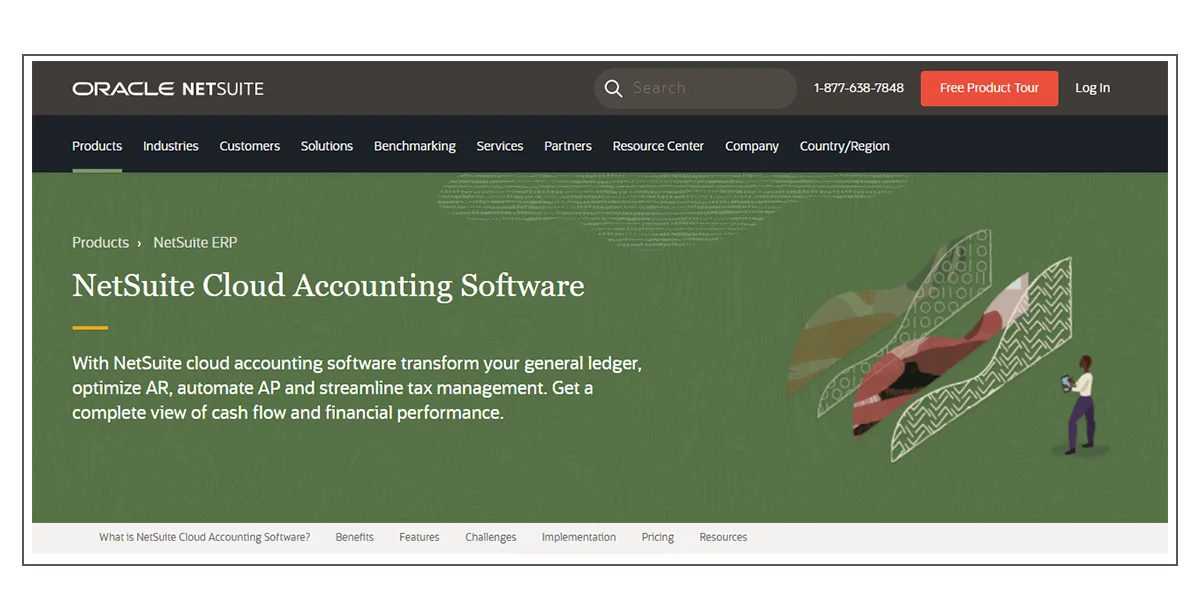
Oracle NetSuite cloud accounting software provides general ledger, AR/AP automation, and cash flow visibility for $10M+ ecommerce enterprises requiring full ERP e-commerce tools.
QuickBooks and NetSuite represent the accounting infrastructure extremes: QuickBooks serves €500K-€5M brands with affordable general ledger and AP/AR, while NetSuite powers €10M-€100M+ operations with full ERP, multi-entity consolidation, and advanced revenue recognition. Both are essential for financial compliance but neither connects marketing causality to finance outcomes, leaving CFOs blind to which campaigns drive profitable revenue.
✅ Why Did We Choose This Tool?
QuickBooks offers accessible accounting for small businesses with invoicing, expense tracking, and basic financial reporting. NetSuite provides enterprise-grade ERP with inventory accounting, multi-currency consolidation, and custom workflows. However, both platforms treat marketing and operations as external black boxes you can see revenue, but not why it happened or how to optimize it.
💼 Solutions Offered
QuickBooks:
General ledger and double-entry accounting
Accounts payable (AP) and accounts receivable (AR)
Invoicing and expense tracking
Basic financial reporting (P&L, balance sheet)
Payroll integration (add-on)
NetSuite:
Full ERP with inventory, order management, and CRM
Multi-entity and multi-currency consolidation
Revenue recognition and ASC 606 compliance
Custom workflows and advanced reporting
Wholesale, retail, and D2C unified management
🏢 Notable Clients
QuickBooks: 4.5 million small businesses globally | NetSuite: 37,000 organizations including REI, Williams-Sonoma.
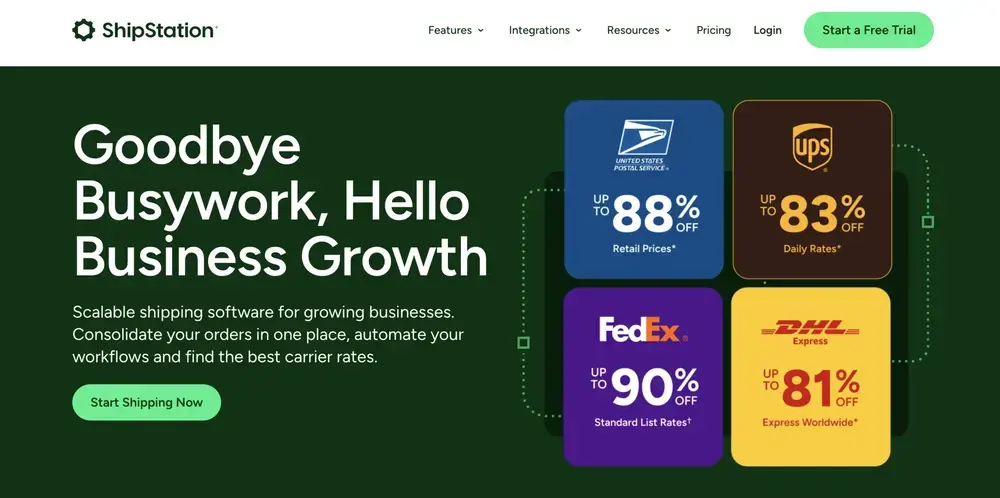
ShipStation offers multi-carrier shipping with up to 90% discounted rates from USPS, UPS, FedEx, and DHL, a core fulfillment tool for ecommerce businesses shipping at scale.
ShipStation dominates multi-carrier shipping management, offering rate shopping, batch label printing, and order tracking across 40+ carriers. For €500K-€20M brands shipping via USPS, UPS, FedEx, and regional carriers, ShipStation's automation and discounted rates save hours daily though it remains a pure execution tool that doesn't connect to inventory planning or cash flow forecasting.
✅ Why Did We Choose This Tool?
ShipStation's multi-carrier rate comparison ensures brands pay the lowest shipping cost for each package. Its automation rules, batch printing, and branded tracking pages reduce fulfillment labor. However, it operates in isolation from inventory and finance systems you can ship efficiently, but you won't know if you're about to stock out or if shipping costs are eroding margins.
💼 Solutions Offered
Multi-carrier rate shopping across 40+ carriers
Batch label printing and automation rules
Branded tracking pages and customer notifications
International shipping and customs documentation
Returns management and integration with major 3PLs
🏢 Notable Clients
Used by over 130,000 e-commerce brands and 3PLs globally.
🎯 Best For
€500K-€20M+ brands shipping from multiple carriers needing efficiency and discounts.
💰 Pricing
€9.99-€159.99/month based on shipments
24. Inventory Planner
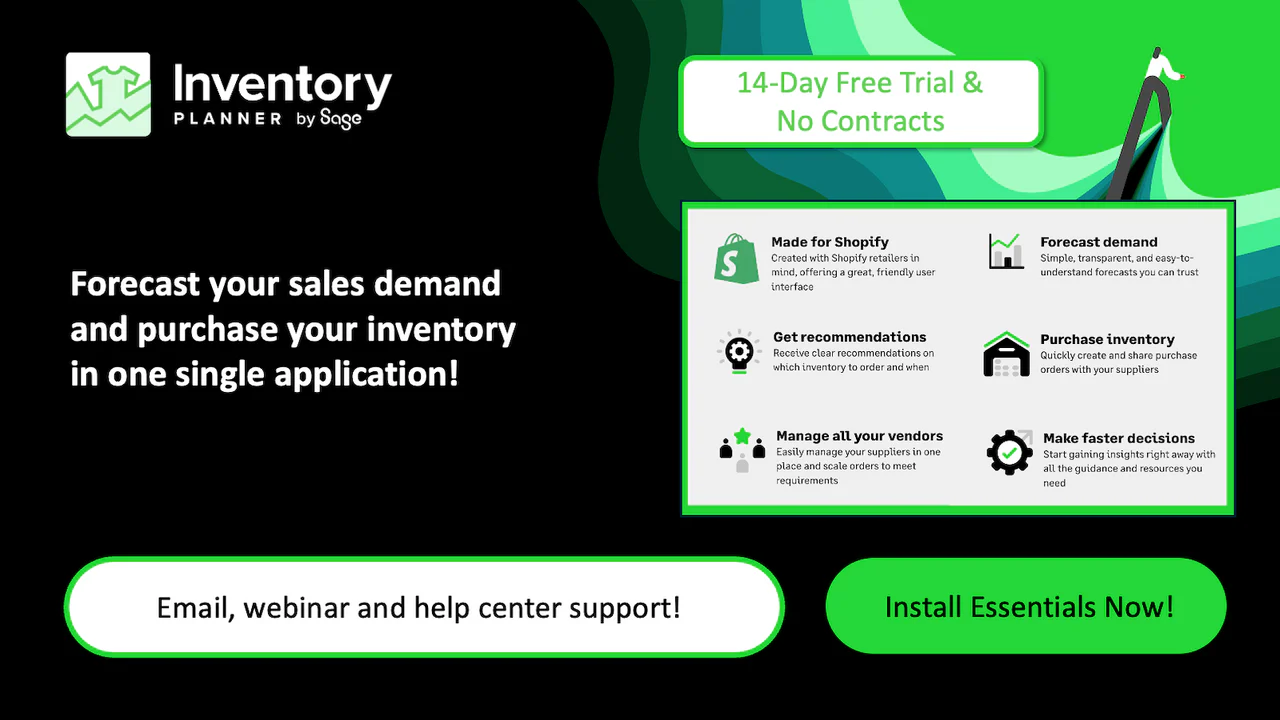
Inventory Planner by Sage offers demand forecasting and automated purchase orders for Shopify stores, an essential operations tool for ecommerce businesses optimizing stock levels.
Inventory Planner offers demand forecasting, purchase order automation, and multi-location inventory optimization for €1M-€20M brands. Its machine learning models predict future demand based on sales history, seasonality, and promotions helping brands avoid stockouts and overstock situations that tie up cash, though it doesn't model the cash flow impact of purchase timing decisions.
✅ Why Did We Choose This Tool?
Inventory Planner's demand forecasting and automated purchase order suggestions eliminate spreadsheet-based inventory management. Its replenishment recommendations account for lead times, safety stock, and sales velocity. However, it forecasts inventory in isolation from cash availability you might know you should order 5,000 units, but not whether you'll have cash to pay for them.
💼 Solutions Offered
Demand forecasting based on sales history and trends
Automated purchase order creation and supplier management
Multi-location inventory optimization
Stockout prevention and overstock alerts
Seasonal planning and promotion impact modeling
🏢 Notable Clients
Used by mid-market DTC brands and multichannel retailers.
🎯 Best For
€1M-€20M+ brands optimizing stock levels across multiple locations.
💰 Pricing
€299-€999+/month
25. Loop Returns (Returnly)
Loop Returns provides self-service return management that grows with Shopify brands, serving as a key operations and fulfillment tool for ecommerce stores with high return volumes.
Loop Returns transformed the returns experience from friction to retention, offering self-service portals, instant exchanges, and returns analytics. For €2M+ brands with return rates above 15%, Loop's exchange optimization and bonus credit mechanics convert returns into repeat purchases though it remains siloed from product quality insights and margin analytics.
✅ Why Did We Choose This Tool?
Loop's self-service portal, instant exchanges (ship before receiving return), and bonus credit incentives reduce return friction while increasing customer lifetime value. Its returns analytics reveal return reasons and product issues. However, it doesn't connect return patterns to upstream product decisions or calculate the true P&L impact of returns on a per-SKU basis.
💼 Solutions Offered
Self-service returns portal with instant exchanges
Bonus credit incentives to drive future purchases
Returns analytics by reason, product, and customer
Returnless refunds for low-value items
Integration with 3PLs and reverse logistics partners
🏢 Notable Clients
Powers returns for Allbirds, Rothy's, Marine Layer, and hundreds of apparel brands.
🎯 Best For
€2M-€50M+ brands with high return volumes (15%+ return rate).
💰 Pricing
Custom (typically €500+/month)
⏰ Transition:
These 25 tools represent best-in-category options across intelligence, commerce, marketing, finance, and operations. But here's the critical insight most founders miss: choosing the right tools matters less than architecting them into a unified system. The hidden cost isn't in subscription fees - it's in the Integration Tax you pay every month when these tools don't talk to each other.
Q2. How We Scored These 25 Tools: Selection Criteria & Ratings [toc=Scoring Criteria]
We didn't evaluate these 25 tools on feature checklists or integration counts those metrics miss what actually determines value for 1M-10M brands. Instead, we scored each tool on 5 criteria that define whether a tool adds intelligence or just adds noise:
Cross-Functional Intelligence (25 points) - Does it connect marketing, finance, and operations data? Or does it create another data silo?
Capital Integration (20 points) - Can it fund opportunities it identifies? Or is capital a separate, disconnected workflow?
Setup & Usability (20 points) - 10-minute no-code integration or weeks of implementation? Natural language queries or SQL dependency?
Pricing Transparency (20 points) - Flat, predictable fees or hidden costs disguised as "revenue share"?
Proactive Intelligence (15 points) - Does it surface risks and opportunities autonomously, or wait for you to ask?
Star Rating Translation
0-20 points = 1 star - Single-function tool, passive reporting only
21-40 points = 2 stars - Solid category leader, but data siloed
41-60 points = 3 stars - Strong integrations, some proactive features
61-80 points = 4 stars - Multi-functional with intelligence layer
Cross-Functional Intelligence (25/25): Only platform connecting marketing spend, inventory needs, and cash position in single queries. Ask "Show me customers from Meta who bought Product X what's their 90-day LTV vs. Google Search customers?" and get answers in seconds, not spreadsheets.
Capital Integration (20/20): Only tool that can fund opportunities it identifies. Intelligence + capital synthesis means you don't need separate applications to Wayflyer or Clearco Luca analyzes AND funds instantly.
Setup & Usability (20/20): 10-minute no-code integration with 20+ platforms. Conversational interface replaces SQL knowledge and analyst dependency natural language queries replace dashboard navigation.
Pricing Transparency (20/20): Flat monthly fee (€299-€499) + transparent outcome-based capital pricing that reflects real-time business health not hidden 40%+ APR equivalents disguised as "6% flat fees."
Proactive Intelligence (15/15): 24/7 automated scanning for risks (CAC spikes, creative fatigue, inventory shortfalls) and opportunities (high-ROAS campaigns ready to scale). Doesn't wait for queries pushes insights instantly.
This framework reveals a critical insight: most tools score 2-3 stars because they optimize one domain (marketing OR finance OR operations) while adding to stack fragmentation. Luca AI earned 5 stars because it's architected as the intelligence layer that unifies all other tools making your existing stack more valuable instead of adding to the noise.
Q3. The Integration Tax: What Your Fragmented Stack Actually Costs [toc=Integration Tax]
It's 11 PM on Thursday. You've spent 3 hours trying to answer one question: Which product-channel combination is actually profitable?
You've exported CSVs from Shopify (orders), Meta Ads Manager (spend), Stripe (net revenue), and your 3PL (COGS). Your spreadsheet has 47 tabs. You still don't have a confident answer because your attribution window in Meta doesn't match Shopify's order timestamps, and your accounting system booked refunds in a different month than the original sale.
This isn't incompetence. It's architecture.
The Integration Tax Has Four Dimensions
Time Cost: 15-25 hours/week on manual data consolidation, report building, and cross-platform reconciliation = $50K-$80K annual opportunity cost at founder/analyst salary of $100K-$150K.
Decision Latency: 3-5 day lag between "something changed" and "confident decision" meaning you spot winning campaigns after they've already plateaued. By the time you understand what happened, the opportunity is gone.
Insight Blindness: No single tool sees the full picture, so cross-functional patterns stay invisible. Example: "Customers from Meta who bought Product X have 3x higher LTV but take 40% longer to convert, impacting Q4 cash flow" this insight requires manually triangulating Shopify, Meta, Stripe, and Xero data.
Tool Sprawl Penalty: Each new tool adds integration complexity exponentially, not linearly. Going from 8-12 tools doesn't add 50% complexity it adds 200%. Most $5M brands have 15+ tool logins; founders can't remember the last time all dashboards showed the same revenue number.
"Our experience with Triple Whale has been extremely frustrating and almost categorically terrible. The integrations are inconsistent, building with the AI tool Moby is very buggy and crashes more than half the time, and support is largely unresponsive and not helpful. We end up reverting back to direct data sources like Meta, Shopify, Recharge, etc." — Mohamed Bahhar,TrustPilot Verified Review
The Real Solution: An Intelligence Layer, Not Another Dashboard
The right system doesn't add another dashboard it sits beneath your existing tools, unifying their data into a single context-aware layer that understands causal relationships. Instead of opening 5 dashboards to answer "What's my true contribution margin by channel?", you ask conversationally and get an answer in 5 seconds, synthesized across Shopify, Meta, Stripe, and Xero with zero manual reconciliation.
Luca AI eliminates the Integration Tax by creating a unified reasoning layer across all your data sources: commerce (Shopify), marketing (Meta, Google), finance (Stripe, Xero), and operations (ShipStation, inventory systems). It connects in 10 minutes, no engineering required, and answers questions that span domains: "Show me customers from Meta who bought Product X what's their 90-day LTV vs. Google Search customers, and will scaling Meta 50% impact my August inventory budget?"
Q4. How to Choose Tools by Revenue Stage: $500K vs. $2M vs. $10M [toc=Tools by Stage]
Choosing your tech stack at $1M revenue looks radically different than at $10M but most founders build reactively, adding tools as pain points emerge. By the time you hit $5M, you're locked into 12+ tools that don't talk to each other, facing expensive migrations or continued fragmentation.
The right approach: build around an intelligence layer from day one, then add specialized tools as complexity demands.
STAGE 1: $500K-$2M Foundation Stack (8 Core Tools)
At this stage, you're validating product-market fit and building repeatable acquisition channels. Avoid tool sprawl every tool should serve a clear, irreplaceable function.
Core Stack:
Intelligence Hub: Luca AI (unified intelligence + capital access)
Commerce: Shopify (storefront + orders)
Payments: Stripe or Shopify Payments
Marketing: Meta Ads Manager (acquisition) + Klaviyo (retention)
Analytics: Google Analytics 4 (web behavior free tier)
Accounting: QuickBooks (basic accounting)
Fulfillment: ShipStation (multi-carrier shipping)
Total Monthly Cost: $800-$1,200 (excluding ad spend)
Philosophy: Build foundation with intelligence layer first. Luca AI connects all these tools into one reasoning layer avoiding the trap of adding specialized analytics tools (Triple Whale, Polar) that create fragmentation before you have the complexity to justify them.
You've proven PMF and are scaling. Bottlenecks emerge in attribution, support, and inventory. Add specialized tools, but ensure they integrate with your intelligence layer.
Total Tool Count: 13-15 tools Total Monthly Cost: $2,500-$5,000
Philosophy: Add specialized tools for scale bottlenecks, but ensure they integrate with Luca AI. You're not replacing your intelligence layer you're adding satellites around it.
STAGE 3: $10M-$50M+ Consolidation Stack
Operational complexity demands enterprise-grade infrastructure. Migrate from point solutions to platforms.
Replace in Core Stack:
QuickBooks → NetSuite (full ERP with multi-entity management)
Google Analytics → Custom data warehouse (BigQuery + dbt)
Total Tool Count: 12-15 (consolidation reduces sprawl) Total Monthly Cost: $8,000-$20,000+
Philosophy: Consolidate redundant tools into platforms. Your unified intelligence layer becomes even more critical as data sources expand enterprise systems without intelligence create exponentially more fragmentation.
FAQ: Common Questions About Choosing Tools
Q: Should I choose tools based on integrations available? A: Integrations matter, but only if they create unified intelligence. 50 integrations that dump disconnected data into dashboards are worse than 5 integrations synthesized into a reasoning layer.
Q: When should I add specialized analytics tools (Triple Whale, Polar)? A: Only after $2M revenue AND $50K+/month ad spend. Before that, they add fragmentation without justifiable ROI your intelligence layer should handle analytics.
Q: Can I skip the intelligence layer and just use dashboards? A: You can, but you'll pay the Integration Tax: 15-25 hours/week on manual reconciliation, 3-5 day decision latency, and blindness to cross-functional insights. Most founders realize this at $3M-$5M when they're drowning in data but starved for answers.
Q: How do I migrate from my current fragmented stack? A: Start by adding the intelligence layer (Luca AI) on top of existing tools it synthesizes without requiring rip-and-replace. Then audit: which tools provide unique functionality vs. redundant dashboards? Consolidate the dashboards, keep the unique functions.
Q: What's the biggest mistake founders make in tool selection? A: Choosing tools based on features instead of architecture. A tool with 100 features that creates a data silo is worse than a tool with 10 features that unifies your stack. Build for intelligence, not feature lists.
FAQ's
What are the most essential e-commerce software tools for a $1M-$5M revenue business?
We recommend starting with 8 core e-commerce software tools that form your foundation stack. First, implement an intelligence layer like Luca AI to unify data across all platforms - this prevents the Integration Tax that costs $50K-$150K annually in manual reconciliation work. Second, your commerce infrastructure needs Shopify for storefront management and Stripe for payment processing. Third, marketing requires Meta Ads Manager for acquisition and Klaviyo for email/SMS retention. Fourth, add Google Analytics 4 for free web behavior tracking, QuickBooks for basic accounting, and ShipStation for multi-carrier fulfillment.
The critical mistake most founders make is adding specialized tools (Triple Whale, Polar Analytics) before establishing the intelligence foundation. This creates 10+ disconnected dashboards where revenue numbers never match. We've seen $3M brands spend 20+ hours weekly exporting CSVs from Shopify, Meta, and Xero just to answer "Which channel is actually profitable?" When you build around unified intelligence first, your total monthly cost stays around $800-$1,200 while maintaining complete visibility across marketing, finance, and operations in a single conversational interface.
What is the Integration Tax and how much does it actually cost my e-commerce business?
The Integration Tax is the compounding hidden cost of running 8-12 disconnected tools that don't communicate with each other. Unlike subscription fees that appear on invoices, this tax manifests in four dimensions. First, time cost: your team spends 15-25 hours per week manually consolidating data, building reports, and reconciling discrepancies between platforms - that's $50K-$80K in annual opportunity cost at typical founder/analyst salaries. Second, decision latency: the 3-5 day lag between spotting a trend and making a confident decision means you identify winning campaigns after they've already plateaued.
Third, insight blindness: cross-functional patterns stay invisible when no single tool sees the full picture. For example, "Meta customers buying Product X have 3x higher LTV but take 40% longer to convert, impacting Q4 cash flow" - this insight requires manually triangulating Shopify, Meta, Stripe, and Xero data that most founders never discover. Fourth, tool sprawl penalty: adding your 12th tool doesn't increase complexity by 50% - it increases it by 200% because each integration point multiplies exponentially.
We eliminate this tax by creating a unified reasoning layer beneath your existing tools, connecting commerce, marketing, finance, and operations into a single context-aware system that answers cross-functional questions in seconds instead of spreadsheet hours.
Which e-commerce tools should I add when scaling from $2M to $10M revenue?
At the $2M-$10M specialization stage, you've proven product-market fit and face new bottlenecks in attribution, support, and inventory that justify adding 5-7 specialized tools to your foundation stack. First, if marketing spend exceeds $50K monthly, add advanced attribution - either Triple Whale or Polar Analytics - but ensure it integrates with your intelligence layer rather than creating another silo. Second, implement Gorgias as your unified helpdesk to centralize email, SMS, and social support with Shopify order management built in. Third, add Inventory Planner for demand forecasting and automated purchase order recommendations to prevent the 10-20% stockout losses that plague this stage.
Fourth, deploy Yotpo for review collection and loyalty programs - social proof becomes critical as acquisition costs rise and repeat purchase rates drive profitability. Your total tool count should reach 13-15 platforms with monthly costs around $2,500-$5,000.
The philosophy shift at this stage: you're not replacing your intelligence foundation - you're adding satellites around it. We've seen $7M brands make the mistake of treating Triple Whale as their analytics solution instead of a specialized attribution feed that connects to their unified intelligence system. This creates competing dashboards where marketing data never reconciles with finance reality. Stack architecture matters more than individual tool selection.
How do I evaluate which e-commerce tools actually add value vs. just adding noise?
We score e-commerce software tools on five criteria totaling 100 points that reveal whether they add intelligence or fragmentation. First, cross-functional intelligence (25 points): can it reason across marketing, finance, and operations - or does it silo data in one domain? Tools that can't answer "If I scale Meta 50%, what happens to Q4 cash flow?" fail this test. Second, capital integration (20 points): does it connect insights to growth funding, or do you need separate applications to Wayflyer/Clearco after identifying opportunities? Third, setup and usability (20 points): less than one-day setup scores 20 points; platforms requiring 3-5 weeks of engineering implementation score 10 points.
Fourth, pricing transparency (20 points): flat monthly fees score higher than usage-based models with hidden 40%+ APR equivalents disguised as "6% flat fees." Fifth, proactive intelligence (15 points): does it push 24/7 automated alerts for risks like CAC spikes and opportunities like high-ROAS campaigns ready to scale - or does it wait for manual queries?
Most tools score 2-3 stars (21-60 points) because they optimize one domain while adding to stack fragmentation. Luca AI earned 5 stars (100/100) because we're architected as the intelligence layer that unifies all other tools - making your existing stack more valuable through cross-functional reasoning instead of adding to the noise.
Can free e-commerce tools like Google Analytics and Meta Ads Manager replace paid analytics platforms?
Free tools are table stakes but dangerously insufficient when used in isolation. Google Analytics 4 and Meta Ads Manager are required platforms - you can't run a modern e-commerce business without them - but they create critical gaps in three areas. First, data silos: Meta's attribution data never matches Shopify or Google Analytics because iOS 14.5 tracking limitations inflate reported ROAS by 30-60%. We've seen $4M brands scale campaigns to $100K monthly spend based on Meta's numbers, only to discover actual Shopify revenue was 40% lower. Second, no cross-functional visibility: GA4 shows website behavior but can't connect to your finance systems to calculate true contribution margin by channel. Meta reports ROAS but can't model cash flow impact of scaling campaigns.
Third, passive reporting: free tools display historical metrics but don't proactively surface insights, detect anomalies, or recommend actions. You're constantly asking "what happened?" instead of receiving alerts that "CAC spiked 35% in the past 48 hours - here's why and how to fix it."
The hidden cost isn't the free subscription - it's the $50K-$150K annual Integration Tax you pay reconciling their contradictory data manually. At $500K+ revenue, investing in unified intelligence eliminates this tax by creating a single reasoning layer beneath free tools that reconciles their data, fills visibility gaps, and proactively alerts you to opportunities and risks across marketing, finance, and operations simultaneously.
Enjoyed the read? Join our team for a quick 15-minute chat — no pitch, just a real conversation on how we’re rethinking Ecommerce with AI - Luca
Loading Schedule...
Your AI Co-Founder is here.
Here’s why:
Shopify, Meta, Xero - one brain.
"Should I scale?" Answered with real data.
Growth capital. No applications. One click.
Thank you! Your submission has been received! Please book a time slot for the Meeting
Oops! Something went wrong while submitting the form.

.jpg)