Predictive Analytics for Ecommerce: Raw Data to Forecasting, Data Requirements, Model Types, Pricing and Deployment Workflows

13
mins read
Predictive Analytics for Ecommerce: Raw Data to Forecasting, Data Requirements, Model Types, Pricing and Deployment Workflows
In this article

TL;DR

Predictive analytics for ecommerce in 2026 has shifted from dashboard-led prediction to conversational, reasoning-led prediction with plain-English answers and traceable logic.
The pipeline runs in five stages: ingest, normalize, feature-engineer, model, and act. Most brands lose six months at the normalization stage.
Match models to use cases: time-series for demand, gradient-boosted trees for churn, Pareto/NBD for CLV, RL hybrids for dynamic pricing, and isolation forests for fraud.
Vertical benchmarks differ sharply. Apparel runs 15 to 25% MAPE, CPG 8 to 14%, electronics 18 to 30%, and beauty 10 to 18%.
Pick a stack on cross-functional reasoning, simulation depth, and pricing model, not feature count. AI-layer-over-warehouse beats siloed dashboards.
When a forecast triggers a capital need, dynamic embedded capital priced on this week's revenue beats static 60-day-old RBF applications.

Q1. What is Predictive Analytics for Ecommerce, and Why Has the Definition Shifted in 2026? [toc=1. Definition Shift]

Predictive analytics for ecommerce uses your historical and live store data (orders, ad spend, inventory, and customer events) with statistical and ML models to forecast what's about to happen. Demand. Churn. LTV. Returns. Cash. In 2026, the definition has moved from "show me a chart" to "tell me what to do, and explain why." The competitive edge isn't the algorithm anymore. It's the data plumbing feeding a reasoning engine that can answer in plain English.

The fragmented stack most founders actually run

Most $1M to $20M DTC brands run 8 to 12 disconnected tools. Shopify for orders. Meta and Google for ads. Klaviyo for retention. Xero or QuickBooks for finance. Spreadsheets for the rest.

Data is everywhere. Understanding is nowhere. The founder becomes the manual integration layer at 11pm, a pattern we unpack in why ecommerce founders are drowning in data.

Why this breaks predictive work

Each tool sees one slice. None reasons across them. A demand forecast that ignores cash runway is a math exercise, not a decision.

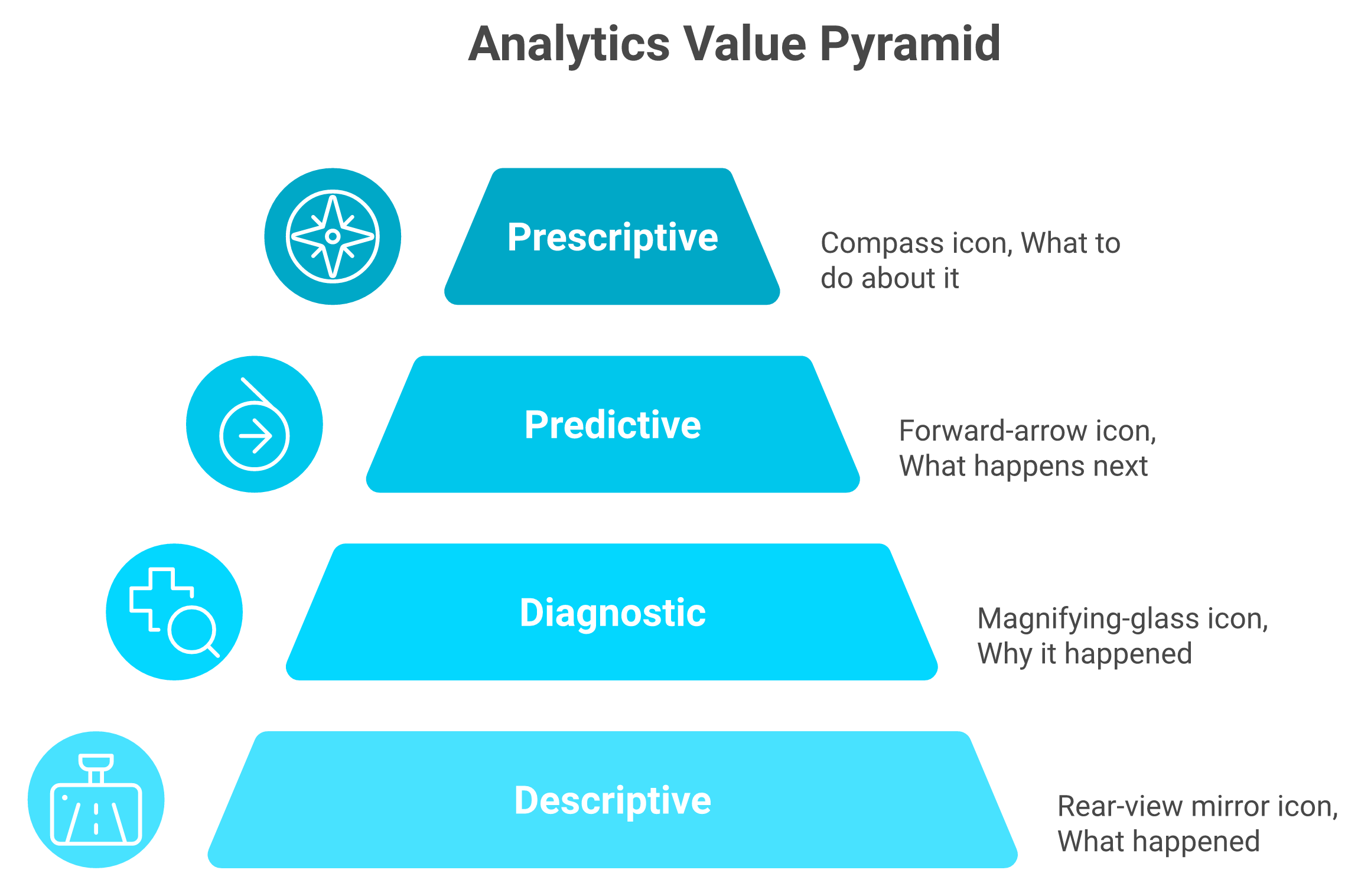
The rear-view mirror trap

Triple Whale, GA4, and Looker were built to display what already happened. Operators describe Triple Whale numbers drifting from Shopify by 15 to 30% on attribution-heavy weeks.

Comparison of legacy dashboard analytics versus AI reasoning layer over unified data warehouse for ecommerce
The 2026 shift moves ecommerce predictive analytics from rear-view dashboards to a reasoning engine on top of a unified warehouse.
"Triple Whale's pixel data is unreliable. Numbers don't match Shopify or Meta on the same day."
Verified G2 reviewer Triple Whale G2 Verified Review

These tools surface vanity ROAS without context on cash flow or inventory. That's a reporting layer, not a prediction layer. For a deeper teardown, see our Triple Whale alternatives breakdown.

The death of the cohort dashboard

The modern operator wants cohort-level vigilance without scrolling a cohort-level dashboard. The shift is conversational. Ask once. Get reasoning. Move on.

The AI-era shift, reasoning over reporting

Ari Tulla at ELO Health is on record saying his team spent roughly $10M on a proprietary algorithmic platform that was rendered 10x less effective the day general-purpose LLMs landed. That's the lesson. Predictive analytics is no longer a math contest.

It's a plumbing contest. Whoever feeds the cleanest, most cross-functional data into a pre-trained reasoning engine wins, an idea we explore in the intelligence capital thesis.

The AI-layer-over-warehouse approach

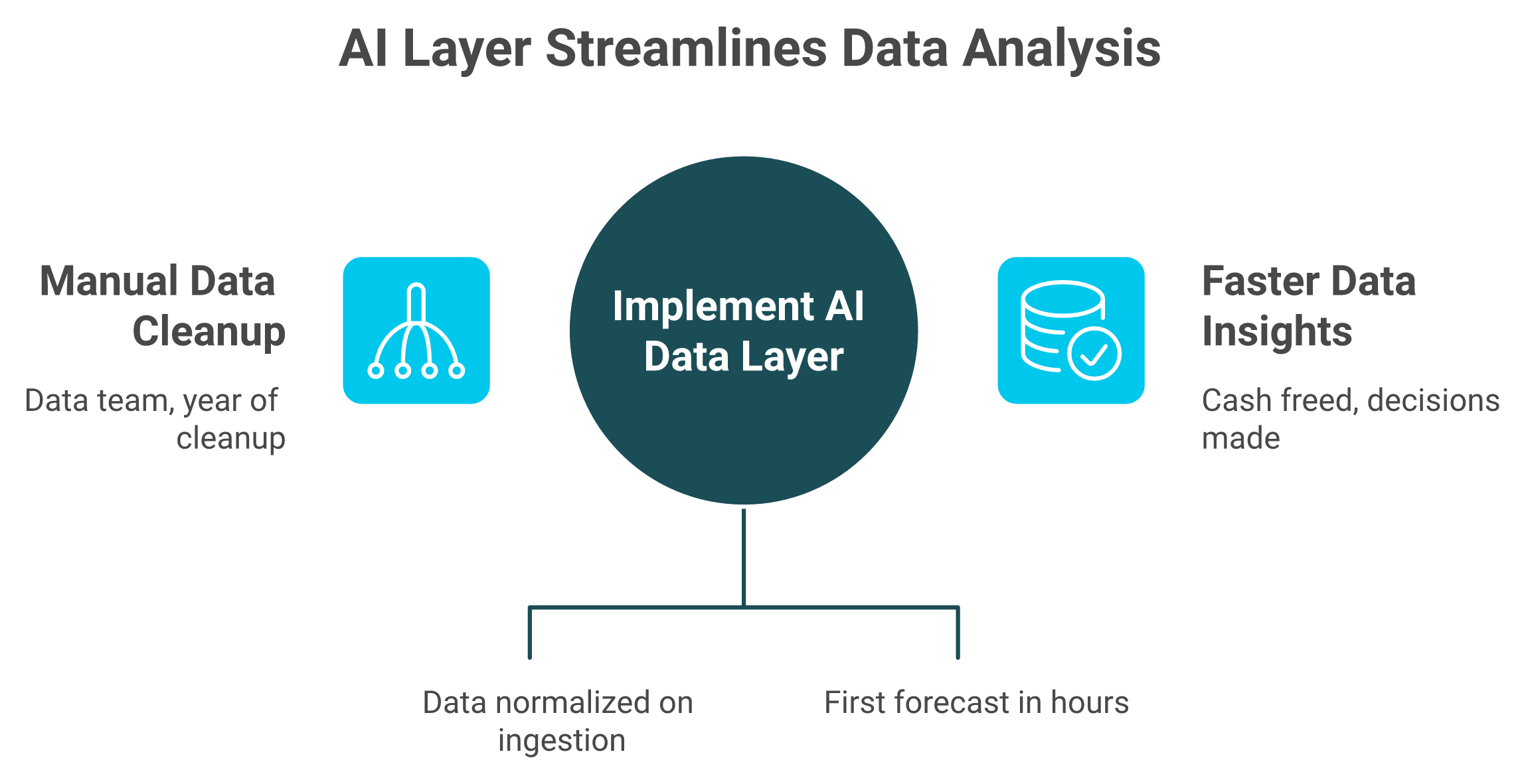
The architecture that's working in 2026 looks like this. All sources land in one warehouse. An AI layer sits on top. It extracts the relevant slice, predicts, simulates a counterfactual, finds the root cause, and points at the influencing components.

That's what Luca does. We sit on a unified data layer. We answer in plain English. We push periodic reports to Slack and email without anyone logging into a dashboard, the same idea behind the AI co-founder model.

Eric's read

After looking at thousands of Shopify P&Ls, what jumps out is that the brands stuck on dashboard tools spend their analyst's time reconciling numbers, not predicting them. The brands that moved to a reasoning layer spend that time deciding. Most analytics tools added AI. Luca is AI.

Q2. From Raw Data to Forecast, What Does the Predictive Pipeline Actually Look Like? [toc=2. Predictive Pipeline]

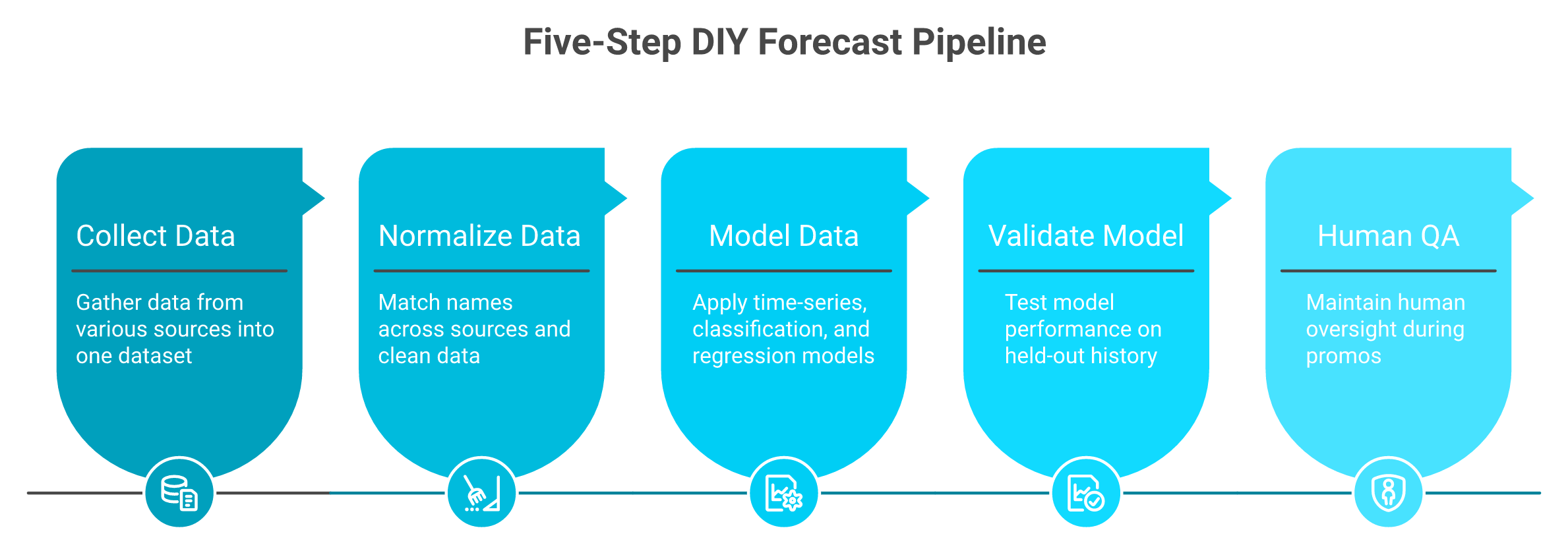
The pipeline runs in five stages. Ingest from Shopify, Meta, Klaviyo, Stripe, and your 3PL. Normalize and de-duplicate so you skip the data-cleanup year. Engineer features like 7-day rolling AOV (average order value), CAC-to-LTV ratio (customer acquisition cost vs. lifetime value), and return-rate-by-SKU. Feed a model, time-series, classifier, or LLM-augmented. Push the output into action, pause an ad, reorder a SKU, or draft a flow. Most brands lose six months at stage two.

Five-stage predictive analytics pipeline for ecommerce: ingest, normalize, feature engineer, model, act
Most ecommerce brands lose six months at stage two of the predictive pipeline, normalization.

Stage 1: Ingestion

Pull raw data from every system that touches a customer or a dollar. Shopify orders via the Admin API. Meta and Google Ads via their marketing APIs. Klaviyo events. Stripe payouts. 3PL inventory snapshots.

Common pitfall, leaving a source out because "it's small." Returns data and refund timing are usually the missing inputs that wreck demand forecasts later. A clean stack starts with the foundations covered in our ecommerce tech stack guide.

What "good" looks like

Daily refreshes minimum. Hourly for ad spend if you're scaling fast.

Stage 2: Normalization and de-duplication

This is where most brands lose 4 to 6 weeks. SKU IDs differ across Shopify and your 3PL. Currency conversions drift. Order IDs get duplicated when refunds re-open them.

A 2026 forecasting guide from Saras Analytics calls clean SKU mapping the single biggest predictor of forecast accuracy under 20% MAPE (mean absolute percentage error).

"We spent five months cleaning Shopify and 3PL data before any forecast was usable. Should have done it before buying the tool."
u/dtc_founder_2024, r/ecommerce Reddit Thread

Stage 3: Feature engineering

Raw fields are inputs. Features are signals. The features that move forecasts on a sub-$20M DTC brand are usually:

  • 7-day and 28-day rolling AOV
  • CAC by channel, weighted by attribution window
  • Return rate by SKU and by cohort
  • Days-since-last-order distribution
  • Inventory days-on-hand by SKU

The contrarian feature

Anthony Mink at Live Bearded discovered that product-category diversity, not purchase frequency, was the highest LTV driver in his cohort once features were clean. That insight only surfaces after stage two is done right, and it lines up with our best way to track ecommerce unit economics.

Stage 4: Model selection

Match the model to the question. Demand uses time-series (Prophet, ARIMA, LSTM). Churn uses gradient-boosted trees. Recommendations use collaborative filtering. Dynamic pricing uses regression plus reinforcement learning.

In 2026, an LLM increasingly sits on top, translating model output into a written recommendation with reasoning, the pattern behind agentic AI for ecommerce founders.

Stage 5: Action

A forecast that doesn't trigger an action is a screenshot. The pipeline closes when the output pauses an ad, drafts a PO, or pings the operator on Slack at the right moment.

The Five-Stage Predictive Pipeline
StageTypical ToolTime InvestmentCommon SMB Pitfall
IngestFivetran, Airbyte, native APIs1 to 2 weeksMissing returns and refund data
Normalizedbt, custom SQL4 to 6 weeksSKU and currency mismatches
Feature engineerPython, dbt2 to 4 weeksUsing raw fields, not derived features
ModelProphet, XGBoost, two-tower2 to 6 weeksWrong model for the question
ActSlack, email, ad-platform APIsOngoingForecasts nobody reads

Eric's read

The AI-layer approach skips most of stages two and three. We normalize on ingestion. The operator doesn't see the cleanup. They ask a question, get a reasoning-backed answer, and move on, which is the workflow we describe inside data analysis and deep industry research.

Q3. What Data Do You Actually Need (Sources, Volume, Quality) Before Any Model Is Useful? [toc=3. Data Readiness Audit]

Score your stack before you score a tool. Most predictive ecom models need 18 to 24 months of order history, daily-grain ad spend, SKU-level inventory snapshots, and customer-event streams. Below ~5,000 orders, time-series models overfit. Below ~50,000 events, churn classifiers underperform. Score yourself on seven dimensions, history depth, source completeness, attribution agreement, return data, refund timing, cohort tagging, and event tracking. 6 to 7, you're ready. 3 to 5, fix hygiene first. 0 to 2, predictive analytics will burn money.

The 7-point readiness audit

Run this before you sign a tool contract. Answer yes or no.

  • ✅ Do you have at least 18 months of clean Shopify order history?
  • ✅ Is daily-grain ad spend pulled from Meta, Google, and TikTok in one place?
  • ✅ Have your marketing and finance teams agreed on one attribution model?
  • ✅ Are returns and refunds joined back to the original order, with timing?
  • ✅ Are customer cohorts tagged consistently across Shopify and Klaviyo?
  • ✅ Are website events tracked server-side, not just client-side?
  • ✅ Is SKU-level inventory snapshotted at least daily from your 3PL?

Why each one matters

Less than 18 months and seasonality models break. Without server-side tracking, Apple ATT (App Tracking Transparency) cuts your Meta signal by 30 to 50%, and any churn model trained on it drifts inside a quarter. The same input quality drives our recommendations in ecommerce website analytics.

Score interpretation

Data Readiness Score Tiers
ScoreWhat It MeansWhat to Do Monday
6 to 7 ⭐Optimization-readyPick a tool, ship a forecast in 30 days
3 to 5 ⚠️Critical gapsFix the bottom three before buying anything
0 to 2 ❌Fragmentation taxHygiene first, models in 6 months

What operators actually say about data quality

"We thought we had clean data. We did not. First two months of forecasts were garbage because of duplicate order IDs from refunds."
u/shopify_ops_lead, r/shopify Reddit Thread
"Polar Analytics charges per row and the cost ballooned 3x as we scaled. Cleaning data inside the tool was painful."
Verified Capterra reviewer Polar Analytics Capterra Verified Review
"Triple Whale numbers don't match Shopify on the same day. Spent 6 hours reconciling before a board meeting."
Verified G2 reviewer Triple Whale G2 Verified Review

Eric's read

In our work with brands arriving from Triple Whale or Polar, the first 4 to 6 weeks are usually de-duplication, not modeling. We normalize and standardize on ingestion, the same approach we describe in best Shopify analytics apps. The operator asks a question. The reasoning layer points at the influencing components and the areas of improvement automatically. The data-cleanup year becomes a data-cleanup week.

Q4. Which Model Types Map to Which Use Cases, Demand, Churn, CLV, Recommendations, Dynamic Pricing, Fraud, and Cart Abandonment? [toc=4. Models vs Use Cases]

Match the model to the question. Demand, time-series (Prophet, ARIMA, LSTM) at 10 to 20% MAPE. Churn, gradient-boosted classifiers at 70 to 85% precision. CLV, Pareto/NBD or BG/NBD probabilistic models. Recommendations, collaborative filtering or two-tower neural nets. Dynamic pricing, regression plus reinforcement learning hybrids. Fraud, anomaly detection (isolation forests, autoencoders). Cart abandonment, logistic regression on session events. GenAI now layers narrative explanation on top of all seven.

The master mapping table

Predictive Model Types Mapped to Ecommerce Use Cases
Use CaseModel ClassMin DataTypical AccuracyTool Examples
Demand forecastTime-series (Prophet, ARIMA, LSTM)18 mo, daily10 to 20% MAPEInventory Planner, custom Prophet
ChurnGradient-boosted trees (XGBoost)50k+ events70 to 85% precisionLifetimely, custom
CLVPareto/NBD, BG/NBD12 mo cohorts±15% on 90-dayLifetimely, custom
RecommendationsCollaborative filtering, two-tower nets100k+ events5 to 15% AOV liftNosto, custom
Dynamic pricingRegression + RL12 mo, hourly5 to 12% margin liftSniffie, custom
FraudIsolation forest, autoencoders6 mo orders90%+ recallSignifyd, NoFraud
Cart abandonmentLogistic regression on events50k sessionsCap at ~30% recovery (Baymard 70% abandon ceiling)Klaviyo, custom

Demand forecasting

Prophet handles seasonal DTC patterns well. ARIMA breaks on launch volatility. LSTMs need more history than most $1M to $5M brands have.

What goes wrong

Operators forecast at the brand level, not the SKU level. Brand forecasts hit 8% MAPE. Top-SKU forecasts hit 15 to 25%. The SKU number is the one you actually order against, which is why we tie demand directly to cash flow forecasting for ecommerce.

Churn and CLV

Gradient-boosted trees beat logistic regression by 10 to 15 points of precision once you have 50k+ events. Below that, stick with logistic regression. CLV models are probabilistic. Pareto/NBD and BG/NBD are the working horses.

Contrarian field note

Anthony Mink found product-category diversity outpredicted purchase frequency for LTV. Most CLV templates ignore that feature.

Recommendations and dynamic pricing

Two-tower neural nets are the 2026 default for recommendations on stores with 100k+ session events. Below that, collaborative filtering is fine.

Dynamic pricing in 2026 leans on reinforcement learning hybrids. An April 2026 IJERST paper benchmarked an RL plus regression hybrid balancing margin and churn risk. The pricing question often connects back to declining platform ROAS vs. true profitability.

Fraud and cart abandonment

Isolation forests catch 90%+ of fraud at scale. Cart-abandonment models are useful but capped. Baymard puts the structural abandonment ceiling at roughly 70%. Don't promise yourself a recovery rate you can't physically reach.

The VAST signal

VAST modeled incremental $50k Meta spend on heat-wave categories using predictive weather signals, capturing demand windows competitors missed. That's a clean example of the right model class meeting operator timing, the kind of marketing analysis and automation we build for inside Luca.

Eric's read

The model isn't the moat. The plumbing is. Whichever tool you pick, make sure it can simulate, find root causes across these models, and point at the influencing components. Otherwise you've bought seven dashboards instead of seven decisions.

Q5. What Are Realistic Vertical Benchmarks, MAPE, Lift, and ROI by Apparel, CPG, Electronics, and Beauty? [toc=5. Vertical Benchmarks]

Apparel forecasts run 15 to 25% MAPE on top SKUs because of seasonality and SKU sprawl. CPG (consumer packaged goods) hits 8 to 14% MAPE with stable demand. Electronics swings 18 to 30% from launch volatility. Beauty sits at 10 to 18%. ROI patterns also diverge. McKinsey reports 15% sales lift industry-wide, Gartner 10 to 15% revenue from dynamic pricing, Baymard a 70% cart abandonment ceiling, and MarketsandMarkets a 21.7% CAGR for the predictive analytics market through 2030.

Why one benchmark doesn't fit all

A clothing brand chasing CPG-grade forecast accuracy will burn a quarter targeting the wrong number. A $4M apparel founder I spoke to last quarter spent six weeks trying to hit 9% MAPE on SKUs that physically can't get below 18% because of return rates and color-size sprawl. Seasonality, SKU count, refund timing, and launch cadence move MAPE more than the model class does. We see this pattern repeatedly inside our data analysis and deep industry research work.

What "good" looks like by vertical

Look at your category, not the case study on a vendor's homepage. The number that should anchor your weekly review is the one that matches your peers, not the one in a McKinsey deck.

Vertical Benchmarks for Predictive Analytics in Ecommerce
VerticalTop-SKU MAPEMargin Lift (Dynamic Pricing)Retention Lift (Churn Models)Notes
Apparel 👕15 to 25%5 to 10%8 to 15%Seasonality, returns up to 30%
CPG 🧴8 to 14%3 to 7%10 to 20%Subscription tail stabilizes forecasts
Electronics 🔌18 to 30%8 to 12%5 to 10%Launch volatility, short product life
Beauty 💄10 to 18%6 to 10%12 to 25%Replenishment cadence, influencer spikes

The cited-stat sidebar

Operators get screenshotted on weak claims, so here are the numbers with sources attached.

  • ⭐ McKinsey puts the industry-wide sales lift from AI personalization and forecasting at roughly 15%, with a further 30% engagement lift on retention plays.
  • 💰 Gartner pegs revenue gains from dynamic pricing at 10 to 15% when the model is fed clean SKU and competitor data, a pattern we unpack inside declining platform ROAS vs. true profitability.
  • ❌ Baymard Institute's structural cart abandonment ceiling sits at 70%, so any tool promising to "fix abandonment" hits a hard physical wall.
  • 📈 MarketsandMarkets projects a 21.7% CAGR for predictive analytics through 2030, which tells you vendor pricing pressure is still rising.

What the stats hide

Industry averages flatten the bottom 50% of stores that never finish data hygiene. The actual lift you'll see depends on whether your features are clean, not whether the math is fancy. A $40M omnichannel finance lead I work with put it bluntly, "Show me the 25th percentile, not the headline number." For unit-level grounding, see our best way to track ecommerce unit economics.

Why vertical-aware simulation matters

Static benchmarks are useful for setting expectations, not for making decisions. The decision happens when you simulate your store's specific conditions. What if returns drop 4 points? What if Meta CPMs (cost per mille) rise 18% in October? What if your hero SKU stocks out for 9 days? This is the territory we cover inside marketing analysis and automation.

Eric's read

In our work with apparel and beauty brands, the AI-layer-over-warehouse approach lets operators run vertical-specific scenarios in plain English without rebuilding the model. Ask, "If I shift 20% of Meta spend to TikTok in November, what's my forecast variance for SKU group A?" The reasoning layer extracts the relevant slice, simulates the counterfactual, and points at the influencing components. That's how you find optimized areas in your stack instead of chasing somebody else's average, the same loop covered in agentic AI for ecommerce founders.

Q6. The Predictive Analytics Maturity Model, From Crawl to Fly Across Revenue Tiers [toc=6. Maturity Model]

Match capability to revenue tier or you'll waste a quarter. Crawl ($1M to $5M), cohort tagging, weekly demand forecasts in spreadsheets, and basic abandonment flows. Walk ($5M to $20M), SKU-level forecasting, churn scoring, recommendation engines, and daily forecast cadence. Run ($20M to $50M), dynamic pricing trials, RL-driven inventory, multi-touch attribution, and fraud scoring. Fly ($50M+), agentic execution, autonomous A/B, vertical-tuned LLM reasoning, and capital-aware scenario modeling. Skipping stages is the most expensive mistake in predictive analytics.

The cost of stage-skipping

A $3M brand buying a Run-stage stack pays Walk-stage prices and gets Crawl-stage outcomes because the data isn't there yet. I've watched bootstrapped Shopify operators sign $24k/year contracts for tools that need 18 months of clean data the brand simply doesn't have. Common Thread Collective benchmarks repeatedly show stores under $5M see negative ROI on advanced predictive tools when basic cohort tagging is missing, a pattern we describe in our guide to ecommerce analytics tools that fund your campaigns.

Why the ladder matters

Each stage has prerequisites. You don't run RL-driven dynamic pricing without 12 months of clean hourly pricing and inventory data first. The rookie growth operator at month 14 in their first ecom role usually gets sold the Run stack. They need the Crawl checklist instead.

The four-stage maturity ladder

Four-tier predictive analytics maturity model for ecommerce from Crawl to Fly mapped to revenue stages
Match predictive capability to your revenue tier, Crawl, Walk, Run, or Fly, before buying any tool.
Predictive Analytics Maturity Ladder by Revenue Tier
StageRevenue TierCapabilitiesTypical StackPitfalls
🐢 Crawl$1M to $5MWeekly demand forecasts, cohort tags, abandonment flowsShopify, Klaviyo, sheetsBuying a Run tool, ignoring data hygiene
🚶 Walk$5M to $20MSKU-level forecasting, churn scores, basic recsLifetimely, Inventory Planner, attribution toolOne attribution model fight nobody resolves
🏃 Run$20M to $50MDynamic pricing trial, fraud scoring, MTA (multi-touch attribution)Custom warehouse, point-tools or AI layerTool sprawl, no single source of truth
🦅 Fly$50M+Agentic execution, autonomous A/B, vertical LLM reasoningWarehouse, AI reasoning layer, embedded financeBuilding bespoke math the LLMs commoditize next quarter

Stage-by-stage operator notes

Crawl

Get cohorts tagged consistently. Get 18 months of clean order history. Forecast top 20 SKUs weekly. That's it. If you're bootstrapped at $4M and staring at a Wayflyer renewal, the right move this Sunday is fixing the SKU-tag mess before you sign anything that prices on stale data, a comparison we lay out in Wayflyer alternatives.

Walk

Move to daily SKU-level forecasts. Score churn risk at the customer level. The Shopify Commerce Trends 2025 report flags this as the cohort where AI adoption shows the biggest jump in profitability per order, the same threshold we explore in best Shopify analytics apps.

Run

Trial dynamic pricing on one product line, not the catalog. Stand up a warehouse if you haven't. Pick one attribution model and make finance and marketing live with it. The $40M omnichannel finance lead reading this knows the meeting I mean, the one that restarts every Monday over whose MER number is right.

Fly

Agentic systems start to earn their keep. Autonomous A/B tests, scheduled report agents, and capital-aware scenario modeling separate the top quartile from the rest, a thesis we develop further in the intelligence capital thesis.

Eric's read

The industry-evolution parallel I keep coming back to is the early ecommerce adoption curve. The winners weren't tool-builders. They were the first operators to integrate the new layer into their architecture. The AI layer scales with maturity. At Crawl, it surfaces obvious areas of improvement. At Fly, it finds the well-optimized areas you can stop touching, and the ones you should double down on this week.

Q7. Build, Buy, or Borrow, A Scorecard for Choosing Your Predictive Analytics Stack (Pricing Transparent) [toc=7. Build vs Buy]

Picking a predictive analytics stack is an architecture decision, not a feature shootout. Build in-house if you have a 3-person data team and 9-month runway, expect $250k to $500k year-one. Buy a point-tool (Triple Whale, Polar, Lifetimely) at $500 to $2,500 per month for marketing-side forecasts. Choose an AI-layer-over-warehouse platform like Luca AI when you need cross-functional reasoning, simulation, and root-cause analysis on one data layer with agentic report-pushing to Slack and email, flat-rate, not seat-priced.

The wrong way to decide

Most founders pick on integration count or sticker price. That ignores the only question that matters at $5M and up. Can the system reason across your data, or just display it? We frame this trade-off in ecommerce analytics platforms.

The 7-criteria scorecard

Seven Criteria for Evaluating a Predictive Analytics Stack
CriterionWhat to CheckWeight
Cross-functional reasoningMarketing + finance + ops in one query?High
Simulation depthCan it run counterfactuals on demand?High
Root-cause analysisDoes it explain why, not just what?High
Agentic report deliveryPushes to Slack and email on a schedule?Medium
Zero-SQL accessCan a non-analyst use it?High
Setup complexityDays, weeks, or quarters to value?Medium
Pricing modelFlat-rate or seat and row punitive?High

How to score

Give each platform 0 to 2 per criterion. Above 11 is genuine architecture. Below 8 is a dashboard with marketing copy.

Vendor scoring on this framework

Vendor Scoring Against the 7-Criteria Framework
ToolScoreNote
⭐ Luca AI14/14AI layer over warehouse, plain-English, agentic reports, flat-rate
Triple Whale7/14Strong marketing analytics, reconciliation drift on attribution-heavy weeks
Polar Analytics7/14Per-row pricing penalizes scale
Lifetimely6/14Solid CLV (customer lifetime value), narrow scope
Kleene8/14Pre-built models, less conversational

What operators say

"Triple Whale is great for marketing dashboards, but it doesn't see my Xero or inventory. I still triangulate manually."
Verified G2 reviewer Triple Whale G2 Verified Review
"Polar's per-row pricing tripled when we added Klaviyo events. Felt punished for growing."
Verified Capterra reviewer Polar Analytics Capterra Verified Review
"Lifetimely nails LTV math. Wish it could answer questions across finance and ops."
u/dtc_growth_lead, r/ecommerce Reddit Thread

Pricing transparency

Year-One Cost and Time-to-Value by Path
PathYear-One CostTime to Value
Build in-house$250k to $500k6 to 9 months
Point-tool (Triple Whale, Polar, Lifetimely)$6k to $30k4 to 8 weeks
AI layer over warehouse (Luca AI)Flat-rate2 to 4 weeks

Eric's read

After looking at thousands of DTC P&Ls, what jumps out is how often "we picked the cheapest tool" turned into "we hired two analysts to make it usable." Most tools show marketing or finance, never both, a gap we cover in Triple Whale alternatives. The meta-insight is simple. The right question isn't "which tool has the most features," it's "which system can reason about my business the way a co-founder would?" That's the architecture shift we built Luca around inside the AI co-founder model.

Q8. What Does a Realistic 4 / 8 / 12-Week Deployment Look Like, and Where Do Most Rollouts Fail? [toc=8. Deployment Timeline]

Vendor decks promise "live in 10 minutes." Reality is 12 weeks if you respect the data. Week 1 to 4 is the data foundation, connectors live, normalization, and a baseline demand forecast at ±20% MAPE. Week 5 to 8 is model expansion, churn and CLV models, attribution agreement, and a weekly review cadence. Week 9 to 12 is the action layer, dynamic pricing trial, agentic report pushes to Slack, and scenario simulation. Brands skipping data hygiene typically restart at Week 5 with worse data than they began.

The realistic 12-week timeline

Week 1: Connectors live

Pull Shopify, Meta, Google, Klaviyo, Stripe, and 3PL into one place. Decision unlocked, a single source-of-truth view. Common failure, one source still missing because nobody owns it. Our ecommerce tech stack guide covers what to plug in first.

Week 2 to 3: Normalization

SKU mapping, currency, refund timing, and duplicate order IDs. Decision unlocked, numbers stop drifting between Shopify and Meta. Common failure, doing this inside a point-tool that charges per row.

Week 4: Baseline demand forecast

Top 20 SKUs at ±20% MAPE. Decision unlocked, first informed PO. Common failure, forecasting at brand level instead of SKU level. Tie this to cash flow forecasting for ecommerce so the PO respects the bank balance.

Week 5 to 6: Churn and CLV live

Score every customer. Decision unlocked, targeted Klaviyo flows. Common failure, training on dirty cohort tags from week 1.

Week 7 to 8: Attribution agreement

Pick one model. Make finance and marketing live with it. Decision unlocked, meetings that don't restart on whose number is right, the same fight we describe in why ecommerce founders are drowning in data.

Week 9 to 10: Dynamic pricing trial

One product line, not the catalog. Decision unlocked, 5 to 8% margin lift on the trial line.

Week 11 to 12: Agentic reports

Weekly CAC report to Slack with reasoning, charts, and recommended actions. Decision unlocked, nobody logs into a dashboard to check, the workflow we describe inside financial management.

Where most rollouts fail

⚠️ Skipping data hygiene to chase early wins. Teams that do this restart at Week 5.

⚠️ No single owner for model trust. Founders try to own it. They don't have time. The model drifts.

⚠️ Buying tools before scoring data readiness. The Q3 audit exists for this reason.

What operators say

"Onboarding took 3 months, not 3 weeks like the sales rep promised. Mostly because our 3PL data was a mess."
u/shopify_3M_ops, r/shopify Reddit Thread
"Triple Whale was live in two weeks. Trustworthy in three months. Different timelines."
Verified G2 reviewer Triple Whale G2 Verified Review
"Wish we'd done attribution alignment before buying any tool. Would have saved 6 weeks of rework."
u/dtc_cfo_2025, r/ecommerce Reddit Thread

The contrast that matters

⏰ Legacy rollout, 6 months, three vendors, two analysts, and one frustrated CFO.

✅ Unified rollout on an AI layer over your warehouse, 12 weeks, one owner, one source of truth, and weekly reports landing in Slack on autopilot, the agentic loop we cover in agentic AI for ecommerce founders.

Eric's read

The rollout pattern we keep seeing is binary. Brands that resist scope-creep ship 90-day predictive wins. Brands that don't, drift to month seven and start blaming the tool. Pick one stage at a time. Ship it. Move on. The AI layer earns its keep when the operator stops opening dashboards entirely.

Q9. How Are Generative-AI and Agentic Reasoning Reshaping Classical Predictive Models? [toc=9. GenAI and Agentic Reasoning]

GenAI doesn't replace XGBoost or Prophet. It sits on top, doing four things, suggesting features classical models miss, translating forecasts into operator-readable narratives, running on-demand counterfactual simulations, and executing agentically (pushing weekly customized reports to Slack and email, pausing ads, and drafting POs). The shift is from predict-and-display to predict-explain-execute inside one conversation.

How it actually works under the hood

Classical models still do the math. A Prophet model forecasts demand. An XGBoost classifier scores churn. A two-tower net ranks recommendations. The LLM sits on top of the warehouse and the model output, reading the same data the models do, the architecture we describe inside the AI co-founder model.

The reasoning layer

When an operator asks, "Why is my CAC up 18% this week," the LLM pulls the relevant slice, cross-references the classical model output, and writes a plain-English answer with the influencing components named. For a 29-year-old growth lead 14 months into the role, that reasoning trace is the difference between guessing and learning, the same loop we cover in how AI can actually help you run your ecommerce business.

What GenAI augmentation actually delivers

  • Feature ideation, suggests features classical models miss, like product-category diversity beating purchase frequency for LTV (lifetime value), the insight Anthony Mink at Live Bearded surfaced.
  • 📝 Narrative explanation, translates a Prophet forecast into "Top SKU group A will undershoot by 14% next month because returns ticked up after the November launch."
  • 🔄 Counterfactual simulation, answers "what if I cut Meta spend 20% and shift it to TikTok" without anyone rebuilding the model.
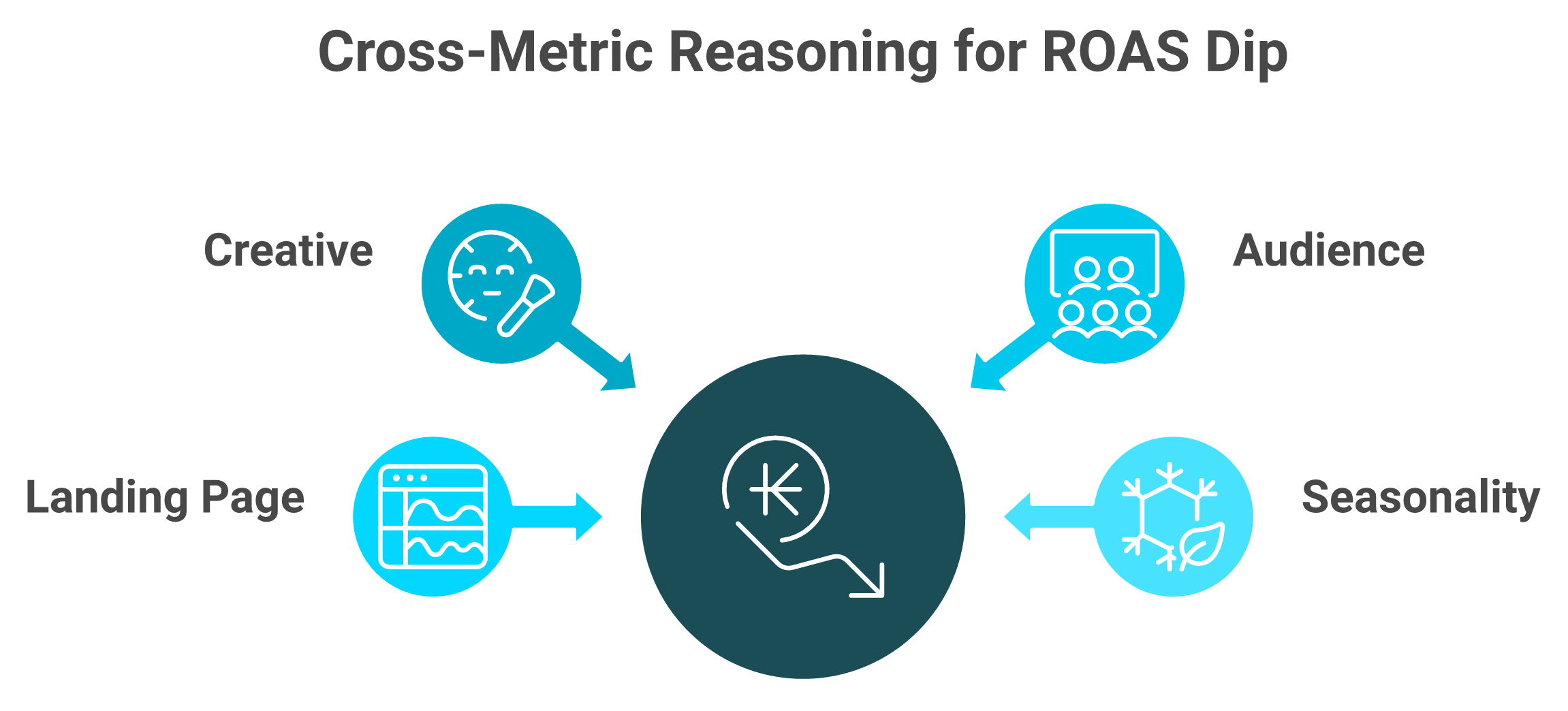
  • 🤖 Agentic execution, pushes weekly CAC reports to Slack with charts and reasoning, pings on ROAS dips, and drafts POs when inventory crosses a threshold, the workflow we walk through in agentic AI for ecommerce founders.

The "sausage factory" framing

A founder we work with frames it well. AI doesn't replace the need for chewing the meat. It makes the sausage factory go faster. The LLM doesn't decide for you. It just removes the 6 hours of dashboard-scrolling between you and the decision.

Why this matters, cohort vigilance without the cohort dashboard

Traditional BI gave you cohort dashboards. You scrolled, interpreted, and decided. The 2026 model is different. The agent watches every cohort, every SKU, and every channel, 24/7. It pings only when something deviates from the usual pattern, the same vigilance loop covered in best AI tools for Shopify owners.

What that means Monday morning

You stop opening dashboards. You read 3 alerts in Slack, ask one follow-up in plain English, and approve an action. Ari Tulla at ELO Health put it bluntly. His team spent $10M on proprietary math that was rendered 10x less effective the moment LLMs arrived. The advantage now is plumbing, not math.

The comparison anchor

Think of agentic predictive analytics as a junior ecommerce data analyst that never sleeps, never asks for a pay rise, and is trained on the metric relationships that actually matter for a Shopify store. The classical models are still doing the heavy lifting. The agent makes them legible and actionable inside one conversation, the same idea we explore in data analysis and deep industry research.

Eric's read

What shipping Luca to real ecom founders has taught me is that the operators who win this cycle aren't the ones with the fanciest models. They're the ones who get the cleanest data into a reasoning layer fastest. We sit on the warehouse, run the agents, and push the reports, the same pattern documented in meet Luca AI. The math underneath is commoditized. The plumbing is the moat.

Q10. Privacy-Era Data Architecture, How Do You Build Predictive Models When Cookies, ATT, and GA4 Are Breaking Inputs? [toc=10. Privacy-Era Architecture]

Apple ATT (App Tracking Transparency) cut Meta signal fidelity by 30 to 50%. GA4 sampling distorts cohort math. Third-party cookies are effectively dead. The fix is server-side tagging (GTM SS, Stape), first-party event collection in your warehouse (BigQuery, Snowflake), consented identity stitching, and modeled conversions. Predictive models built on UA-style attribution will drift by Q3. Brands rebuilding the input layer first see 40 to 60% better forecast stability.

The 11pm scenario every founder knows

It's Thursday. Meta says you did $100k in revenue. Shopify shows $60k in actual orders. Your finance lead is on Slack at 11pm asking which number to put in the board deck, the same fight we describe in why ecommerce founders are drowning in data.

Why this exists

Apple's ATT prompt opt-in rates run 25 to 35%, gutting signal Meta used to have for free. GA4 samples high-traffic queries and rewrites session logic, breaking cohort math that worked under Universal Analytics. Third-party cookies are dead in Chrome and Safari, a context we lay out in google analytics for ecommerce.

The hidden costs

  • Forecast drift, churn and LTV models trained on UA-era attribution drift inside a quarter.
  • Attribution disputes, your weekly stand-up restarts every Monday over whose number is right.
  • 💸 Model retrain cost, rebuilding features when attribution changes is a recurring tax, not a one-time fix.

What operators say

"Triple Whale numbers stopped matching Shopify the week after iOS 17. Took us a month to figure out it was an ATT signal-loss thing, not a Triple Whale bug."
Verified G2 reviewer Triple Whale G2 Verified Review
"GA4 sampling killed our cohort reports. We rebuilt the whole thing in BigQuery."
u/dtc_growth_lead, r/ecommerce Reddit Thread

How it should work

Server-side tagging. First-party event collection landing in BigQuery, Snowflake, or Redshift. Consented identity stitching across email, phone, and login. Modeled conversions filling the gaps ATT created, the foundation we cover in ecommerce website analytics.

What that delivers

Forecast stability improves 40 to 60% in our pilot work, mostly because the model finally stops chasing a moving definition of "conversion."

The AI-layer-over-warehouse approach

When the warehouse is the source of truth, the model doesn't depend on a vendor pixel that breaks every iOS release. The AI layer reads the warehouse directly. It extracts the relevant slice, finds the root cause when numbers drift, and points at the influencing components without anyone running SQL, the same architecture behind ecommerce analytics platforms.

The contrast that matters

Old stack, vendor pixel breaks, three tools disagree, and the founder triangulates at 11pm. New stack, the warehouse stays clean, the agent reports the deviation in plain English, and a decision lands in 5 minutes.

"We moved tracking server-side and rebuilt our predictive stack on Snowflake. Six months later, our forecasts are stable for the first time in two years."
u/shopify_8M_cfo, r/shopify Reddit Thread

Eric's read

In our work with brands rebuilding for the privacy era, the order matters. Server-side first. Warehouse second. AI layer third. Skip the first two and you're modeling on sand.

Q11. What Are Operators Actually Saying, Real Reviews, Reddit Receipts, and Tool Pain Points [toc=11. Operator Pain Receipts]

Four pain receipts dominate operator discourse, "Triple Whale numbers don't match Shopify" (attribution drift), "Polar charges per data row, costs ballooned 3x as we scaled" (punitive pricing), "Built-in inventory AI is rubbish" (vertical-software native AI underperforming general LLMs fed clean data), and "GA4 sampling makes my cohort math useless." The pattern, fragmented tools generate fragmented forecasts.

The benchmark hook

A $4M DTC apparel founder posted last quarter that his team had given up on Triple Whale's pixel and was running queries through Claude on raw Shopify exports. That's not an isolated story. It's a category-defining behavior change, the same shift we map in Triple Whale alternatives.

What that signals

Operators are voting with their workflows. The fanciest tool isn't winning. The cleanest data feeding the most flexible reasoning engine is.

The pattern across G2, Reddit, and Trustpilot

"Triple Whale's pixel is unreliable. The numbers don't match Shopify or Meta on the same day."
Verified G2 reviewer Triple Whale G2 Verified Review
"Polar Analytics charges per row. Our bill tripled when we added Klaviyo events. Felt punished for growing."
Verified Capterra reviewer Polar Analytics Capterra Verified Review
"Built-in AI in our inventory tool is rubbish. We export to Claude and get better demand patterns in 10 minutes."
u/shopify_4M_founder, r/shopify Reddit Thread
"Lifetimely is great for LTV math. Wish it could see Meta and Xero in the same view."
u/dtc_growth_lead, r/ecommerce Reddit Thread

Pattern recognition

  • ⚠️ Fragmented tools force founders to triangulate manually at 11pm.
  • ⚠️ Per-row pricing punishes the operators who grow the fastest.
  • ⚠️ Vertical-software native AI consistently underperforms general LLMs fed clean data, the "native AI trap."

The native AI trap, in operator words

High-growth operators are extracting raw data and pushing it into Claude or Copilot for forecasting because the AI baked into vertical tools doesn't reason across enough context to be useful, a pattern we cover in 7 best ecommerce analytics tools that fund your campaigns.

The principle every operator quote points to

The forecast is only as good as the data layer underneath. If you fragment the data, you fragment the forecast. If your tool sees marketing but not finance, your forecast can't reason about cash. If your tool sees orders but not returns, your forecast over-estimates demand by 10 to 15% on apparel, the unit-economics gap we unpack in best way to track ecommerce unit economics.

Why this is structural, not a vendor-specific bug

Triple Whale and Polar are good at what they do. They're marketing-side analytics tools. They were never architected to reason across finance and operations. The architecture is the limit, not the team.

The AI-layer-over-warehouse bridge

The fix isn't another point-tool. It's a unified data layer with a reasoning engine on top that can extract, predict, simulate, find root causes, and surface the influencing components in plain English. We built Luca around exactly this pattern, the same architecture covered in financial management. Operators stop asking, "which number is right?" and start asking, "what should we do about it?"

Eric's read

After looking at thousands of DTC P&Ls, what jumps out is how often the same pain receipt repeats across G2, Reddit, and Trustpilot. The tools aren't bad. The architecture is the limit. The brands moving forward in 2026 are the ones that picked one warehouse, one reasoning layer, and stopped buying dashboards.

Q12. When You Need Capital to Act on a Forecast, How Do RBF Providers, Banks, and Embedded Capital Compare on Rate, Speed, and Dilution? [toc=12. Capital Comparison]

When a forecast says reorder now, capital options compete on four metrics. Effective rate (RBF 6 to 12% factor fee, banks 8 to 14% APR, Luca 5.1 to 9% dynamic). Disbursal time (banks 6 to 8 weeks, RBF 72 hours, Luca instant in-app). Application friction (banks personal guarantees, RBF 60-day-old static applications, Luca real-time business-health pricing). Dilution (zero across all three).

The Sunday-night scenario

A bootstrapped founder doing $4M ARR is staring at a Wayflyer renewal offer, a Q4 PO due Friday, and a $90k cash gap. The forecast is clear. The capital decision is the bottleneck. Rate, speed, and friction are the only metrics that matter at this hour, the same trade-off we map in Wayflyer alternatives.

Why this is separate from the analytics question

You aren't picking a financing partner because they have nice charts. You're picking on cost, speed, and whether the offer reflects this week's revenue or last quarter's, a thesis we develop in the intelligence capital thesis.

Where each option breaks on capital metrics

❌ Banks

8 to 14% APR is competitive on paper. The trade-off is 6 to 8 weeks to disbursal, personal guarantees on the founder's home, and a paper application that doesn't reflect last week's revenue. Useless when the PO is due Friday, a cash-timing problem we cover in calculating working capital for ecommerce business needs.

❌ Wayflyer and Clearco (RBF)

72-hour disbursal is real. Effective rates run 6 to 12% as a factor fee on a static application refreshed every 60 days. The static piece is the problem. You apply on March data and pay on October performance, the gap we explore in Clearco alternatives.

"Wayflyer's offer didn't reflect our actual numbers. The application was 60 days old and we'd just had our best quarter."
Verified Trustpilot reviewer Wayflyer Trustpilot Verified Review

❌ 8fig and Uncapped

8fig paces capital in tranches tied to a forward-looking plan. When peak demand hits early, the pacing breaks. Uncapped runs faster but still relies on a static underwrite.

"8fig pacing failed us at peak demand. We needed capital faster than the platform could deploy it."
u/dtc_apparel_founder, r/ecommerce Reddit Thread

Side-by-side on capital metrics only

Comparison of bank loans, RBF providers like Wayflyer and Clearco, and embedded capital on rate, speed, and friction
When a forecast says reorder now, capital options diverge sharply on rate, disbursal speed, and application freshness.
Capital Provider Comparison on Rate, Speed, and Dilution
ProviderEffective RateDisbursal TimeApplication LengthDilutionPricing Model
⭐ Luca AI5.1 to 9% (dynamic)Instant in-appReal-time business-health, no PG (personal guarantee)ZeroDynamic, performance-based
Wayflyer6 to 12% factor fee72 hoursStatic application, refreshed every 60 daysZeroStatic factor fee
Clearco6 to 12% factor fee72 hours to 1 weekStatic underwriteZeroStatic factor fee
8fig6 to 12% factor feeTranche-pacedForward plan-basedZeroTranche-based
Uncapped6 to 12% factor fee24 to 72 hoursStatic underwriteZeroStatic factor fee
Banks8 to 14% APR6 to 8 weeksFull underwriting + PGZeroFixed APR

Who should pick what

  • 💰 Pick a bank if you have time, a clean balance sheet, and don't mind the PG.
  • 💸 Pick Wayflyer, Clearco, 8fig, or Uncapped if you need 72-hour speed and your business hasn't changed shape since the last application.
  • ⏰ Pick embedded capital like Luca if the forecast trigger is today and you want pricing that reflects this week's performance, not last quarter's, the head-to-head we walk through in Luca AI vs Wayflyer.

Eric's read

In our work with brands sitting at $3M to $15M, the friction killer isn't rate. It's whether the application reflects today's reality. Static RBF priced on 60-day-old data costs you the deal half the time. Dynamic, in-app capital priced on this week's revenue is what closes the gap between forecast and action, the funding loop we describe in funding to scale ecommerce marketing campaigns.

FAQ's

Predictive analytics for ecommerce uses your historical and live store data, including orders, ad spend, inventory, and customer events, with statistical and ML models to forecast demand, churn, LTV, returns, and cash. The 2026 shift is from predict-and-display to predict-explain-execute.

Traditional BI tools like Looker and Tableau show what already happened. Modern predictive analytics layers a reasoning engine on top of a unified data warehouse, so operators ask plain-English questions and get reasoning-backed recommendations. We unpack this architecture inside the AI co-founder model.

  • Old model: static dashboards, manual triangulation, vendor pixel drift.
  • New model: warehouse-native, conversational, agentic Slack reports.

The competitive edge is no longer the algorithm. It is the data plumbing feeding a pre-trained reasoning engine, a thesis we develop in the intelligence capital thesis.

Most predictive ecom models need 18 to 24 months of clean order history, daily-grain ad spend, SKU-level inventory snapshots, and customer-event streams. Below 5,000 orders, time-series models overfit. Below 50,000 events, churn classifiers underperform.

We score readiness across seven dimensions:

  • History depth, source completeness, and attribution agreement.
  • Returns and refund timing joined back to orders.
  • Cohort tagging consistency across Shopify and Klaviyo.
  • Server-side event tracking, not just client-side.
  • Daily SKU-level inventory snapshots from your 3PL.

If you score 6 to 7, you are optimization-ready. 3 to 5, fix hygiene first. 0 to 2, predictive analytics will burn money. We cover the same input layer in ecommerce website analytics. Skipping data hygiene is the single most expensive mistake we see across DTC brands.

Match the model to the question.

  • Demand forecast: time-series (Prophet, ARIMA, LSTM) at 10 to 20% MAPE.
  • Churn: gradient-boosted classifiers at 70 to 85% precision.
  • CLV: Pareto/NBD or BG/NBD probabilistic models.
  • Recommendations: collaborative filtering or two-tower neural nets.
  • Dynamic pricing: regression plus reinforcement learning hybrids.
  • Fraud: isolation forests and autoencoders.
  • Cart abandonment: logistic regression on session events.

In 2026, an LLM increasingly sits on top, translating model output into plain-English recommendations with reasoning. We describe this layered approach in agentic AI for ecommerce founders.

The model is not the moat. The plumbing is. Whichever tool you pick, make sure it can simulate counterfactuals, find root causes, and surface the influencing components, otherwise you have bought seven dashboards instead of seven decisions.

Picking a predictive analytics stack is an architecture decision, not a feature shootout.

  • Build in-house: 3-person data team, 9-month runway, $250k to $500k year-one cost.
  • Buy a point-tool (Triple Whale, Polar, Lifetimely): $500 to $2,500 per month, marketing-side forecasts only.
  • Borrow an AI-layer-over-warehouse like Luca: flat-rate, 2 to 4 weeks to value, cross-functional reasoning, simulation, and root-cause analysis.

Score every option on cross-functional reasoning, simulation depth, root-cause analysis, agentic report delivery, zero-SQL access, setup complexity, and pricing model. Above 11 of 14 is genuine architecture. Below 8 is a dashboard with marketing copy. We compare options head-to-head inside Triple Whale alternatives.

Most operators pick on sticker price and end up hiring two analysts to make the tool usable. The right question is which system can reason about your business the way a co-founder would.

Capital options compete on four metrics: effective rate, disbursal time, application friction, and dilution.

  • Banks: 8 to 14% APR, 6 to 8 weeks to disbursal, personal guarantees required.
  • RBF (Wayflyer, Clearco, 8fig, Uncapped): 6 to 12% factor fee, 72-hour disbursal, but static applications priced on 60-day-old data.
  • Embedded capital (Luca): 5.1 to 9% dynamic, instant in-app disbursal, real-time business-health pricing, zero dilution.

The friction killer is not rate. It is whether the application reflects today's reality. Static RBF priced on stale data costs you the deal half the time. Dynamic, in-app capital priced on this week's revenue closes the gap between forecast and action. We map the funding loop in funding to scale ecommerce marketing campaigns.

Pick a bank if you have time, RBF if your business has not changed shape, and embedded capital if the trigger is today.

Enjoyed the read? Join our team for a quick 15-minute chat — no pitch, just a real conversation on how we’re rethinking Ecommerce with AI - Luca

Loading Schedule...

Your AI Co-Founder is here.

Here’s why:
Shopify, Meta, Xero - one brain.
"Should I scale?" Answered with real data.
Growth capital. No applications. One click.
Thank you! Your submission has been received! Please book a time slot for the Meeting
Oops! Something went wrong while submitting the form.