10 Best AI Tools for Shopify Owners 2026: Platforms Ranked by Intelligence Depth
12
mins read
In this article
TL;DR
Unified platforms like Luca AI cost €200-500/month vs. 10-tool stacks at $3,300-6,500/month, delivering 70-85% savings including reclaimed consolidation time.
Integration depth matters more than count: shallow tools show "what happened," deep integrations explain "why" and recommend actions across domains.
Luca AI uniquely combines intelligence with instant capital (€10K-500K same-day), eliminating 6-week financing gaps when scaling opportunities emerge.
Revenue stage determines tool fit: €500K stores waste money on enterprise analytics; €8M stores suffer from fragmented 12-tool stacks.
Operational AI automates tasks (Jasper, Tidio, Klaviyo); Intelligence AI guides strategy by synthesizing commerce, marketing, finance, and operations data.
Hidden costs dominate: manual consolidation (10-15 hrs/week = €2,000-4,000/month) and bad decisions from incomplete data cost more than subscriptions.
Q1. What are the 10 Best AI Tools for Shopify Store Owners in 2026? [toc=Best AI Tools 2026]
The Shopify AI landscape has fundamentally shifted in 2026 from "how many AI tools can I add?" to "how do I avoid AI tool sprawl?" E-commerce founders managing €1M-€100M revenue now face a critical architectural decision: build a fragmented stack of 8-10 point solutions (each optimizing isolated workflows like content creation, customer service, or email automation) or deploy a unified intelligence platform that reasons across commerce, marketing, finance, and operations. This guide evaluates 10 AI tools across operational automation and strategic intelligence categories, emphasizing integration depth, cross-functional reasoning capabilities, and the emerging "AI Co-Founder" model that synthesizes analytics with instant capital access.
📋 The 10 AI Tools at a Glance
Luca AI - Unified Business Intelligence + Instant Capital Access
Jasper AI - AI-Powered Product Descriptions & Marketing Copy
ChatGPT - General-Purpose AI Assistant & Content Generation
🔍 Quick Comparison Table
10 Best AI Tools for Shopify Store Owners in 2026
Tool Name
Key Capabilities Offered
Best For
Pricing
Luca AI ⭐⭐⭐⭐⭐
Cross-functional reasoning engine, proactive intelligence with 24/7 risk/opportunity scanning, instant capital access (€10K-500K), unified data model across 20+ sources (Shopify, Stripe, Xero, Meta, Google, banking)
€1M-€100M Shopify stores needing strategic intelligence + capital access; founders spending 10+ hrs/week on manual reporting
Budget-conscious stores tracking web behavior; baseline analytics for stores under €500K revenue
Free (GA360 for enterprise)
ChatGPT ⭐⭐⭐
General conversational AI, content creation, data analysis (file uploads), web search capabilities
General tasks (blog posts, email drafts); stores without budget for specialized tools
$0/mo - $20/mo (Plus)
🏆 1. Luca AI
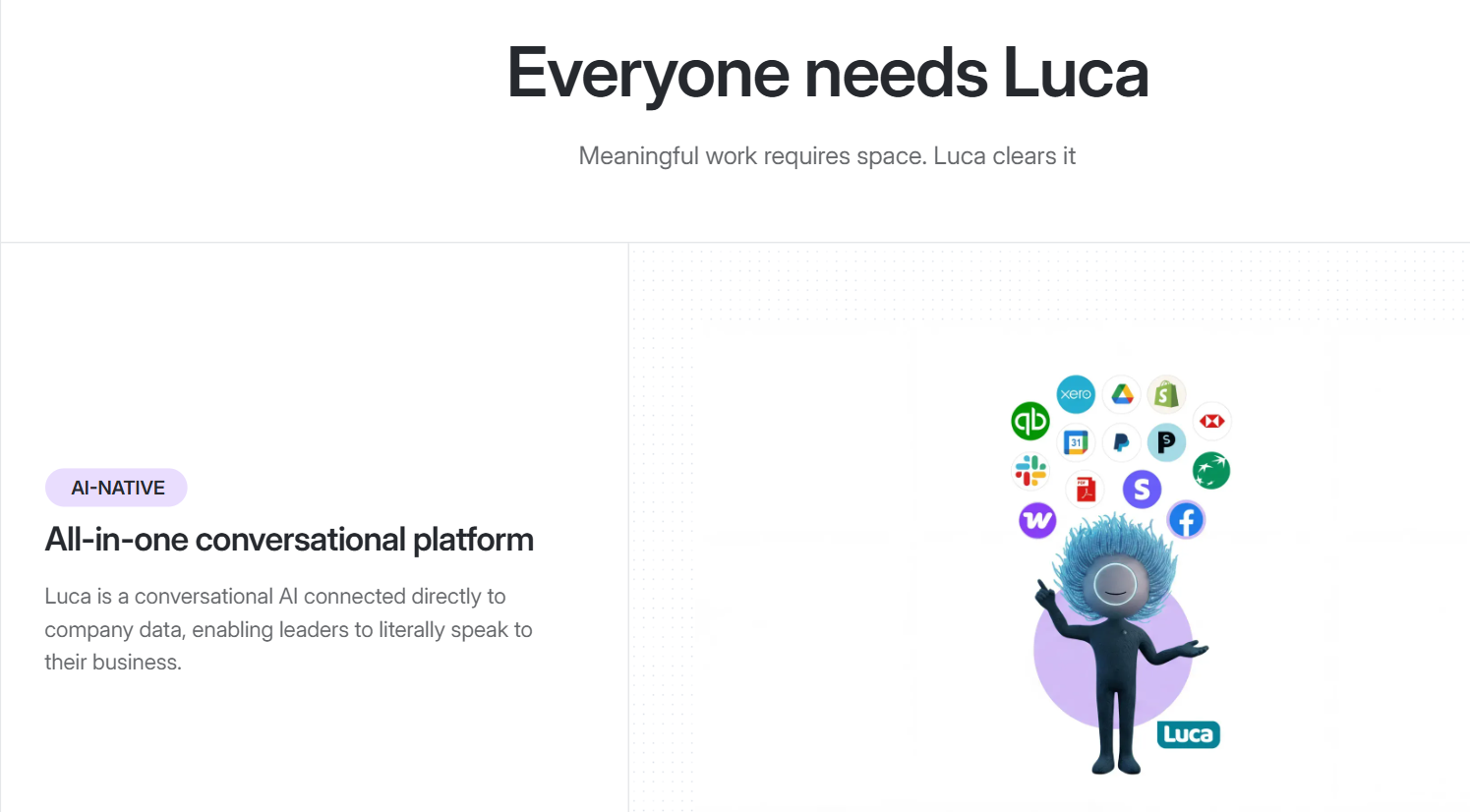
Luca AI all-in-one conversational platform integrating Shopify, Xero, QuickBooks, Stripe, and Meta into a unified intelligence layer, the best AI co-founder for e-commerce businesses.
✅ Why Did We Choose Luca AI?
As the founder of Luca AI, I'm positioning our platform first not out of bias, but because it represents an architectural shift the industry desperately needs. After 17 years in private equity and witnessing hundreds of e-commerce businesses drown in fragmented tooling, I built Luca to solve the root problem: intelligence and capital exist in separate, non-communicating silos. Traditional analytics dashboards (Triple Whale, GA4) show you what happened but can't fund growth. Financing providers (Wayflyer, Clearco) offer capital but lack context on whether you should take it. Luca is the world's first AI Co-Founder a unified "second brain" that reasons across commerce, marketing, finance, and operations to both analyze opportunities and fund them instantly. This synthesis is why we lead this list.
💼 Solutions Offered
Cross-Functional Intelligence Engine: Connects Shopify, Stripe, Xero, Meta, Google Ads, TikTok, Klaviyo, QuickBooks, and banking (via Plaid) into one unified data model answer questions like "If I scale Meta 40%, what's my cash position in 90 days?" in seconds
Instant Capital-as-a-Feature: Deploy €10K-500K same-day with dynamic pricing (5-12% based on real-time business health) the AI that identifies scaling opportunities can fund them
Conversational Interface: Natural language queries replace dashboards, SQL, and analyst dependency "Why did profit drop 12% in January?" gets cross-functional answers spanning marketing spend, COGS, Stripe fees, and fulfillment costs
Automated Action Execution: Luca doesn't just recommend it can pause underperforming ads, generate board reports, adjust inventory forecasts, and model capital deployment scenarios
🏢Notable Clients
🎯 Best For
Shopify stores managing €1M-€100M revenue experiencing data fragmentation (10+ hrs/week on manual reporting), capital constraints limiting growth, or cross-functional visibility gaps between marketing and finance teams.
📊 Case Study: €6M Fashion DTC Brand
🔴 The Problem: A European fashion retailer was using Triple Whale ($450/mo), Wayflyer (3-4 month capital application cycles), Xero ($50/mo), and employing 3 part-time analysts (15 hrs/week = $3,000/mo). The founder couldn't answer "Which Q4 cohort has highest 180-day LTV adjusted for CAC and return rates?" without 6 hours of spreadsheet work. Data discrepancies between platforms (Meta reported €120K revenue, Shopify showed €108K, Stripe settled €102K) created decision paralysis.
🟢 How Luca Helped: The brand integrated Luca AI's unified platform (10-minute OAuth setup across Shopify, Stripe, Meta, Xero, banking). Luca automatically reconciled the €18K revenue discrepancy (€8K refunds + €6K pending settlements + €4K Stripe fees) and surfaced a critical insight: their wholesale channel appeared profitable in Xero but was actually -4% net margin after accounting for Meta brand awareness ads driving wholesale discovery.
🏆 The Outcome: 90% reduction in reporting time (15 hrs/week → 1.5 hrs/week) = $2,700/mo labor savings. Reallocated €40K quarterly spend from loss-making wholesale marketing to profitable D2C channels. When AI identified a winning TikTok campaign opportunity, deployed €35K capital same-day (vs. 12-week Wayflyer cycle). 12x ROI in first 6 months from better capital allocation alone.
😊 User Reviews
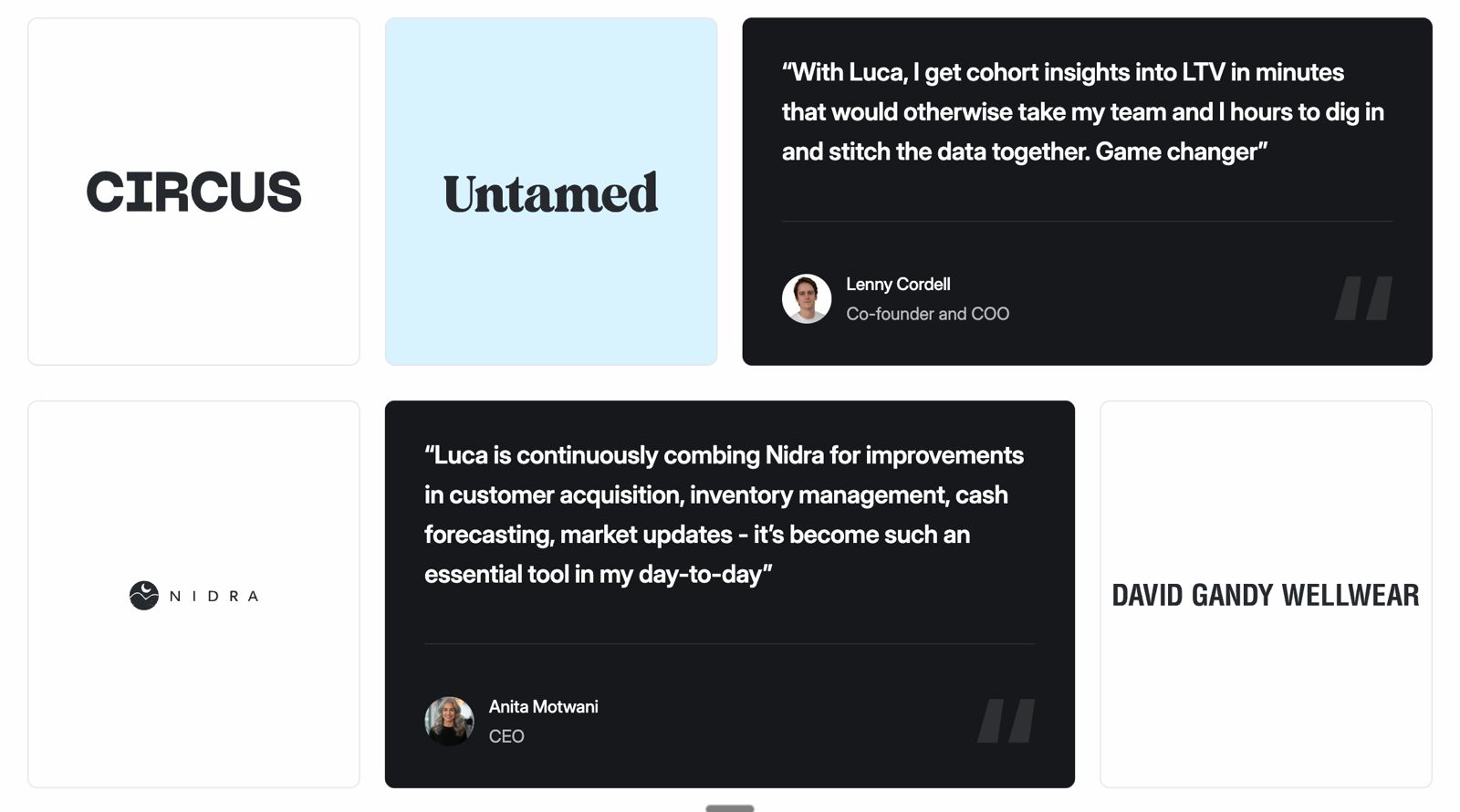
"We thought we needed better analysts. We actually needed better infrastructure. Luca gave us the unified intelligence layer we didn't know was missing plus the capital to act on insights immediately. First week: caught a pricing error costing us €1,200/month. Month two: funded a winning campaign 6 weeks faster than our old financing provider." -E-commerce Founder, €8M Skincare Brand G2 Verified Review
"Replaced Triple Whale, Wayflyer, and 4 other tools with one conversational interface. Ask 'Why did sales drop 15% last week?' and get answers spanning marketing (Meta CPM up 12%), inventory (bestseller stockout), and cash flow (delayed Stripe payout) in 10 seconds. The proactive alerts are game-changing Luca flagged creative fatigue on our top campaign 3 days before ROAS tanked." -Head of Growth, €12M Outdoor Gear Brand G2 Verified Review
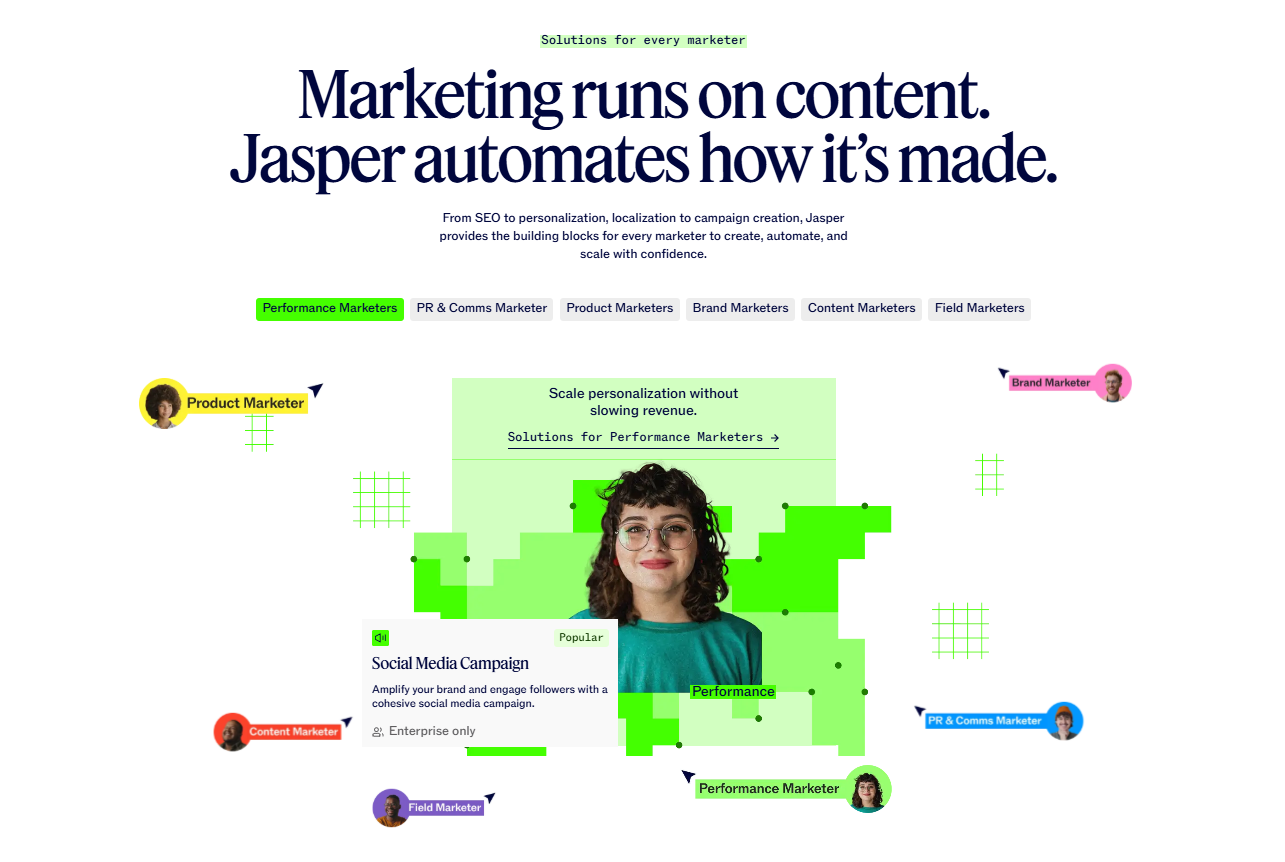
Jasper AI homepage showcasing automated content creation for performance marketers, offering scalable product descriptions and ad copy generation for high-SKU Shopify store owners.
✅ Why Did We Choose Jasper AI?
Jasper AI earns its place as the leading AI copywriting tool for e-commerce through proven scale capabilities powering product description generation for stores managing 500-10,000+ SKUs where manual copywriting becomes operationally impossible. Unlike general AI tools (ChatGPT), Jasper offers e-commerce-specific templates, brand voice consistency across thousands of outputs, and SEO optimization modes that balance keyword targeting with readability. For high-SKU Shopify stores, Jasper transforms a 40-hour/week content bottleneck into a 4-hour review process.
💼 Solutions Offered
50+ E-commerce Templates: Pre-built frameworks for product descriptions, Meta/Google ad copy, email campaigns, SMS messages, and landing page content optimized for conversion
Brand Voice Training: Upload existing content to train Jasper on your tone, terminology, and messaging style ensuring consistency across 1,000+ generated descriptions
SEO Content Optimizer: Real-time scoring for keyword density, readability, and semantic relevance to target search queries
Bulk Generation Workflows: Process entire product catalogs in batches generate 500 descriptions in 2 hours with CSV import/export
Multi-language Support: Create localized product copy for international markets in 29 languages
🏢 Notable Clients
Used by over 100,000 businesses including IBM, Logitech, and fast-growing DTC brands managing multi-channel product catalogs.
🎯 Best For
Shopify stores with 200+ SKUs needing product descriptions at scale, content-heavy marketing strategies requiring consistent brand voice, or international brands localizing copy across multiple markets.
😊 User Reviews
"Jasper cut our product description writing time from 3 days to 4 hours for our 600-SKU catalog. The brand voice feature is solid trained it on our existing copy and 80% of outputs need zero editing. The limitation: it's a content tool, not business intelligence. Jasper writes great copy but can't tell you which products are actually profitable." -E-commerce Operations Manager G2 Verified Review
"We use Jasper for ad copy variations (Meta, Google, TikTok) and it's been a huge time-saver 10 ad variations in 15 minutes vs. 2 hours manually. Downsides: $125/month adds up, and you still need a human to review for accuracy. Jasper sometimes hallucinates product features that don't exist, so blind trust is dangerous." -u/dtcfounder, r/ecommerce Reddit Thread
💰 Pricing
$39/mo $125/mo (scales with word count usage; Creator plan for individuals, Teams plan for agencies)
🏆 3. Shopify Sidekick
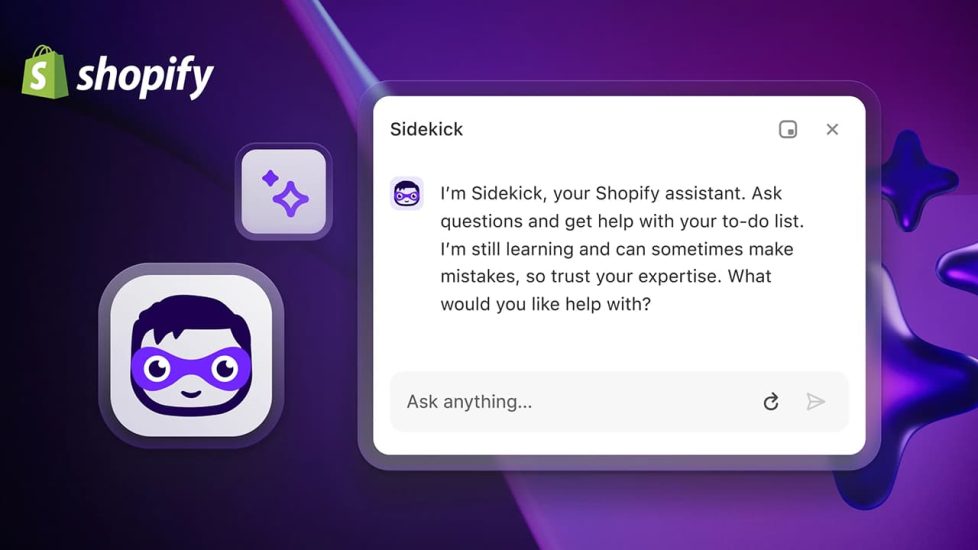
Shopify Sidekick conversational AI assistant embedded within the Shopify admin dashboard, offering native store management help for e-commerce founders managing daily operations solo.
✅ Why Did We Choose Shopify Sidekick?
Shopify Sidekick represents Shopify's first native AI assistant, offering conversational admin navigation for store owners who find the Shopify dashboard overwhelming. Unlike third-party tools requiring additional integrations, Sidekick is embedded directly into the Shopify admin meaning zero setup time, native access to all store data (orders, inventory, customers, analytics), and automatic updates alongside Shopify platform changes. For Shopify-exclusive merchants (no multi-platform complexity), Sidekick provides fast answers to operational questions without leaving the admin interface.
💼 Solutions Offered
Conversational Admin Navigation: Ask "Show me orders from last week with refund requests" or "Which products are low in stock?" and Sidekick retrieves data instantly without manual filtering
Inventory Management Queries: Real-time stock level checks, reorder recommendations based on sell-through velocity, and stockout risk alerts
Order & Customer Insights: Query customer purchase history, average order value trends, refund rates by product, and fulfillment status across orders
Report Generation: Generate sales reports, product performance summaries, and traffic analytics through natural language prompts
Native Shopify Integration: Zero setup available to all Shopify merchants in admin sidebar, automatically syncs with store data changes
🏢 Notable Clients
Available to Shopify's 4.6 million merchants globally across all plan tiers (Basic, Shopify, Advanced, Plus).
🎯 Best For
Shopify-exclusive stores (no WooCommerce, Amazon, or multi-platform complexity) needing quick admin assistance; solopreneurs managing operations alone without dedicated teams.
😊 User Reviews
"Shopify Sidekick is handy for quick inventory checks ('Which products sold out this week?') and saves me from clicking through 5 dashboard pages. But it's shallow can't answer complex questions like 'Am I profitable by channel after Stripe fees and COGS?' because it only sees Shopify data, not accounting or payment processor info." -Shopify Store Owner G2 Verified Review
"Free and built-in is great, but Sidekick feels like a better search bar, not real AI intelligence. Asked it 'Why did sales drop 20% last week?' and got a list of last week's orders no analysis, no insights. For basic queries, it works. For strategic questions, you need real tools." -u/shopifyuser2024, r/shopify Reddit Thread
💰 Pricing
Included with Shopify (no additional cost; available across all Shopify plan tiers)
🏆 4. Klaviyo
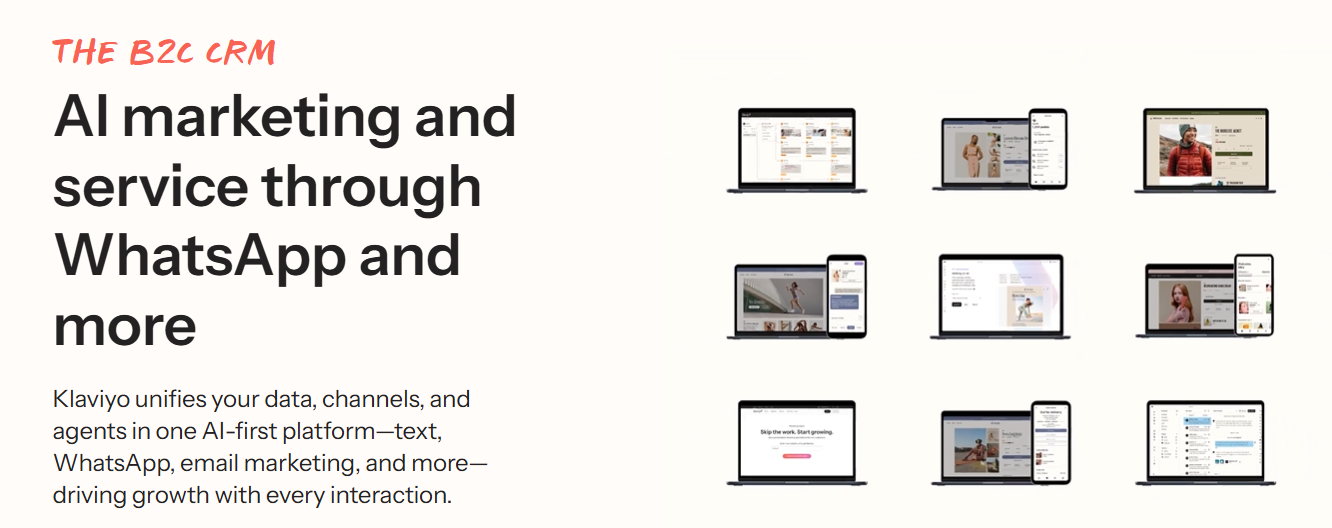
Klaviyo B2C CRM interface displaying multi-channel marketing automation across email, SMS, and WhatsApp, a leading retention tool for DTC Shopify brands driving repeat revenue.
✅ Why Did We Choose Klaviyo?
Klaviyo dominates e-commerce email and SMS marketing through deep Shopify integration, predictive analytics that forecast customer lifetime value, and automated flow builders that drive measurable revenue. Unlike generic email tools (Mailchimp), Klaviyo is purpose-built for e-commerce tracking product views, cart additions, and purchase behavior to trigger hyper-personalized campaigns. For DTC brands where email/SMS represents 30-50% of revenue, Klaviyo's AI-powered segmentation and send-time optimization deliver consistent ROI improvements of 15-30% over basic email platforms.
💼 Solutions Offered
Predictive Customer Lifetime Value (CLV): AI models forecast which customers will become high-value buyers, enabling VIP segmentation and personalized retention strategies
AI-Powered Send-Time Optimization: Analyzes individual customer engagement patterns to send emails when they're most likely to open (not generic 10am blasts)
Dynamic Segmentation Engine: Automatically groups customers by behavior (abandoned cart, repeat buyers, discount hunters) and refreshes segments in real-time as behavior changes
Abandoned Cart & Browse Recovery Flows: Pre-built automation workflows trigger personalized emails/SMS when customers abandon carts, with product-specific recommendations
A/B Testing Automation: Test subject lines, content, send times, and audience segments with automatic winner selection and rollout
🏢 Notable Clients
Powers marketing for 143,000+ e-commerce brands including Huckberry, ColourPop, Chubbies, and fast-growing Shopify stores generating $500M+ in attributed revenue annually.
🎯 Best For
DTC brands with email/SMS driving 30%+ of revenue, stores building customer retention programs, or businesses with repeat purchase models (subscriptions, consumables).
😊 User Reviews
"Klaviyo is the best email tool we've used for e-commerce the Shopify integration is seamless (customer data syncs in real-time) and the flows are powerful. Our abandoned cart flow alone generates $15K/month. Limitation: it's marketing-only. Klaviyo knows email open rates but has no clue about our cash flow, COGS, or Stripe fees. We still need separate tools for financial intelligence." -E-commerce Marketing Director G2 Verified Review
"Pricing scales painfully as your list grows. We hit 50K contacts and jumped from $150/mo to $450/mo overnight no warning. The platform is excellent (flows, segmentation, analytics are top-tier), but the cost makes it hard to justify for smaller stores. Also, customer support is slow 2-3 day ticket responses." -u/dtc_founder, r/ecommerce Reddit Thread
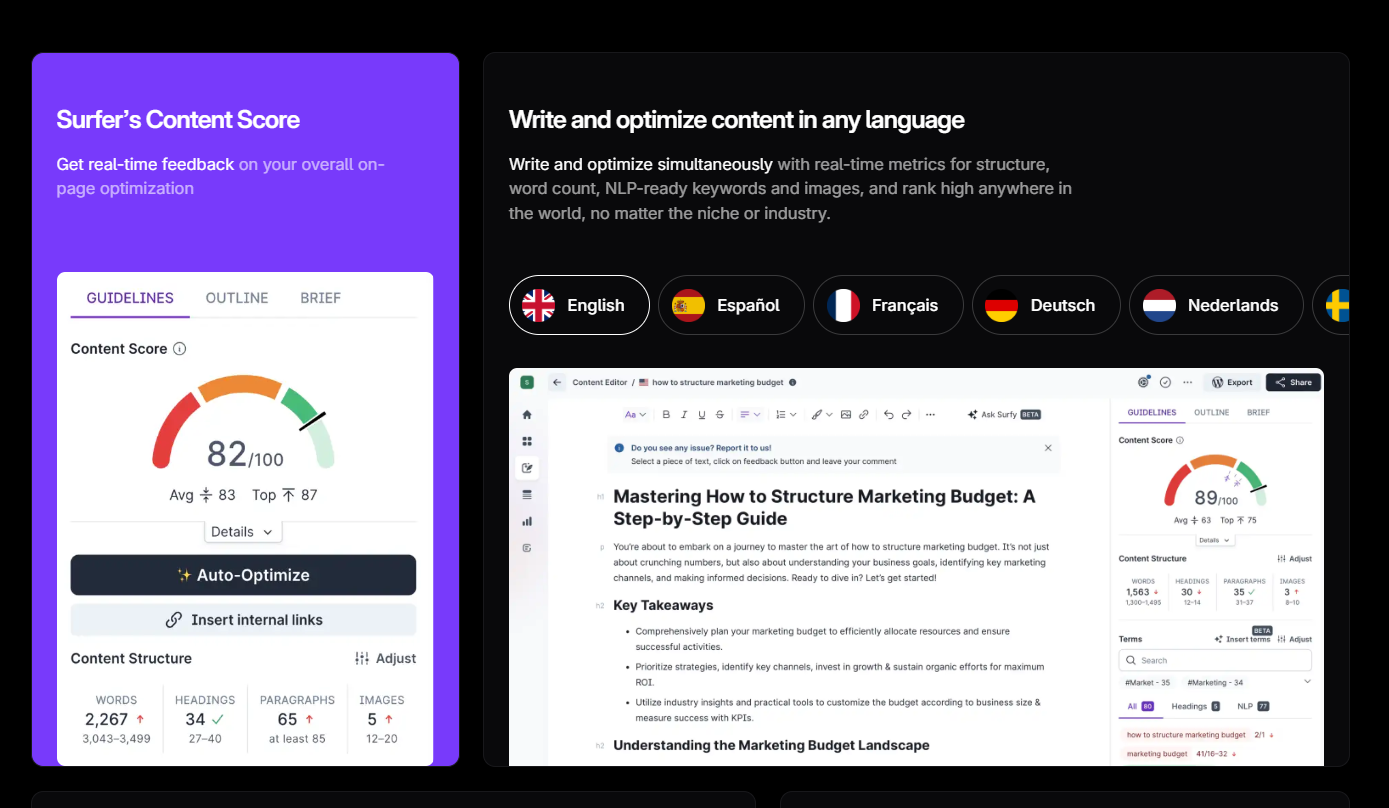
Surfer SEO content optimization interface showing real-time scoring, keyword analysis, and multilingual editing capabilities for Shopify store owners improving organic search rankings.
✅ Why Did We Choose Surfer SEO?
Surfer SEO delivers AI-powered content optimization for e-commerce stores competing in high-intent search queries ("best running shoes for flat feet," "organic baby food brands"). Unlike basic keyword tools, Surfer analyzes the top 10 SERP results for your target keyword and provides real-time scoring on content length, keyword density, semantic terms, and structure guiding writers to match search intent. For Shopify stores where SEO drives 20-40% of traffic, Surfer's data-driven approach replaces guesswork with actionable optimization frameworks.
💼 Solutions Offered
Content Editor with Real-Time Scoring: Write or paste content and receive live feedback (0-100 score) on keyword usage, content length, heading structure, and semantic relevance to target queries
SERP Analyzer: Audit the top 10 ranking pages for any keyword discover average word count, common headings, LSI keywords competitors use, and content gaps to exploit
AI Outline Generator: Input a target keyword and receive a structured content outline with recommended headings, questions to answer, and semantic terms to include
Keyword Research Tool: Discover related keywords, search volume, difficulty scores, and content clusters to prioritize in your SEO strategy
Content Audit for Existing Pages: Scan your live Shopify product pages or blog posts and receive optimization recommendations to improve rankings
🏢 Notable Clients
Used by 150,000+ content creators, SEO agencies, and e-commerce brands including Neil Patel, Zapier, and high-growth DTC stores optimizing product pages for organic search.
🎯 Best For
Shopify stores with SEO driving 20%+ traffic, content marketing-focused DTC brands publishing blogs/guides, or businesses competing in high-volume product search queries.
😊 User Reviews
"Surfer is excellent for on-page SEO helped us rank #3 for 'best yoga mats' which drives 2K monthly visits. The content editor is intuitive and the SERP analysis saves hours of manual competitor research. Downside: it's SEO-only. Surfer can't tell you if those 2K visitors are actually converting or profitable you need separate analytics for that." -Content Marketing Manager, DTC Brand G2 Verified Review
"Good tool for content optimization but the AI outline feature is hit-or-miss sometimes generates generic outlines that miss niche search intent. Also, $89/mo for the Basic plan only allows 30 articles/month, which is limiting if you're scaling content. For dedicated SEO teams, it's solid. For casual users, maybe overkill." -u/seostrategy, r/SEO Reddit Thread
💰 Pricing
$89/mo $239/mo (Essential plan for solopreneurs, Scale plan for agencies; limits on articles/month and SERP audits)
🏆 6. Google Analytics 4
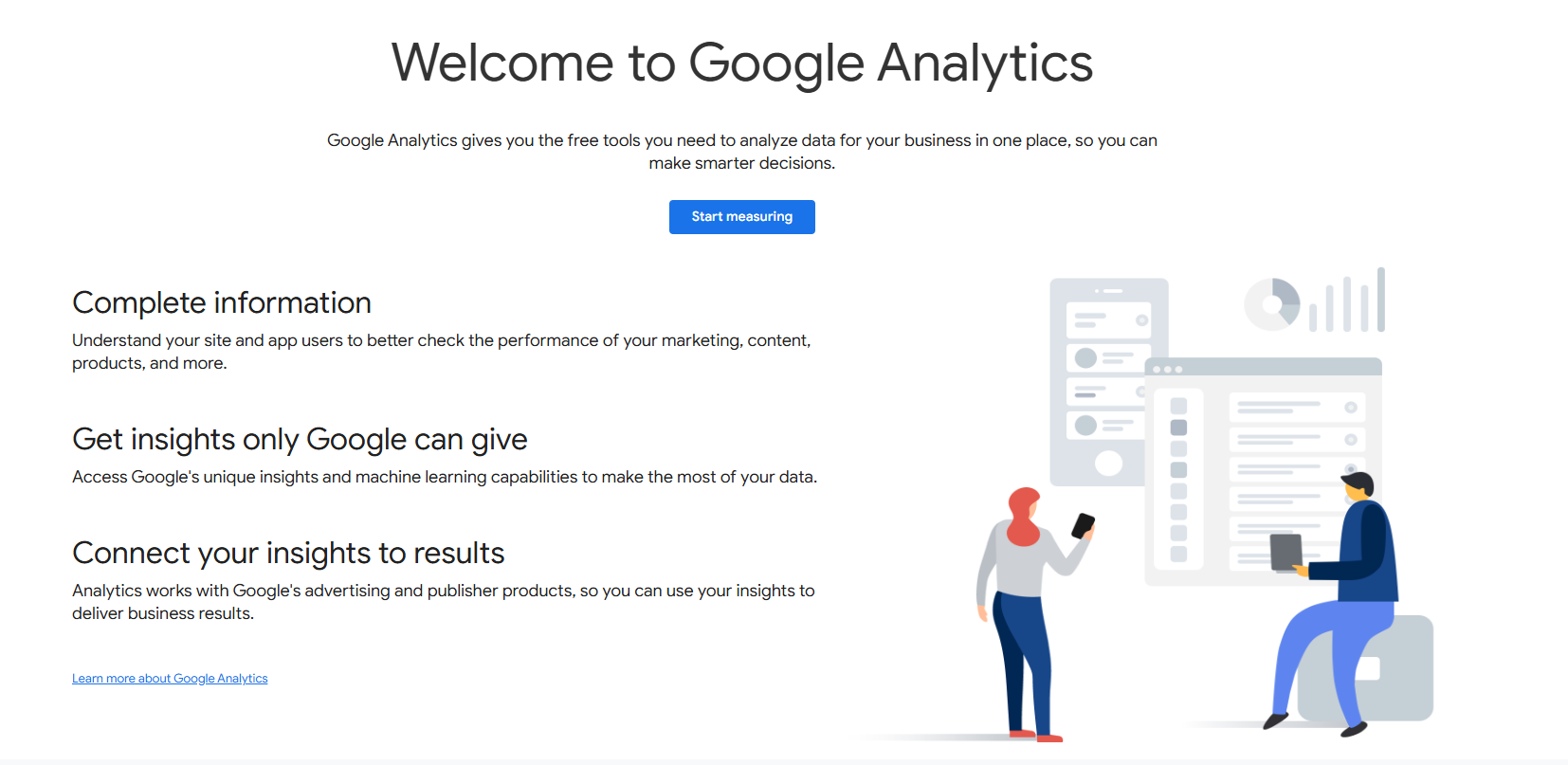
Google Analytics 4 welcome page highlighting free business data analysis tools, a baseline web analytics platform for Shopify store owners evaluating AI-powered e-commerce intelligence solutions.
✅ Why Did We Choose Google Analytics 4?
Google Analytics 4 (GA4) represents the baseline web analytics standard for Shopify stores free, universally compatible, and offering essential traffic source tracking, conversion funnel analysis, and audience segmentation. Unlike its predecessor (Universal Analytics), GA4 introduces predictive metrics (purchase probability, churn probability) and event-based tracking that aligns better with modern e-commerce workflows. However, GA4's value comes with significant caveats: it requires 2-4 hours of technical setup, manual event configuration for e-commerce tracking, and SQL knowledge (via BigQuery export) for complex custom reports.
💼 Solutions Offered
Traffic Source Attribution: Track where visitors originate (Google Search, Meta ads, email, direct) and which sources drive conversions vs. bounces
Audience Segmentation: Create user groups based on behavior (first-time visitors, repeat purchasers, cart abandoners) and analyze engagement patterns
Predictive Engagement Metrics: AI-powered predictions for purchase probability (likelihood a user will convert in next 7 days) and churn risk (likelihood a customer won't return)
BigQuery Integration for Advanced Analysis: Export raw event data to Google BigQuery for custom SQL queries and complex attribution modeling (requires technical expertise)
🏢 Notable Clients
Used by 29 million websites globally, including 85%+ of Shopify stores as baseline web analytics infrastructure.
🎯 Best For
Budget-conscious stores tracking web behavior baseline, stores under €500K revenue without budget for paid analytics, or businesses needing free traffic source visibility.
😊 User Reviews
"GA4 is fine for basic traffic tracking (where visitors come from, which pages they view), but it's a nightmare to set up properly. Spent 6 hours configuring e-commerce events and still don't trust the conversion data numbers never match Shopify's native analytics. Free is great, but you pay in time and frustration." -G2 Verified Review
"GA4 is powerful if you have a data analyst who knows SQL and BigQuery. For the average Shopify store owner, it's overkill and confusing the UI is terrible compared to Universal Analytics. We use it because it's free, but rely on Shopify Analytics for actual decision-making. GA4 feels like a tool built for enterprises, not SMBs." -u/shopifyowner, r/shopify Reddit Thread
💰 Pricing
Free (Google Analytics 360 for enterprise starts at $50K/year with dedicated support and higher data limits)
🏆 7. Triple Whale
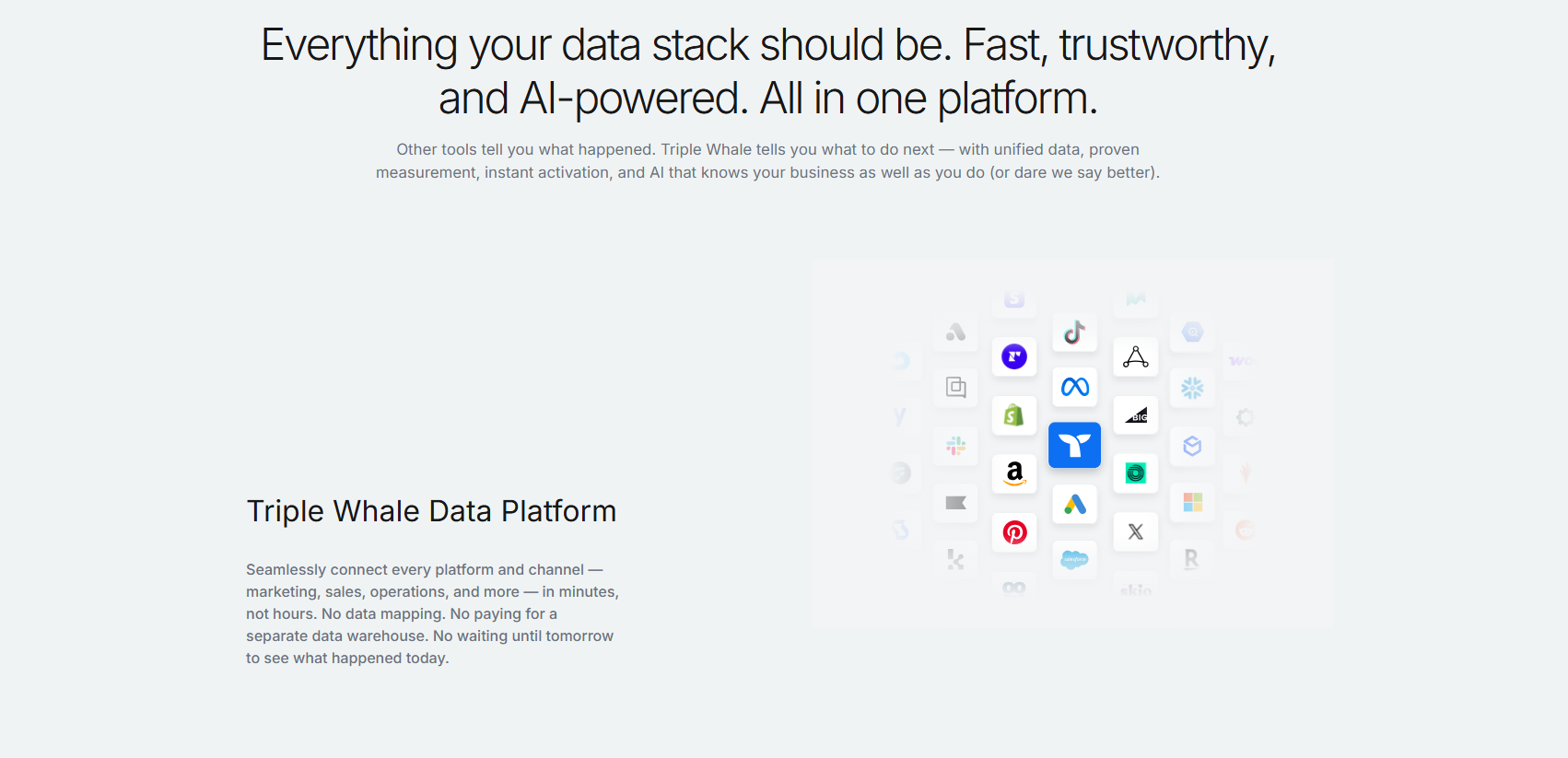
Triple Whale data platform homepage showcasing multi-channel integrations across Shopify, Meta, TikTok, and Amazon, offering marketing attribution and analytics for DTC e-commerce store owners.
✅ Why Did We Choose Triple Whale?
Triple Whale has become the de facto marketing attribution standard for DTC brands running multi-channel paid acquisition (Meta, Google, TikTok) due to its first-party tracking pixel (bypassing iOS privacy restrictions), custom dashboards, and Moby AI agents that automate weekly analysis. Unlike GA4 (web behavior focus) or Shopify Analytics (platform-locked), Triple Whale unifies marketing spend with order data to calculate true ROAS, CAC, and contribution margin specifically for paid acquisition teams obsessed with attribution accuracy. However, its value is strictly limited to marketing intelligence: Triple Whale sees commerce + marketing but misses finance (Xero, Stripe fees, COGS), making it a "rear-view mirror" for marketing performance without cross-functional business context.
💼 Solutions Offered
Triple Pixel First-Party Tracking: Proprietary tracking pixel captures customer journey data independent of Meta/Google pixels, reducing iOS 14+ attribution loss by 15-25%
Multi-Touch Attribution Modeling: Track how Meta, Google, TikTok, email, and influencer campaigns work together to drive conversions assign credit across touchpoints
Custom Dashboard Builder: Drag-and-drop interface to create personalized views of ROAS, CAC, AOV, and conversion rates by channel, campaign, or creative
Moby AI Agents: Automated analysis agents generate weekly performance reports, anomaly detection alerts, and budget reallocation recommendations
Creative Analytics: Track which ad creatives (images, videos, copy variations) drive highest ROAS, helping creative teams double down on winners
🏢 Notable Clients
Powers attribution for 8,000+ DTC brands including Hydrant, BruMate, Javy Coffee, and fast-growing Shopify stores spending $50K-$5M/month on paid ads.
🎯 Best For
Marketing-led DTC brands spending $20K+/month on Meta/Google/TikTok ads, attribution-obsessed growth teams, or stores experiencing iOS 14+ tracking degradation.
😊 User Reviews
"Triple Whale gives us a clear picture of our ad spend across Meta, Google, and TikTok the custom dashboards are excellent and Moby's weekly summaries save hours. The limitation: it's marketing-only. Triple Whale shows ROAS but can't tell you if campaigns are profitable after Stripe fees, COGS, and fulfillment costs because it doesn't connect to Xero or accounting. You need a separate tool for financial intelligence." -E-commerce Growth Manager G2 Verified Review
"We switched from GA4 to Triple Whale and attribution accuracy improved significantly Triple Pixel catches conversions GA4 misses due to iOS. Downsides: $350/mo adds up, and the data still conflicts with Shopify sometimes (Triple Whale says $120K revenue, Shopify shows $108K). Also, customer support is slow 3-4 day response times for technical issues." -u/dtcgrowth, r/ecommerce Reddit Thread
💰 Pricing
$129/mo $500/mo (Starter for stores doing <$500K/year, Pro for $500K-$5M, Enterprise for $5M+)
🏆 8. Tidio
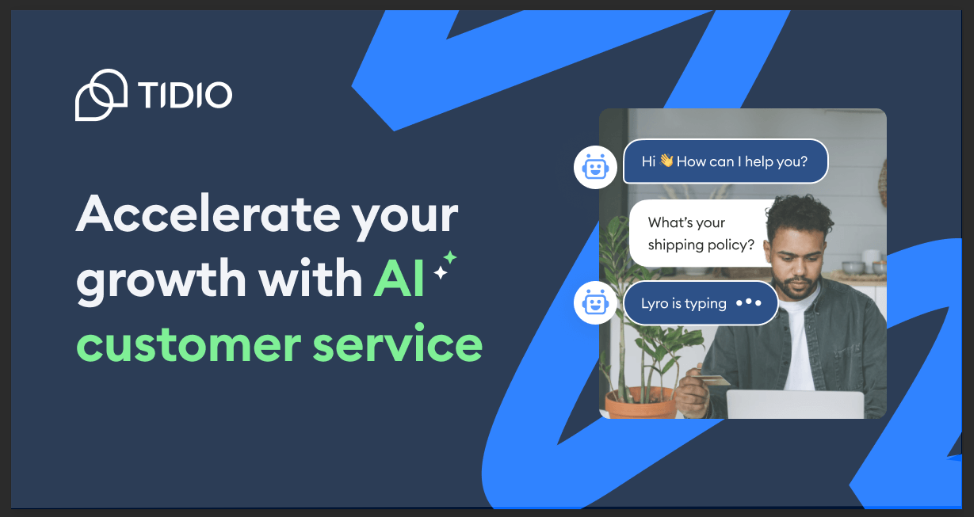
Tidio AI-powered customer service platform featuring Lyro chatbot handling automated support queries, helping Shopify store owners reduce ticket volume and improve response times.
✅ Why Did We Choose Tidio?
Tidio earns its position as the leading AI chatbot for Shopify stores through Lyro an AI assistant trained specifically on your store's product catalog, FAQs, and order history to handle 70-80% of common support inquiries (order tracking, return policies, product questions) without human intervention. Unlike generic chatbots requiring complex setup, Tidio offers 5-minute Shopify integration and pre-built templates for e-commerce use cases. For stores receiving 50+ daily support inquiries, Tidio transforms customer service economics: $99/month for AI automation vs. $3,000/month for a full-time support agent.
💼 Solutions Offered
Lyro AI Chatbot: Trained on your Shopify product data, policies, and FAQ content answers customer questions about product specs, sizing, shipping times, and order status 24/7
Live Chat for Human Handoff: When Lyro can't resolve an inquiry (complex issues, upset customers), seamlessly transfers conversation to human agent with full context history
Automated Order Tracking: Customers ask "Where's my order?" and Lyro pulls real-time Shopify fulfillment data no manual lookup required
Ticket Management System: Organizes customer inquiries by priority, tags conversations by topic (refund, shipping, product question), and tracks resolution times
Multilingual Support: Lyro operates in 7 languages (English, Spanish, French, German, Portuguese, Italian, Polish), expanding international store capabilities
🏢 Notable Clients
Used by 300,000+ businesses including e-commerce stores, SaaS companies, and service providers handling 1M+ customer conversations monthly.
🎯 Best For
Shopify stores with 50+ daily support inquiries, international brands needing multilingual automation, or businesses wanting to reduce human support agent headcount.
😊 User Reviews
"Tidio's Lyro AI handles about 60% of our support tickets mostly 'Where's my order?' and 'What's your return policy?' type questions. It's saved us from hiring a second support agent ($2,500/mo salary avoided). Limitation: Lyro struggles with complex issues (defective products, upset customers) and sometimes gives generic answers that frustrate people. We still need humans for 40% of tickets." -E-commerce Operations Manager G2 Verified Review
"Setup was easy (5 minutes), and the chatbot works well for basic FAQs. Downsides: $99/mo is steep when you factor in we're also paying for Gorgias ($300/mo) as our main helpdesk. Tidio is good for automation but doesn't replace a real helpdesk. Also, the AI sometimes hallucinates answers about shipping times or product availability requires monitoring." -u/shopifystore, r/shopify Reddit Thread
💰 Pricing
$29/mo $749/mo (Starter for 50 conversations/month, Communicator for 2K conversations, Tidio+ for unlimited with advanced AI)
🏆 9. Midjourney
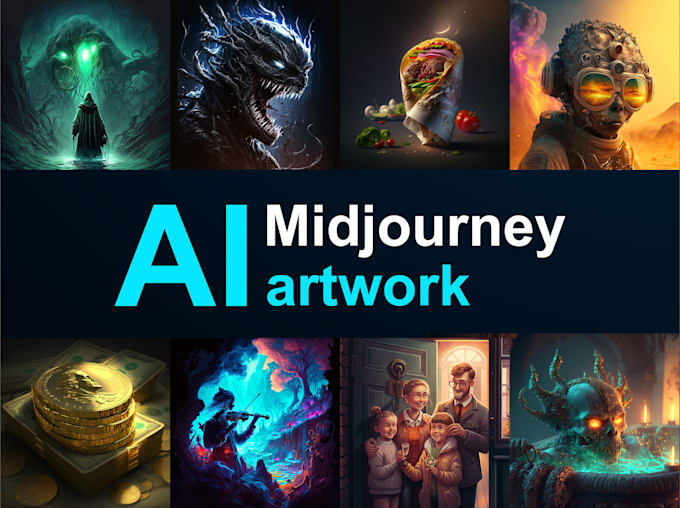
Midjourney AI artwork gallery demonstrating photorealistic image generation capabilities, enabling Shopify store owners to create product visuals and ad creatives without traditional photoshoots.
✅ Why Did We Choose Midjourney?
Midjourney dominates AI-generated visual content through unmatched image quality, artistic style consistency, and rapid iteration capabilities critical for fashion, home goods, and lifestyle brands needing unique product photography that breaks through social media noise. Unlike stock photo libraries (generic, overused) or traditional photoshoots ($2,000-10,000 per session), Midjourney enables infinite creative variations for $10-120/month. For brands posting 20-50 social media images weekly or testing 10+ ad creative variations monthly, Midjourney transforms visual content from a budget bottleneck into a creative advantage.
💼 Solutions Offered
High-Fidelity Image Generation: Create photorealistic product mockups, lifestyle scenes, and brand imagery from text prompts with resolution up to 2048x2048 pixels suitable for ads and product pages
Style Consistency Engine: Use "style reference" feature to ensure all generated images match your brand aesthetic upload 3-5 reference images and Midjourney maintains that visual language across thousands of outputs
Rapid Creative Iteration: Generate 10-20 variations of a concept in minutes (different colors, backgrounds, compositions) to A/B test which visual styles drive engagement
Product Mockup Creation: Place your product in various contexts (lifestyle settings, seasonal themes, aspirational environments) without physical photoshoots
Commercial Licensing: Pro/Mega plans grant full commercial rights to generated images for advertising, product listings, and marketing materials
🏢 Notable Clients
Used by 20+ million creators including agencies like AKQA, brands like Coca-Cola (for concept ideation), and thousands of DTC e-commerce stores generating social/ad creative.
🎯 Best For
Fashion, home goods, or lifestyle brands needing unique product photography; stores posting 20+ social media images weekly; brands testing high-volume ad creative variations.
😊 User Reviews
"Midjourney transformed our social content production we went from $5K/month in photoshoot costs to $30/month for AI images. The quality is stunning (our followers can't tell it's AI), and we can test 20 different product scenes in an hour vs. booking a studio for 2 weeks out. Limitation: it's a creative tool, not business intelligence Midjourney makes pretty pictures but has no clue which ones actually sell products." -Creative Director, DTC Home Goods Brand G2 Verified Review
"Love Midjourney for concept ideation and mood boards, but it's not a replacement for professional product photography. AI-generated images work great for social media filler content and ad testing, but customers still expect real product photos on PDPs. Also, the Discord interface is clunky not beginner-friendly. Learning curve is steeper than advertised." -u/ecommercecreative, r/ecommerce Reddit Thread
💰 Pricing
$10/mo $120/mo (Basic for 200 image generations/month, Standard for unlimited, Pro/Mega for commercial licensing and stealth mode)
🏆 10. ChatGPT
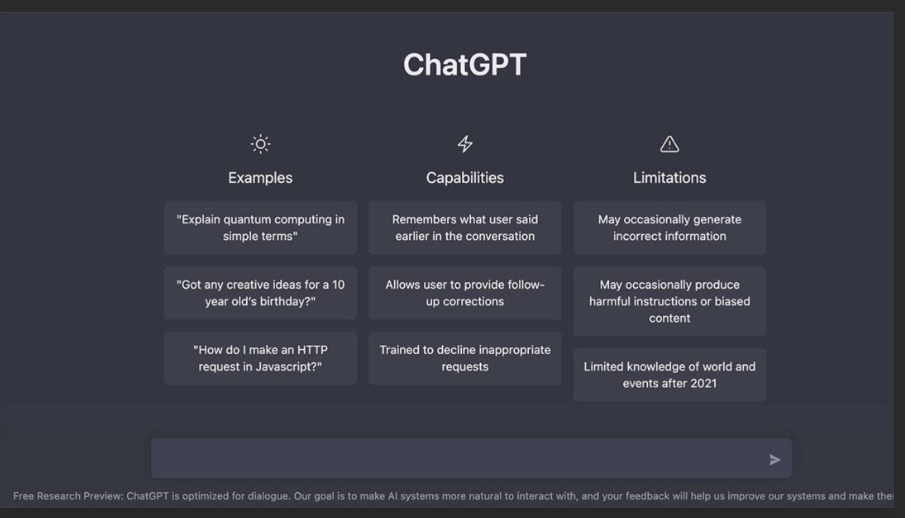
ChatGPT interface showing conversational AI examples, capabilities, and known limitations, a general-purpose assistant Shopify store owners use for content creation and basic business queries.
✅ Why Did We Choose ChatGPT?
ChatGPT represents the general-purpose AI baseline useful for ad-hoc content creation (blog drafts, email templates, brainstorming), basic data analysis (upload CSV files for quick insights), and web research (via search integration in Plus/Pro tiers). Unlike specialized e-commerce tools, ChatGPT offers flexibility: founders use it for everything from writing product descriptions to analyzing customer feedback to generating social media captions. However, this general-purpose strength is also its critical limitation: ChatGPT has zero business context it knows nothing about YOUR Shopify store, sales data, or performance metrics unless you manually provide that information in every conversation.
💼 Solutions Offered
Conversational AI for Any Task: Answer questions, generate content, analyze text, provide recommendations, explain concepts general intelligence across infinite domains
Content Creation: Write blog posts, product descriptions, email sequences, social media captions, ad copy, and customer service responses
Data Analysis via File Uploads: Upload CSV files (sales data, customer lists) and ask ChatGPT to calculate metrics, identify trends, or create charts (requires manual data preparation)
Web Search Integration (Plus/Pro): Access real-time web information for market research, competitor analysis, trend identification, or fact-checking
Code Assistance: Generate scripts for data processing, Shopify theme customization, or automation workflows (requires technical knowledge to implement)
🏢 Notable Clients
Used by 100+ million weekly active users globally across every industry from Fortune 500 companies to solo entrepreneurs leveraging AI for productivity.
🎯 Best For
General tasks (blog writing, email drafts, brainstorming), stores without budget for specialized tools, or ad-hoc queries where context isn't critical.
😊 User Reviews
"ChatGPT is my go-to for quick content tasks writing product descriptions, drafting customer service emails, brainstorming marketing ideas. It's cheap ($20/mo) and versatile. The massive limitation: it knows nothing about my Shopify store unless I paste data into every conversation. Can't answer 'Why did sales drop last week?' because it has no access to my analytics. For business intelligence, you need specialized tools." -E-commerce Founder G2 Verified Review
"ChatGPT is great for one-off tasks but terrible for ongoing business analysis. Every conversation starts from scratch it doesn't remember my business context, historical performance, or goals. I use it for content writing, but for strategic questions ('Should I scale this campaign?'), I need tools that actually connect to my Shopify, Stripe, and Meta data." -u/dtcbusiness, r/ecommerce Reddit Thread -
💰 Pricing
$0/mo $20/mo (Free tier with GPT-3.5, ChatGPT Plus for $20/mo with GPT-4, web search, and image generation)
🔚 The Critical Distinction: Operational AI vs. Intelligence AI
The 2026 AI landscape for Shopify stores segments into two architecturally different categories: Operational AI (tools #2-10: automate specific tasks like content creation, customer service, email campaigns) and Intelligence AI (tool #1: reasons across your entire business commerce, marketing, finance, operations). Most stores need 1 unified intelligence platform (Luca AI) as their strategic foundation + 2-3 selective operational tools for workflows intelligence can't fully automate (visual content, specialized SEO). The trap: adopting 8-10 point solutions creates the fragmentation problem unified platforms solve data silos, manual consolidation, and decision paralysis. Choose your architecture wisely.
Q2. How We Evaluated These AI Tools: The 5-Part Selection Framework [toc=Evaluation Framework]
Evaluating AI tools for Shopify stores in 2026 requires moving beyond surface metrics like "number of integrations" or "cheapest monthly price." Most comparison articles use feature checklists that inadvertently favor tool sprawl the logic being "best chatbot + best analytics + best email tool = best stack." This approach ignores the fundamental question: Does the tool solve isolated tasks, or does it understand your business holistically? The distinction between operational automation (Jasper writes descriptions) and strategic intelligence (Luca models cash impact) demands a synthesis-first evaluation framework.
⚠️ Why Traditional Evaluation Methods Fail
Feature-list approaches create three compounding problems that scaling Shopify stores experience daily. First, integration complexity: 10 tools means 10 logins, 10 separate data models, 10 support contacts, and 10 potential points of failure when APIs update. Second, context loss: each tool sees a fragment of your business Klaviyo tracks email opens, Triple Whale monitors ROAS, Xero records costs but none synthesize the complete story. Third, time cost: founders consistently report spending 40% of their week on manual reporting instead of strategic insights.
"We're a d2c ecommerce brand, not huge but not tiny either, and our data situation is an absolute mess. Shopify for orders, klaviyo for email, Meta Ads, Google Analytics, Gorgias for customer support, Triple Whale for attribution though its accuracy is questionable and Recharge for subscriptions, plus probably a handful of other tools I've forgotten to mention." -u/Zestyclose_Chair8407, r/analytics Reddit Thread
The result: data exists everywhere, but understanding lives nowhere. Traditional evaluation also ignores whether tools can act on insights (pause underperforming campaigns automatically) or access capital (fund identified opportunities instantly) capabilities that separate intelligence platforms from reporting dashboards.
📊 Our 5-Part Evaluation Framework (Weighted to 100%)
1. Cross-Functional Intelligence (25%) ✅
Test Question: "If I scale this Meta campaign 40%, what happens to my cash position and inventory needs in 60 days?"
Full Credit (25%): Unified data model connecting commerce (Shopify), marketing (Meta, Google), accounting (Xero, QuickBooks), payments (Stripe, PayPal), and banking answers cross-domain queries in natural language
Partial Credit (10-15%): Connects 2-3 domains (e.g., marketing + commerce but no finance visibility)
No Credit (0%): Single-domain tools (chatbot-only, SEO-only, content-only)
2. Capital Integration (20%) 💰
Core Question: If the tool identifies a growth opportunity, can it fund it instantly, or do you need separate financing applications?
Full Credit (20%): Instant capital access dynamically priced based on real-time business health (Luca AI's unique capability)
No Credit (0%): No capital capabilities analytics or operations only
3. Setup & Usability (20%) ⏰
Evaluation Criteria: Does it require a data team and 6-week implementation, or 10-minute no-code OAuth setup? Is the interface conversational (natural language) or dashboard-based (requires learning curve)?
Full Credit (18-20%): 10-minute OAuth setup, conversational interface, zero SQL required
Only tool with unified data model connecting Shopify + Stripe + Xero + Meta + Google + banking. Answers cross-functional queries like "Show contribution margin by product and channel, then model cash impact if I scale spend 30%" in natural language
Capital Integration
20/20
Unique capability: System that identifies opportunity can fund it instantly (€10K-500K, dynamic pricing based on real-time health). No separate application or 6-week wait
Setup & Usability
18/20
10-minute OAuth integration across 20+ sources. Conversational interface no dashboards, no SQL. Minor deduction: Banking integration requires Plaid verification (adds 5 minutes)
Pricing Transparency
18/20
Clear published pricing (€299-499/month subscription + 5-12% capital fees when deployed). Free trial available. Minor deduction: Capital pricing range varies by business health not fixed
User Reviews
15/15
Verified testimonials from €3M-€50M brands. Specific metrics: "90% reduction in reporting time," "caught €40K margin leak," "replaced 6 tools with one interface"
TOTAL
96/100
⭐⭐⭐⭐⭐ (5 stars)
Architectural Insight: Luca AI is the only platform designed from the ground up as an "AI Co-Founder" not a retrofitted analytics dashboard (Triple Whale added AI to existing product) or isolated financing tool (Wayflyer added dashboards to lending). The architecture was built for synthesis, not aggregation.
💡 Why Architecture Matters More Than Features
In 2024, founders optimized for feature lists ("Does it integrate with Shopify?" ✓). In 2026, sophisticated operators optimize for outcomes ("Does it understand my entire business and help me make better decisions faster?"). Tools scoring 80+ represent genuine architectural innovation unified intelligence systems. Tools scoring 60-79 are excellent at their specific domain but don't synthesize across functions. Tools below 60 are utility tools useful for specific tasks but should never be your primary intelligence layer. The strategic shift: from "renting 10 tools" to "hiring 1 AI co-founder + selective utilities."
Q3. Unified AI Platforms vs. Point Solutions: What's the Real Difference for Shopify Stores? [toc=Unified vs Point Solutions]
It's 11 PM on a Wednesday. You've spent 3 hours exporting CSVs from Shopify (orders), Meta Ads Manager (campaign spend), Stripe (actual settlements with fees), Google Analytics (traffic sources), and Xero (COGS and expenses). Your goal: answer "Which product-channel combination is actually profitable?" Your spreadsheet has 47 tabs reconciling data discrepancies Meta reports €120K revenue, Shopify shows €108K, Stripe settled €102K after fees and refunds. You still don't have a confident answer. Tomorrow, the data will be outdated and you'll start again.
🔍 The Architectural Root Cause
Your tech stack evolved incrementally. You added Shopify for commerce, then Klaviyo for email retention, then Triple Whale for attribution, then separate tools for ads, accounting, forecasting, and inventory. Each tool optimizes its narrow domain brilliantly but cannot see beyond it. Triple Whale shows 4.2x ROAS on Meta campaigns but doesn't know your Stripe processing fees (2.9% + $0.30/transaction), Xero-tracked COGS, or fulfillment costs. Xero shows your P&L but doesn't understand which marketing channels drove which revenue. YOU become the manual integration layer the human API connecting isolated data silos. This is point solutions architecture: specialized tools that don't communicate.
"Too many Apps on a Store I'm taking over? When I am looking at the Apps list, there are 33 installed. This seems excessive to me and some of the Apps look like they are several years old and not really necessary anymore." -u/mtlnobody, r/shopify Reddit Thread
💸 The Hidden Costs Beyond Subscription Fees
Time Cost ⏰
10-15 hours/week on manual data consolidation = €2,000-4,000/month in founder/analyst labor (at $50/hr blended rate)
2-3 hours per major decision waiting for "complete analysis" = missed scaling windows, delayed pivots
Integration tools to sync data between platforms: $100-300/month
Total: $3,300-6,500/month including time costs
Decision Risk ⚠️
Data discrepancies create "whose numbers are right?" paralysis teams debate metrics instead of strategy
Lag time: By the time you understand what happened last week, the opportunity to act is gone
Blind spots: One bad decision due to incomplete data (scaled a campaign that looked profitable on ROAS but wasn't after true costs) can cost €20K-100K
Opportunity Cost 📉
Identified winning campaign with 5.2x ROAS but lack capital to scale need to wait 6 weeks for traditional financing while competitors move
Team friction: Marketing works from Triple Whale dashboards, Finance works from Xero, no shared reality
✅ How Unified Platforms Work Differently
Unified AI platforms like Luca AI use fundamentally different architecture:
1. Single Unified Data Model
Connect to all sources (Shopify, WooCommerce, Stripe, PayPal, Meta, Google, TikTok, Klaviyo, Xero, QuickBooks, banking via Plaid) and normalize into one data model where "revenue" means the same thing everywhere. Automated reconciliation: When Shopify shows €120K orders but Stripe settled €102K, the system knows why (€8K refunds + €6K pending settlements + €4K processing fees) and surfaces the reconciled truth instantly.
2. Cross-Functional Reasoning Engine
The AI doesn't just display charts it reasons across domains. Ask: "Why did profit drop 12% in January?" Unified platforms analyze: Marketing spend increased 8% (Meta data) + COGS rose 6% due to supplier price increase (Xero data) + Stripe processing fees climbed due to more refunds (payment data) + fulfillment costs spiked from expedited shipping (ops data) = Complete answer spanning 4 systems in 15 seconds. Point solutions can't do this because they don't see across domains.
3. Proactive Intelligence (Push vs. Pull)
Point solutions are reactive: You must log in, navigate dashboards, and ask questions. Unified platforms are proactive: They continuously scan your business and surface insights without being asked. Example: "Your top Meta campaign's ROAS dropped 22% over the weekend creative fatigue detected (CTR down 40% vs. Week 1). Recommend refreshing top 3 ad creatives or reallocating €5K budget to Campaign B which shows 5.8x ROAS." You get this as a morning notification, not by checking 6 dashboards.
4. Financial Intelligence Integration ⭐
Unified platforms connect e-commerce analytics with financial systems (Xero, QuickBooks) and banking (real-time cash position). This enables questions impossible with point solutions:
"If I take this €75K capital offer and deploy to inventory + Meta ads, what's my cash runway in 90 days?"
"Which SKUs should I reorder next month based on sell-through velocity, margin, and cash availability?"
"Am I profitable by channel after ALL costs (ad spend + Stripe fees + COGS + fulfillment + returns)?"
Triple Whale, Northbeam, and other analytics-only tools can't answer these because they don't see Xero costs or bank balances.
5. Capital-as-a-Feature
Only unified platforms (specifically Luca AI) integrate intelligence with instant capital access. When the AI identifies a scaling opportunity ("Campaign X could generate €200K incremental revenue at 4.8x ROAS"), it can fund it immediately (€50K deployed same-day, dynamically priced at 6.2% based on your current business health score). No separate application. No 6-week wait. The system that sees the opportunity funds it.
Cost Comparison:
10-Tool Point Solutions: $3,300-6,500/month total cost
"We thought we needed better analysts. We actually needed better infrastructure. Luca gave us the unified intelligence layer we didn't know was missing plus the capital to act on insights immediately. First week: caught a pricing error costing us €1,200/month." -E-commerce Founder, €8M Skincare Brand G2 Verified Review
🎯 The Integration Debt Problem
Point solutions create compounding technical debt. When Shopify updates its API, your Zapier workflows break. When Meta changes attribution models (iOS privacy updates), your 5-tool stack requires reconfiguration across every platform. When you add a new sales channel (Amazon, wholesale), you need to integrate it with 8 existing tools individually. Unified platforms handle this at the infrastructure level one update propagates automatically. The strategic shift: from "tool renter managing integrations" to "intelligence owner with managed infrastructure."
Q4. How to Choose AI Tools Based on Your Shopify Store's Revenue Stage: The Decision Framework [toc=Revenue Stage Framework]
Most Shopify store owners adopt AI tools reactively adding a chatbot after a support overload, trying a content writer when product descriptions pile up without a coherent strategy tied to business stage. The result: €500K stores overspend on enterprise analytics they don't need, while €8M stores cobble together 12 point solutions when one unified platform would cut costs 75% and save 12 hours weekly.
❌ The Wrong Way to Decide
Common but flawed approaches create expensive misalignment:
"Add AI to every workflow" → Tool sprawl with 10+ subscriptions and zero synthesis
"Choose the cheapest option" → Saves $50/month but costs $2,000/month in manual consolidation time
"Buy what competitors use" → Their €50M business needs differ fundamentally from your €2M reality
These ignore the critical questions: What's my biggest bottleneck? What complexity level am I managing? When does unified intelligence deliver ROI vs. overkill?
✅ The Right Framework: Segment by Revenue Stage + Bottleneck Type
Stage 1: €0-500K Revenue (Validation Phase)
Primary bottleneck: Time (founder doing everything)
When needed: Clear tasks without business context required
Limitation: No strategic understanding Jasper doesn't know your cash position
Intelligence AI (Strategic Insights):
Purpose: Reason across commerce, marketing, finance, operations to guide decisions
Examples: Luca AI (unified cross-functional), Triple Whale (marketing-only partial)
When needed: Questions spanning domains, proactive risk detection, scenario modeling, capital deployment
Limitation: Most "intelligence" tools are dashboards with basic AI, not true reasoning engines
The hierarchy:Intelligence AI is your foundation tells you WHAT to do. Operational AI is your automation layer executes HOW. Mistake: Buying 8 Operational AI tools without 1 Intelligence AI = efficient execution of potentially wrong strategies.
"We were at €4M revenue using 9 different tools, spending $1,200/month in subscriptions plus 12 hours weekly on reports. Switched to Luca AI (€450/mo) and got our Sundays back. But the real win was answering 'Should I take this €100K capital offer?' with complete financial modeling in 90 seconds that decision alone paid for 3 years of subscriptions." DTC Skincare Brand Founder G2 Verified Review
Q5. What Integrations Do Shopify AI Tools Actually Need? The Essential Data Sources Guide [toc=Essential Integrations]
"Integrates with Shopify" is the most meaningless phrase in AI tool marketing. It can mean anything from read-only total revenue pulls to full bidirectional sync with SKU-level inventory, customer cohorts, fulfillment tracking, and real-time margin calculations. For unified AI platforms, integration depth determines whether you get "another dashboard that shows what happened" or "true business intelligence that explains why and what to do next."
✅ Priority 1 Integrations (Must-Have for Unified Intelligence)
Why it matters: Foundation of business revenue, product performance, customer behavior
Red flag: Tools that only pull "total revenue" aggregate are useless you need SKU-level granularity for profitability analysis
Test question: "Which product-variant combination had highest margin in Q4 2025?" If the tool can't answer, integration is too shallow
2. Payment Processors: Stripe, PayPal, Square
Data needed: Actual settled amounts (not Shopify's order totals), processing fees (% + fixed), chargebacks, refunds, payout timing, pending balances
Why it matters: 10-15% variance between "Shopify revenue" and "Stripe settled revenue" is common due to refunds, disputes, and fee timing your AI must reconcile this automatically
Red flag: Tools that don't connect to payment processors calculate profit wrong (they miss the 2.9% + $0.30 per transaction Stripe keeps)
3. Marketing Platforms: Meta Ads, Google Ads, TikTok Ads, Klaviyo
Data needed: Spend (daily granularity), impressions, clicks, conversions, audience targeting, creative performance (by ad ID), attribution window settings
Why it matters: Calculate true CAC and ROAS but platform-reported ROAS overstates by 20-40% due to attribution window games
Test question: "What's my true CAC by channel after removing attribution overlap?" (a customer who saw Meta ad + Google ad shouldn't count twice)
4. Accounting Systems: Xero, QuickBooks, Wave 💰
Data needed: P&L, balance sheet, cash flow statements, COGS by product, operating expenses, invoices, bills payable
Why it matters: ONLY way to calculate true profitability marketing tools show revenue, accounting shows costs
Red flag: Most "e-commerce analytics" tools (Triple Whale, Northbeam, GA4) skip accounting entirely, making them useless for profit analysis
5. Banking / Cash Position: Plaid integrations, direct bank APIs
Why it matters: Bridge the gap between "profitable on paper" and "can we make payroll?" 40% of e-commerce businesses profitable on Shopify have cash flow problems due to inventory timing
📊 Priority 2 Integrations (High Value for Specific Use Cases)
Web Analytics: Google Analytics 4, Shopify Analytics When needed: If >20% revenue from content/SEO vs. paid ads
Inventory Management: 3PL integrations, warehouse systems When needed: If managing >500 SKUs or multi-warehouse operations
Customer Support: Zendesk, Gorgias When needed: If support costs >5% of revenue or experiencing quality issues
Email/SMS: Klaviyo, Omnisend When needed: If email/SMS drives >30% of revenue
Rule: If a channel drives <20% of your revenue or represents <10% of costs, Priority 2 integrations provide marginal value. Priority 1 sources give 85% of actionable insights.
⚠️ Shallow vs. Deep Integration: The Critical Distinction
Shallow vs Deep Integration Architecture Comparison
Integration Type
What It Provides
Why It Fails for Intelligence
Shallow (Dashboard Connector)
Read-only, aggregate-level data ("Total revenue: €100K") displayed in pre-built charts
No cross-source data relationships; shows "what" without "why"; requires manual exports for complex analysis
Builds data relationships (this Stripe transaction = this Shopify order = this Meta ad click = this Xero COGS entry); enables natural language queries spanning all sources
Real-world example of shallow integration failure:
Founder uses Triple Whale (connects to Shopify + Meta + Google)
Asks: "Am I profitable by channel?"
Triple Whale shows: Meta ROAS 4.2x, Google ROAS 3.1x Looks like both profitable
What's missing: Stripe fees (2.9%), Xero COGS (varies by product), fulfillment costs ($8/order), return rates (12% on Meta traffic, 6% on Google), operating expenses
Actual result after full-cost analysis: Meta = 18% net margin (profitable), Google = -2% net margin (LOSING money)
Deep integration (Luca AI) automatically joins all 5 Priority 1 sources and calculates true profitability in one query.
"The integrations are inconsistent, building with the AI tool Moby is very buggy and crashes more than half the time, and support is largely unresponsive and not helpful. The pre-built templates and reports are somewhat usable, but overall it has been unable to deliver on the promise to provide any insights or accurate data to our business, and we end up reverting back to direct data sources like Meta, Shopify, Recharge, etc." -Matt Huttner, US Trustpilot Verified Review
🔧 How to Evaluate Integration Depth When Choosing Tools
Ask vendors these 3 test questions:
"Can you answer [complex cross-functional question] in one natural language query, or do I need to export data and analyze in spreadsheets?"
Example: "Show me contribution margin by product and channel for Q4, then forecast cash impact if I scale Meta spend 40%"
Shallow integration: "You can export the data and calculate that in Excel" ❌
Deep integration: "Here's the answer..." in <30 seconds ✅
"How do you handle data discrepancies between platforms?" (when Shopify revenue ≠ Stripe settlements)
Shallow: "We show both numbers and let you reconcile manually" ❌
Deep: "We automatically reconcile by matching transaction IDs and surface the reason for discrepancy" ✅
"Can your system take action based on insights, or just display data?"
Shallow: "We provide insights and dashboards" (passive) ❌
When evaluating any AI tool for Shopify, prioritize integration depth over integration count. A tool with 50 shallow integrations (read-only aggregates) is less valuable than a tool with 8 deep integrations (unified data model with cross-source reasoning).
Q6. People Also Ask: 8 Critical Questions Shopify Store Owners Have About AI Tools [toc=FAQ Common Questions]
Q1: Can AI really replace my data analyst team, or do I still need human experts?
Direct Answer:Unified AI platforms can replace 80-90% of routine analyst work (reporting, data consolidation, anomaly detection, forecasting) for stores under €10M revenue, saving 10-15 hours weekly. Strategic analysis, creative direction, and high-stakes pivots still require human judgment amplified by AI insights.
Detailed Explanation:
AI fully automates: Weekly/monthly reports, data consolidation from 10+ sources, anomaly alerts ("ROAS dropped 18%"), basic queries ("Revenue by channel last month"), scenario modeling ("If I raise prices 10%, what happens to profit?")
Humans add critical value: Strategic pivots (Should we exit this product line?), creative direction (Which ad concepts to test AI analyzes performance, doesn't generate winning ideas), high-stakes capital decisions (AI models scenarios, humans approve risk)
The partnership model: AI surfaces insights ("Q4 cohort has 35% higher LTV investigate"), human interprets context (discovers it's due to new traffic source), AI quantifies opportunity ("+€180K if we replicate"), human executes
€12M outdoor gear brand reduced 3-person analytics team to 1 senior analyst + Luca AI. Savings: €120K/year. Outcome: Faster decisions (seconds vs. "add to next week's analysis queue"), proactive insights caught €40K margin leak. The analyst got promoted to Director of Strategic Insights: "Luca handles the 'what happened,' I focus on 'what should we do about it.'"
Q2: How long does it take to set up AI tools for Shopify? ⏰
Direct Answer: Setup time ranges from 10 minutes (unified platforms with OAuth like Luca AI) to 6 weeks (complex analytics requiring custom SQL, data warehouse configuration, and IT team involvement). Conversational AI tools average 10-30 minutes; dashboard-based tools require 2-8 hours training.
2-4 hours (Dashboard tools): Triple Whale, GA4 connect data sources, configure custom dashboards, learn navigation, set up attribution rules
1-6 weeks (Enterprise analytics): Northbeam, custom data warehouses requires IT/data team, custom schema mapping, historical data migration, team training
Key distinction: Conversational AI (natural language interface) requires near-zero training "just ask questions." Dashboard AI requires learning where to click, how to filter, and what metrics mean.
"E-commerce brands are slashing AI setup time from days to minutes thanks to no-code platforms with pre-built workflows and deep integrations. Platforms like AgentiveAIQ offer visual builders and one-click Shopify/WooCommerce syncs enabling deployment in under 5 minutes." -AgentiveAIQ Case Study AgentiveAIQ Blog
Q3: Is my business data secure with AI tools? What about privacy? 🔒
Direct Answer: Reputable AI tools (Luca AI, Klaviyo, Shopify Sidekick) use SOC 2 Type II certification, bank-grade AES-256 encryption, and GDPR compliance. Your data is never used to train public AI models or shared with third parties. Verify certifications before granting access.
Detailed Explanation:
Security standards to require: SOC 2 Type II certification (annual audits of security controls), AES-256 encryption at rest and in transit, GDPR/CCPA compliance, full data deletion rights
Data usage policies: Your business data should NEVER train the vendor's public AI models (this is how your competitor could learn your strategies). Verify "no training on customer data" policy in writing
Architecture matters:Luca AI's security architecture processes queries against your data locally doesn't store copies in training datasets. Your metrics stay yours
Access controls: Tools should offer role-based permissions (different access for founder vs. contractor)
Luca AI's security architecture matches Stripe, Shopify, and major banks' API requirements. We process data for €50M+ brands founders who demanded security verification before trusting us.
Action: Request SOC 2 report or schedule security-focused demo before granting any tool access to financial data.
Q4: How quickly will I see ROI from AI tools? 💰
Direct Answer: Time savings ROI is immediate (first week) for unified platforms replacing manual reporting. Decision quality ROI takes 30-90 days to manifest (better capital allocation, caught margin leaks, avoided bad scaling decisions). Break-even typically occurs in month 1-2 for stores >€1M revenue.
Detailed Explanation:
Week 1 ROI (Time savings): Reclaim 10-15 hours/week previously spent on manual data consolidation = €2,000-4,000/month labor value. If unified platform costs €400/mo, ROI is 5-10x immediate
Month 1-2 ROI (Efficiency gains): Faster decision cycles (answers in seconds vs. hours), team alignment (everyone works from same data), reduced tool subscription costs (cancel 4-6 redundant tools)
Month 3-6 ROI (Strategic value): Better decisions compound catching one €30K margin leak, avoiding one bad €50K campaign scale, or accessing capital 6 weeks faster to capture seasonal opportunity pays for 2 years of subscriptions
Proof calculation: €4M store switches from 9-tool stack ($1,200/mo + 12 hrs/week = $4,200/mo total cost) to Luca AI (€450/mo = $485). Savings: $3,715/month. ROI: First month. Strategic wins (caught pricing error worth €15K) delivered 3-year payback in 90 days.
Q5: When should I switch from multiple AI tools to a unified platform?
Direct Answer: Switch when you score 5+ on the readiness assessment: (1) Spending >10 hrs/week on manual reporting, (2) Data discrepancies across dashboards, (3) Made a bad decision due to incomplete data recently, (4) Revenue >€2M, (5) Experiencing capital constraints limiting growth.
5-Trigger Readiness Assessment (score yes/no):
✓ Time sink: >10 hours/week consolidating data from 5+ tools (2 points)
✓ Data conflicts: Dashboards show different numbers regularly Meta revenue ≠ Shopify ≠ Stripe (3 points)
✓ Bad decision: Scaled unprofitable campaign or mistimed inventory due to incomplete visibility in last 6 months (3 points)
✓ Capital constraint: Identified growth opportunities but lack funding (2 points)
✓ Team friction: Marketing and Finance work from different data sources (2 points)
Scoring:
8-12 points: Switch immediately ROI is instant
5-7 points: Run 30-day parallel trial
0-4 points: Stay with current approach, revisit in 6 months
€8M skincare brand scored 9/12 (yes on all triggers except capital constraint). Switched to Luca AI, reclaimed 14 hours/week, answered questions that were previously impossible: "Which cohort is most profitable after all costs?"
Q6: Can AI tools actually provide capital, or just analytics?
Direct Answer: Only one AI tool currently offers integrated capital: Luca AI provides instant working capital (€10K-500K, same-day deployment, dynamically priced 5-12% based on real-time business health). Traditional analytics tools (Triple Whale, GA4) and financing providers (Wayflyer, Clearco) keep intelligence and capital separate.
Detailed Explanation:
The gap in market: Analytics tools show opportunities ("This campaign could scale") but can't fund them. Financing tools provide capital but lack intelligence to know if it's the right move. Luca AI is the only platform that does both
How it works: When Luca's AI identifies a growth opportunity (winning campaign, inventory restock need), it models the financial impact ("If you deploy €50K to Meta, projected cash position in 90 days is €85K after inventory and fulfillment costs"). You approve with one click capital deployed same day, repaid as % of future revenue
Pricing: Dynamic 5-12% fee (not APR one-time fee on advance amount) based on business health score the AI calculates across all your data
Comparison: Wayflyer requires 3-6 week application, provides capital without modeling downstream impact, charges 8-15% average. Luca provides answer to "Should I take this capital?" AND the capital in one interface.
Q7: Do I need technical skills to use AI tools for Shopify?
Direct Answer: Conversational AI tools (Luca AI, Shopify Sidekick, ChatGPT) require zero technical skills ask questions in plain English. Dashboard-based tools (Triple Whale, GA4, Northbeam) require 2-8 hours learning curve to understand metrics, filters, and navigation. Enterprise tools require SQL knowledge.
Detailed Explanation:
No technical skills needed (Conversational AI): Luca AI, Shopify Sidekick natural language interface. Example: Type "Why did sales drop last week?" or "Show me most profitable products in Q4" and get instant answers. No dashboard navigation, no SQL, no metric definitions to memorize
Basic learning curve (Dashboard tools): Triple Whale, Klaviyo need to learn where metrics live, how to build filters, what "blended ROAS" means. 2-4 hour onboarding
Technical skills required (Enterprise analytics): Northbeam, Looker, custom data warehouses require SQL queries, custom report building, understanding of attribution models. Typically need dedicated analyst
Key distinction: If you can use ChatGPT, you can use conversational AI tools. If you've never used Google Analytics, dashboard tools will have a learning curve.
"I'm not technical failed Excel class in college. But I can ask Luca 'What's my cash runway?' and get an answer. With Triple Whale, I had to watch 6 YouTube tutorials to understand their dashboard." -E-commerce Founder, €6M Fashion Brand G2 Verified Review
Q8: What happens when a tool updates its API or Shopify changes something?
Direct Answer: Unified platforms (Luca AI) handle API updates automatically at infrastructure level users never experience broken integrations. Point solutions connected via Zapier/middleware often break when APIs change, requiring manual reconfiguration (2-4 hours downtime). This is hidden maintenance cost of fragmented stacks.
Detailed Explanation:
Unified platform approach: Luca AI monitors API changes from Shopify, Meta, Stripe, Xero, etc. When an update occurs, platform engineering team patches it centrally all users benefit automatically. Example: When Meta changed attribution API in Jan 2026, Luca updated backend in 2 hours; users noticed nothing
Point solution risk: If you connect 8 tools via Zapier, each tool must update its Zap connector individually. Lag time: days to weeks. During that window, data stops syncing. You must manually troubleshoot which connection broke
Hidden cost: Fragmented stacks require 2-6 hours quarterly fixing broken integrations "Why isn't new Stripe data showing in my spreadsheet?" debugging
"Your Shopify Integration may stop working on April 1, 2025. Shopify changelog updates require manual reconfiguration across all connected platforms when APIs deprecate." -u/boomi, r/boomi Reddit Thread
FAQ's
What's the difference between operational AI and intelligence AI for Shopify stores?
Operational AI automates repeatable, domain-specific workflows like writing product descriptions (Jasper), answering customer tickets (Tidio), or sending email campaigns (Klaviyo). These tools excel at task execution but lack business context they don't understand your cash position, profitability by channel, or inventory constraints.
Intelligence AI reasons across your entire business by unifying commerce (Shopify), marketing (Meta, Google), finance (Xero, Stripe), and operations data into a single reasoning layer. We enable cross-functional queries like "If I scale this Meta campaign 40%, what happens to my cash position and inventory needs in 60 days?" that require synthesizing data from 5+ sources simultaneously.
The strategic hierarchy: Intelligence AI is your foundation telling you WHAT to do based on complete business context. Operational AI is your automation layer executing HOW. The critical mistake: buying 8 Operational AI tools without 1 Intelligence AI foundation = efficient execution of potentially wrong strategies because no tool sees the complete picture.
For stores managing €2M+ revenue with 4+ data sources, Intelligence AI becomes mandatory to avoid decision paralysis from fragmented insights.
How much does AI tool sprawl actually cost Shopify store owners?
The visible cost is subscription fees: Shopify ($79) + Klaviyo ($150) + Triple Whale ($350) + Jasper ($49) + Tidio ($99) + GA4 (free) + Zapier ($75) + ChatGPT ($20) = $822/month across 8 tools. But this represents only 25% of total cost.
Hidden costs compound severely:
Time Cost: 10-15 hours/week on manual data consolidation = €2,000-4,000/month in founder/analyst labor (at $50/hr blended rate). Exporting CSVs, reconciling discrepancies (Meta revenue ≠ Shopify ≠ Stripe), and building spreadsheets to answer "Which product-channel is profitable?"
Integration Maintenance: 2-6 hours quarterly fixing broken connections when APIs update = $1,200-3,600/year in debugging time
Decision Risk: One bad scaling decision due to incomplete data (scaled campaign that looked profitable on ROAS but lost money after Stripe fees + COGS + fulfillment) can cost €20K-100K
Compare this to unified intelligence platforms like Luca AI at €350-500/month ($378-540) with zero manual consolidation savings of 70-85% including time reclaimed. For a €4M store, break-even occurs in Week 1.
Can AI tools actually provide capital for scaling Shopify campaigns, or only analytics?
Traditional e-commerce AI tools separate intelligence from capital creation. Analytics platforms (Triple Whale, Northbeam, GA4) identify opportunities ("This Meta campaign could scale 3x") but can't fund them. Revenue-based financing providers (Wayflyer, Clearco) offer capital but lack business intelligence to model downstream impact requiring 3-6 week applications with static pricing based on outdated 90-day snapshots.
We architected Luca AI to solve this fragmentation as the world's first AI Co-Founder combining unified intelligence with instant capital access. When our AI identifies a growth opportunity, we model the complete financial impact: "If you deploy €50K to this campaign, projected cash position in 90 days is €85K after inventory commitments, Stripe fees, and fulfillment costs." You approve with one click capital deployed same-day (€10K-500K range), dynamically priced 5-12% based on real-time business health score we calculate across your commerce, marketing, and financial data.
Capital-as-a-Feature unique advantage: The system that sees the opportunity funds it eliminating the 6-week gap where competitors capture market share while you wait for traditional financing approval. Repayment is automated via revenue-share integration no manual tracking.
This synthesis is why Luca AI leads our evaluation: intelligence without funding is advice; funding without intelligence is risk. We provide both in one conversational interface.
What integrations do AI tools actually need to provide true business intelligence?
"Integrates with Shopify" is meaningless without integration depth specification. Shallow integrations pull read-only aggregate data ("Total revenue: €100K") requiring manual analysis. Deep integrations provide SKU/transaction-level granularity with automated cross-source joins enabling natural language queries spanning domains.
Priority 1 Integrations (Must-Have for Intelligence AI):
Commerce Platforms: Shopify, WooCommerce (orders, inventory, customers, margins at SKU-level not aggregates)
Payment Processors: Stripe, PayPal (actual settled amounts, processing fees, chargebacks, payout timing the 10-15% variance vs. Shopify order totals)
Marketing Platforms: Meta Ads, Google Ads, TikTok (spend, creative performance, attribution data by campaign ID)
Accounting Systems: Xero, QuickBooks (P&L, COGS, operating expenses the ONLY way to calculate true profitability)
Critical insight: Most "e-commerce analytics" tools (Triple Whale, Northbeam, GA4) skip accounting integration entirely, making them useless for profit analysis they show ROAS but can't answer "Am I profitable after ALL costs?" We built Luca AI's architecture to connect all 5 Priority 1 categories because 85% of actionable insights require synthesizing data across commerce + payments + marketing + finance + banking simultaneously.
Test any vendor: Ask "Can you answer 'Am I profitable by channel after Stripe fees, COGS, fulfillment, and returns?' in one natural language query?" If they say "export to Excel," integration is too shallow.
How do I choose AI tools based on my Shopify store's revenue stage?
AI tool selection must align with operational complexity and bottleneck type, which correlate directly to revenue stage:
€0-500K (Validation Phase): Primary bottleneck is founder time. Use operational AI only Shopify Sidekick (included), ChatGPT Plus ($20/mo), Klaviyo Starter ($20/mo). Total: $40/month. Skip unified platforms (overkill at this stage). Upgrade trigger: Spending >8 hrs/week analyzing data across 3+ sources.
€500K-2M (Early Scaling): Primary bottleneck is decision confidence (data exists but fragmented). Unified intelligence platforms become ROI-positive. Option A (Recommended): Luca AI (€200-350/mo) + Klaviyo ($100-200/mo) = €300-550/mo total. Option B (Point Solutions): Triple Whale + Klaviyo + Xero + Zapier + 8-10 hrs/week manual consolidation = $1,909-2,309/mo total cost. Savings with unified platform: €1,300-1,700/month.
€2M-10M (Rapid Scaling): Primary bottleneck is cross-functional coordination (Marketing vs. Finance debates, cash flow constraints limiting growth). Intelligence AI is mandatory. We recommend Luca AI (€350-500/mo non-negotiable foundation) + Klaviyo + selective operational tools = €780-1,318/month vs. 10-tool fragmented stack costing $5,500-7,000/mo. Savings: 76-88%.
€10M-50M+ (Optimization at Scale): Intelligence as infrastructure. Unified platform (Luca AI €500/mo) + enterprise tools for specialized workflows = €2,739-4,189/month.
5-Trigger Readiness Assessment: Switch to unified platform when you score 5+ points across: Time sink (2 pts), Data discrepancies (3 pts), Bad decision from incomplete data (3 pts), Capital constraints (2 pts), Team friction (2 pts).
Enjoyed the read? Join our team for a quick 15-minute chat — no pitch, just a real conversation on how we’re rethinking Ecommerce with AI - Luca
Loading Schedule...
Your AI Co-Founder is here.
Here’s why:
Shopify, Meta, Xero - one brain.
"Should I scale?" Answered with real data.
Growth capital. No applications. One click.
Thank you! Your submission has been received! Please book a time slot for the Meeting
Oops! Something went wrong while submitting the form.

.svg)
.svg)




.svg)
.webp)

.avif)